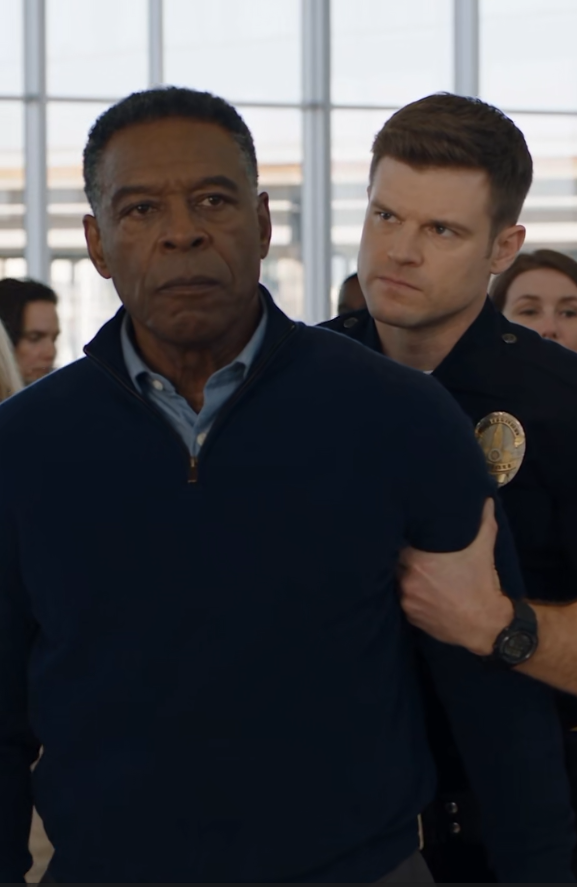
“I’m glad you were a judge.”
I raised an eyebrow.
He continued.
“Not because it should’ve mattered.”
He opened the door.
“Because once it did, you didn’t let that be the end of it.”
Then he left.
I sat alone in chambers for several minutes.
Later that afternoon, my clerk brought in a draft opinion involving a police stop.
“Need this tonight?”
“Tomorrow is fine.”
He placed it on my desk.
Before leaving, he noticed the wooden gavel.
“You finally fixed the chip.”
I looked at it.
One edge had cracked during the airport search.
My daughter had repaired it with a thin line of dark resin.
“No.”
He looked confused.
“It’s still cracked.”
The repair did not hide the damage.
It traced it.
My clerk left.
I picked up the gavel.
For months, people had asked me whether the airport incident changed how I viewed police, race, judging, authority, safety, or the law.
The answer to each question was too complicated for an interview.
I had believed before that institutions were imperfect.
I had believed before that bias could live inside routine judgment without announcing itself.
I had believed before that rights meant most when they belonged to people no one recognized.
But belief from the bench is different from knowledge on the floor.
That distinction stayed with me.
So did something else.
Brennan had apologized.
Holloway had testified.
Doyle had been held accountable.
The department had changed policies.
Marcus Bell had received the review he should have received the first time.
None of those things erased what happened.
That was not what accountability was for.
The law is poor at erasing.
At its best, it records.
It names.
It limits.
It creates consequences.
And occasionally, when enough people refuse the easier version of events, it forces an institution to remember the truth longer than it remembers the embarrassment.
That evening, Denise met me outside the courthouse.
We walked toward the parking garage.
She glanced at my sweater beneath my coat.
“Navy again?”
“What’s wrong with navy?”
“You learned nothing.”
“I learned many things.”
“Apparently not about clothing.”
I smiled.
At the corner, an airport shuttle passed us in traffic.
For half a second, the white letters on its side pulled me back to the terminal floor.
Cold tile.
Steel cuffs.
A shoe near my face.
Then Holloway opening the credential case.
Captain Doyle’s voice changing.
Sir.
I kept walking.
Denise slipped her hand into mine.
“You okay?”
This time I did not answer automatically.
I looked at the courthouse behind us, then at the traffic moving through the evening.
“I am.”
She squeezed my hand.
We crossed the street.
In my coat pocket, the repaired wooden gavel pressed lightly against my palm.
I had brought it home because my daughter wanted to see whether her repair would hold.
The crack was still visible.
It probably always would be.
I had once thought that justice meant reaching the correct result.
Years on the bench taught me something more difficult.
The result matters.
But so does who gets believed before anyone important opens the wallet.