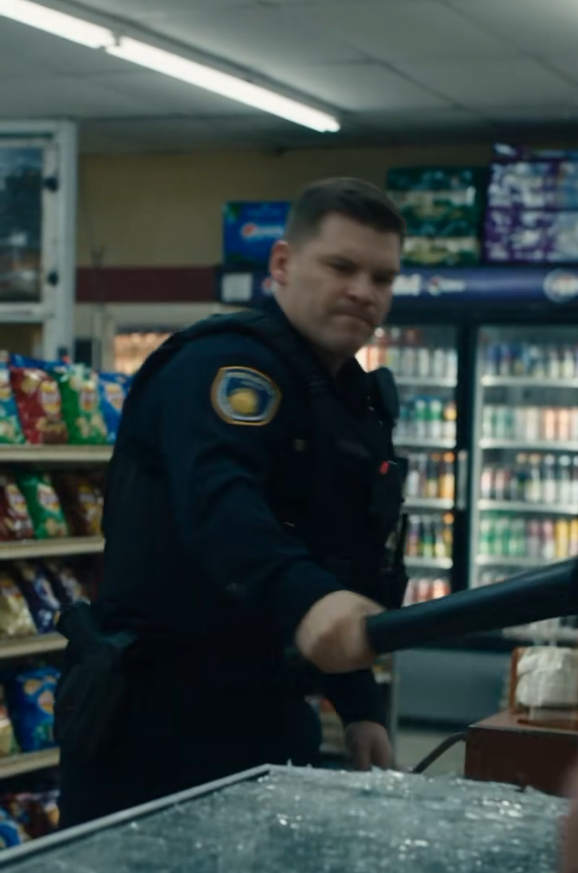
Then he thought about the messages concerning other properties.
“I want what happened to be written down correctly.”
The reporter blinked.
“That’s all?”
Mr. Chen shook his head.
“No.”
He looked toward the courthouse doors.
“That is not a small thing.”
Over the next several months, more came out.
Trent had contacted multiple owners in the redevelopment area.
Not all had paid him.
Some had never met him.
A few remembered unofficial warnings.
Others had sold before pressure escalated and wanted no part of the investigation.
There was no simple conspiracy tying every transaction together.
Reality resisted that kind of neatness.
The property company maintained that Trent acted beyond anything authorized.
Investigators found evidence that at least one intermediary had paid him for information about reluctant sellers.
Whether that person understood how Trent obtained cooperation became the center of a separate case.
Mr. Chen followed only enough to know that the matter had moved beyond his store.
He had no desire to turn his life into permanent observation of Trent’s downfall.
That would still allow Trent to occupy the room.
So Mr. Chen worked.
He replaced the counter.
Changed suppliers.
Repaired the damaged shelving.
He kept the security shutters.
Customers joked about them sometimes.
“Expecting a riot, Mr. Chen?”
He would smile.
“No. Just weather.”
They never knew whether he was serious.
The redevelopment plan changed.
The original schedule collapsed under financing delays and legal review.
The block was not bulldozed the following week.
Or the month after that.
Eventually, new negotiations began.
This time, Mr. Chen attended with counsel.
Nobody sent a police officer.
Nobody called him stubborn.
Nobody warned him that time was running out.
They discussed square footage.
Comparable sales.
Relocation costs.
Closing dates.
Taxes.
Ordinary things.
It was almost boring.
Mr. Chen liked boring.
The final price was higher than every earlier offer.
But that was not why he accepted.
Nearly a year after Trent smashed the counter, Mr. Chen agreed to sell.
The news surprised people who had turned his refusal into a symbol.
A reporter called.
“I thought you were fighting to save the store.”
Mr. Chen looked around at the aisles.
“I was fighting to decide for myself.”
“So the redevelopment won?”
Mr. Chen smiled.
“No.”
“Then you won?”
“I sold a building.”
The reporter waited for more.
There wasn’t any.
Trent eventually pleaded guilty to multiple charges rather than face trial on all counts.
The agreement included conduct at Mr. Chen’s store and other misuse of his position.
He lost his badge permanently.
He was ordered to pay restitution.
The broader property investigation produced penalties and civil settlements against people who had treated informal pressure as if it were merely another business tool.
No single dramatic conviction explained the entire system.
No courtroom exposed every hidden motive.
Some questions remained unanswered.
Mr. Chen discovered that justice did not always resemble the closing scene of a movie.
Sometimes it looked like documents.
Dates.
Audits.
People losing positions quietly.
Contracts rewritten.
Policies changed.
Money returned in installments.
A man who once said I am the law standing before a judge and answering yes, Your Honor.
That was enough.
On the final night before Mr. Chen handed over the store, he stayed after closing.
Most shelves were empty.
The lottery display was gone.
The coffee machine had already been removed.
Without merchandise, the room looked larger than he remembered.
He walked behind the counter.
The new glass reflected him faintly.
For a moment, he could see the old night layered over the empty store.
Trent’s flashlight.
The money.
The boot raised from the floor.
His own hand inside the apron pocket.
He opened the drawer beneath the register.
The black remote was still there.
He picked it up.
Heavy.
Plain.
A red switch beneath a protective cover.
He had kept the system active even after Trent’s arrest.
Not because he expected another attack.
Because he liked knowing the button existed.
Mr. Chen walked toward the front doors.
Outside, the block was quiet.
Several buildings stood vacant now.
Construction fencing had gone up farther down the street.
Change was coming.
Trent had been right about that.
What Trent never understood was that change itself had never been the enemy.
Mr. Chen turned back toward the store.
Then he pressed the switch one final time.
The steel shutters began descending.
The sound filled the empty room.
A year earlier, that noise had trapped two men inside.
Tonight, it was different.
Mr. Chen stepped out before the front shutter reached the ground.
He stood on the sidewalk as the steel settled into place behind him.
The cage was empty.
He put the remote in his coat pocket and looked once through the narrowing reflection in the metal.
For six months, he had believed the badge was the source of Trent’s power.
Later he had believed the cameras were the source of his own.
Both ideas had been incomplete.
The badge had worked because Mr. Chen believed resisting it would cost too much.
The cameras mattered because, finally, he had decided that silence cost more.
He turned toward the street.
The property had been sold.
The store would disappear.
The block would change.
None of that frightened him now.
At the corner, Mr. Chen stopped beneath the same streetlight that had flashed blue the night police surrounded his shop.
His lip had healed long ago.
The money had been returned.
The broken glass was gone.
But he remembered the exact sound of Trent laughing when he asked who would stop him.
Mr. Chen looked back once at the shuttered storefront.
Then he smiled.
Nobody had stopped Trent for him.
Mr. Chen had simply stopped making it easy for Trent to continue.
He turned away and walked home while, behind him, the steel door remained locked—not as a cage anymore, but as the last thing he had chosen to close on his own.