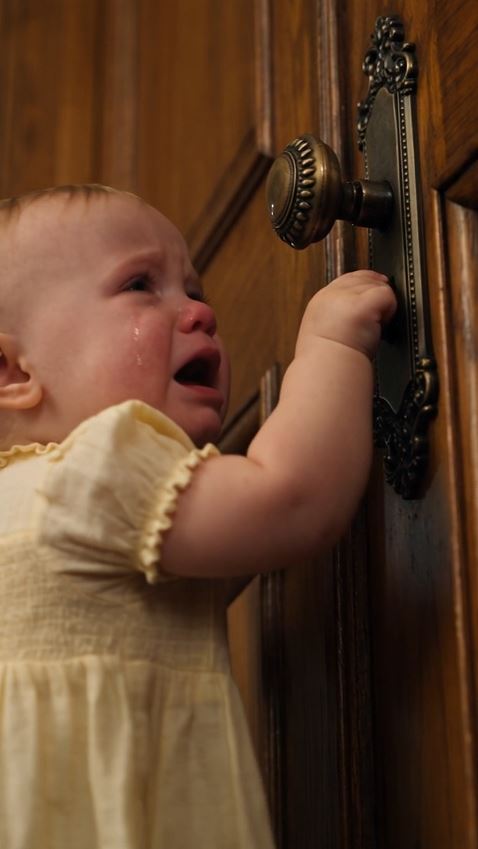
Natalie closed her eyes for a moment against Sophie’s hair before answering. “You did exactly what I needed you to do when you got your dad and stayed where he could find you. None of the rest was your job, sweetheart. The grown-ups are going to handle it from here, and you are staying with people who love you.”
The paramedics needed to leave, and Owen faced a decision he hated before anyone asked him to make it. Natalie needed hospital care, while Sophie had just been struck by Vanessa and had watched her mother emerge injured from a locked basement. Diane was already driving toward Sewickley after Owen’s call, so he arranged for her to meet them at the emergency department rather than leaving Sophie in the house while police processed the scene. An officer told him that Sophie should also be medically evaluated because of the visible mark on her face, which allowed father and daughter to follow Natalie without separating immediately.
Vanessa was led outside before they left. The officers had corroborating physical evidence in the house, Sophie’s visible injury, Natalie’s account, the phone recovered from Vanessa’s possession, and the locked room downstairs, so she was not permitted to remain in the residence while the investigation proceeded. Owen saw her only briefly through the rain-darkened window as an officer placed her in the rear of a patrol vehicle, and he turned back toward Sophie before she could follow his gaze.
At the hospital, the first hour disappeared into separate rooms, medical histories, blood work, imaging and questions asked more than once because different people needed different answers. Natalie’s head injury appeared consistent with the fall she described, and dehydration accounted for some of the weakness that had frightened Sophie at the basement stairs. Staff also examined Sophie’s cheek, documented the injury and asked Owen enough questions about who had been supervising her that he understood the mark would not remain merely a family matter.
A pediatric nurse explained the next part while Sophie sat beside Owen coloring a horse with a blue crayon. “Because Sophie has an injury that may have been caused by a caregiver, a report has to be made through Pennsylvania’s child-protection system. That does not mean someone is arriving to take her away from you tonight. It means the concern has to be documented and assessed, and they will want to know where Vanessa is, whether Sophie can safely return to either household, and which adults are available to care for her.”
Owen looked toward Sophie before answering. “Vanessa will not be going anywhere near her. Sophie can stay with me or with her grandmother for as long as anyone needs, and I’ll cooperate with whatever information they ask for. I only want her to know that none of these questions mean she has done something wrong.”
The nurse assured him that staff would keep their language age-appropriate and avoid making Sophie repeat details unnecessarily. Pennsylvania’s ChildLine system receives reports of suspected child abuse and routes them for assessment, and health-care professionals are among the mandated reporters required to report when they have reasonable cause to suspect abuse. Owen accepted the process without resistance, grateful that nobody expected Sophie to carry the responsibility of proving what had happened simply because she had been the smallest person in the room.
Diane arrived shortly before seven with rain on the shoulders of her wool coat and an expression Owen had known through divorce negotiations, holiday handoffs and ordinary disagreements about Sophie. She embraced her granddaughter first, holding her long enough that Sophie complained softly about being squeezed, then entered Natalie’s room and stood beside the bed without speaking for several moments. The bruising around Natalie’s temple had darkened under hospital lighting, and the sight of it changed Diane’s anger from frantic speculation into something much quieter.
When Owen followed her inside, Diane turned toward him. “I know you called the police when Natalie failed to show up, and I know you drove back the moment this stopped making sense. I am trying very hard to remember those facts because my daughter spent last night locked under your house while my granddaughter slept one floor above her, and right now those two truths are living very badly beside each other in my head.”
Owen did not defend himself against an accusation Diane had not quite made. “You can be angry with me tonight if that is what you need. I’m not going to spend Natalie’s first night out of that basement asking you to be fair to me. Sophie needs both of us steady, and Natalie needs whatever gives her the least amount of work while the doctors finish with her.”
Natalie, exhausted but awake, looked between them with impatience stronger than her voice. “Neither of you is going to turn this hospital room into another place Sophie has to watch adults fight. Owen came back for her, he called the police, and he found me because Sophie refused to stop listening. Vanessa is responsible for what Vanessa did, and I do not have enough energy tonight to watch that responsibility get moved around because everybody is scared.”
Diane pressed her lips together and sat beside the bed. The rebuke did not erase her fear or make Owen comfortable, but it ended the argument before it acquired a life of its own. For the next half hour they spoke about practical things instead: where Sophie would sleep, which clothes needed collecting later, whether Natalie wanted Diane’s apartment or her own place after discharge, and who would contact Natalie’s supervisor.
Detective Lena Ortiz arrived after eight, when the hospital had grown quieter and Sophie was asleep against Diane in a family waiting area. Ortiz did not begin by asking Natalie to relive every minute of the basement. She confirmed that Natalie felt able to speak, established the time she remembered arriving at the Hale house, and asked about her phone, keys and vehicle before returning to the question of what happened after she entered.
Natalie gave her the parts she could remember without filling uncertain spaces. “I came to speak with Vanessa about something involving Sophie, and we ended up downstairs because she told me to take boxes that still belonged to me. We argued near the shelving. She blocked the stairs, I tried to get past her, and she pushed me hard enough that I fell. I remember the edge of the shelf, and the next clear thing I remember is waking inside that storage room with the door locked.”
Ortiz let several seconds pass while she finished a note. “I’m going to ask you about the argument in greater detail later, because the reason you went there may matter. Tonight I’m more interested in the period when you could not leave. Did Vanessa return after you regained consciousness?”
“She came down Saturday morning with water. I was awake, I knew where I was, and I told her plainly that I wanted out and would call the police as soon as she opened the door. She took the bottle back after I drank, walked upstairs and locked the outer door again. Whatever she tells you about being confused after an accident, she knew by then that I was conscious and asking to leave.”
Ortiz did not comment on the legal significance of the answer. She asked a few more questions about the storage room, thanked Natalie and left before fatigue turned the interview into guesswork. In the corridor, she found Owen beside a vending machine waiting for coffee he had forgotten to collect.
An officer from the responding department called Ortiz before she could speak to him. Natalie Reed’s vehicle had been located in a public parking area near the Ohio River several miles from the Hale residence, locked and apparently unattended. Owen watched Ortiz listen, seeing her expression tighten only slightly as she asked the officer to preserve the vehicle and confirm the location before ending the call.
Ortiz told him the car had been found, then asked whether Natalie had any reason to leave it there. Owen shook his head and reached for his phone, already trying to remember the last time anyone had mentioned her car. Before he could answer further, another message arrived on Ortiz’s screen from an officer still canvassing the street around the Hale house.
A residential camera across from Owen’s property had captured Natalie walking up the driveway shortly after four on Friday afternoon. The available footage showed her entering the house and gave investigators a confirmed time for her arrival; in the portion reviewed so far, nobody had found an image of Natalie walking back out.
Ortiz put the phone away and looked through the glass panel toward the waiting room, where Sophie remained asleep against her grandmother while Owen stood beneath the hospital’s cold fluorescent light. The missing-person case that had begun that afternoon was already becoming something else, and the abandoned car meant the unanswered portion of Friday evening extended well beyond the basement door.