I wasn’t.
That life was already gone.
The house didn’t matter.
The marriage didn’t matter.
My reputation could be repaired.
Money could be earned again.
The only things that mattered were sleeping two rooms away.
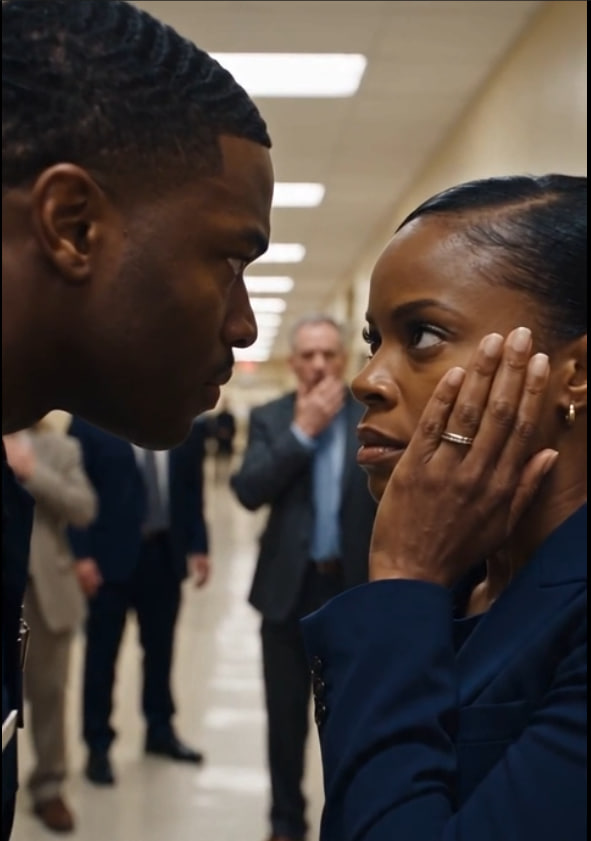
At five twelve, Rachel walked out.
Hands raised.
No fire.
No gun.
No dramatic final stand.
Just a tired woman in yesterday’s clothes stepping onto the porch while police surrounded her.
She screamed my name once.
I wasn’t there.
She screamed for Lily.
Lily was asleep.
She screamed that everyone had misunderstood.
Nobody moved.
Police placed her in handcuffs.
And for the first time since I met Rachel, nobody was listening to the story she wanted them to believe.
The months afterward were not easy.
There was no magical ending.
Ethan started therapy.
At first, he barely spoke.
Then he drew pictures.
Doors with locks.
Empty plates.
Rachel as a giant shadow.
Slowly, the pictures changed.
He drew school.
Melissa.
Me.
Lily.
A dog he wanted someday.
One afternoon, his therapist asked what made him feel safe.
He wrote:
WHEN DAD LISTENS.
I kept that paper.
Lily gained weight.
Not quickly.
Doctors helped us build healthy routines without turning food into another source of fear.
For weeks, she asked permission before eating anything.
“Daddy, can I have crackers?”
“Yes.”
“Two?”
“As many as you need.”
“Can I have another banana?”
“Yes.”
“Will you be mad?”
“No.”
Every question hurt.
But every answer rebuilt something.
Rachel and Cal both remained in custody facing multiple serious charges.
The legal process moved slowly.
Cal’s cooperation helped prosecutors.
Rachel kept changing attorneys.
Then changing stories.
At one hearing, she claimed she had rescued the children from me.
At another, she claimed Cal manipulated her.
Then she denied knowing about the forged insurance documents.
Experts connected her handwriting.
Digital records connected her devices.
Bank records connected payments to Cal.
Security footage connected him to my worksite.
Hospital documentation supported the children.
Ethan’s school handwriting samples destroyed the fake statement attributed to him.
The gun carried Rachel’s fingerprint.
The cabin carried Cal’s.
Piece by piece, the truth became larger than any lie she could tell.
Six months later, we sold the house.
I thought it would hurt.
Instead, I felt relief.
We moved into a smaller place closer to Melissa.
Two bedrooms for the kids.
One for me.
A kitchen with a low pantry shelf.
I told Ethan and Lily that shelf belonged to them.
Snacks.
Fruit.
Crackers.
They never had to ask.
The first week, Ethan stored food in his room anyway.
I didn’t scold him.
His therapist said healing was not about forcing old survival habits to disappear overnight.
It was about proving, repeatedly, that they were no longer necessary.
So every morning I quietly restocked the pantry.
Every night I checked the locks.
And every day I came home when I said I would.
I stopped taking unnecessary overtime.
Money became tighter.
I didn’t care.
One evening, about eight months after everything began, I was making grilled cheese when Lily climbed onto a chair.
She reached toward a slice of bread.
Then stopped.
Her hand hovered.
I saw the memory in her face.
I put down the spatula.
“What is it, sweetheart?”
She whispered, “Can I touch it?”
My chest tightened.
I moved the bread closer.
“You never need permission to eat when you’re hungry.”
She looked at me.
“Never?”
“Never.”
She grabbed the slice.
Took a bite.
Then smiled.
Ethan entered the kitchen.
“She’s eating the sandwich bread.”
I looked at him.
“So?”
He grinned.
“Nothing.”
He took a piece too.
I pretended to be offended.
“You two are ruining dinner.”
Lily giggled.
Ethan laughed.
Real laughter.
Not nervous.
Not cautious.
Just a seven-year-old boy stealing bread before dinner.
I leaned against the counter.
For one second, an image returned.
The old kitchen.
Rachel’s raised hand.
Lily crying.
Ethan wrapping himself around his sister.
The plate breaking.
The beginning of everything.
I used to torture myself with one question.
What if I had come home at the normal time?
What if I arrived forty minutes later?
Would Rachel have deleted the footage?
Would Ethan have stayed silent?
Would Cal have tried again at the construction site?
Would September first have become the day my children lost me?
There was no answer.
And eventually I learned I didn’t need one.
I could not change the mornings I went to work without noticing Ethan’s fear.
I could not erase the nights Lily went to sleep hungry.
I could not go backward and expose Rachel before she entered our lives.
But I could listen now.
I could believe them now.
I could make sure fear never became normal again.
A year after Rachel’s arrest, Ethan and I visited Sarah’s grave.
Just us.
He brought flowers.
For a while, he stood silently.
Then he asked, “Do you think Mom knows what happened?”
“I don’t know.”
“I think she does.”
I smiled.
“Maybe.”
He placed the flowers beside the headstone.
“Rachel hated her.”
“Yes.”
“Because you loved her?”
“Partly.”
He looked at me.
“Do you still love Mom?”
I took a breath.
“Yes.”
“Is that bad?”
“No.”
“Even if you marry somebody else someday?”
I almost laughed.
Marriage was the last thing on my mind.
But I understood the real question.
Could love survive without replacing what came before?
“Yes,” I said. “Love doesn’t have to erase other love.”
He thought about that.
Then slipped his hand into mine.
“Lily looks like her.”
“She does.”
“But Lily is Lily.”
I looked down at him.
Those were the exact words I had told Rachel.
“Yes.”
Ethan smiled.
“Good.”
We walked back toward the car.
My phone buzzed.
Melissa.
She had Lily.
Her message said:
Your daughter has eaten three cookies and is demanding pizza. Please advise.
I laughed.
Ethan read it.
“Tell her yes.”
“To pizza?”
“Obviously.”
I typed back.
Pizza it is.
Then Ethan looked at me.
“Dad?”
“Yeah?”
“I’m glad you came home early.”
I stopped walking.
For a moment, I couldn’t answer.
Then I squeezed his hand.
“So am I.”
That evening, the four of us sat around Melissa’s table.
Pizza boxes open.
Lily had Nextce on her face.
Ethan argued about which movie we should watch.
Melissa complained that nobody ever helped clean up.
It was loud.
Messy.
Ordinary.
Exactly what family should feel like.
Lily reached for the final piece of garlic bread.
Her hand froze for only a fraction of a second.
Then she took it.
No fear.
No permission.
No one slapped her hand away.
Nobody told her she had to earn food.
She simply ate.
And I realized that was what winning looked like.
Not revenge.
Not watching Rachel sit behind bars.
Not proving strangers wrong.
It was a little girl reaching for bread and knowing nobody in the room would hurt her.
It was a boy no longer standing guard outside his sister’s bedroom.
It was coming home and having my children run toward me instead of wondering what would happen after I left.
I had spent years believing my job was to provide a house.
Food.
Money.
Security.
Rachel taught me the hardest lesson of my life.
A locked door does not make a child safe.
A full refrigerator does not mean a child is fed.
A smiling family photograph does not mean a family is happy.
You have to look.
You have to listen.
And when a child finally finds the courage to tell you something is wrong, you have to believe them.
That night, after the kids fell asleep, I checked their rooms.
Lily lay sideways across her bed with the stuffed rabbit under one arm.
Ethan had fallen asleep with a comic book on his chest.
His door was open.
He always wanted it open now.
I stood there for a while.
Then Ethan stirred.
“Dad?”
“Go back to sleep.”
“You leaving?”
I understood the question.
Not the room.
Not the hallway.
Leaving.
“No.”
His eyes closed again.
“Okay.”
I turned off the hall light.
Then I stopped.
A year earlier, I would have walked downstairs believing my children were safe simply because they were home.
Now I knew safety was something you built.
Choice by choice.
Day by day.
Promise by promise.
I looked back once more.
Both children sleeping peacefully.