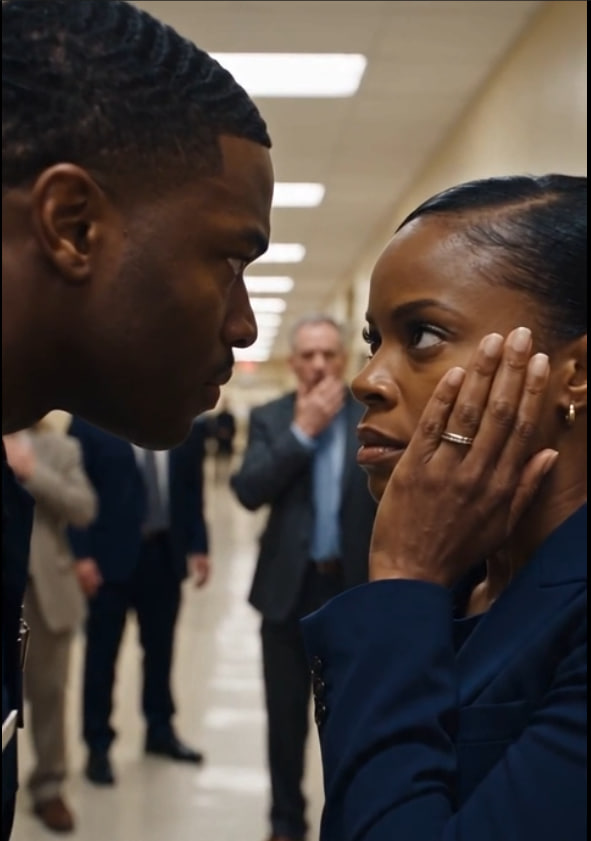
I did not answer Celeste right away.
She had told me how she felt. That feeling could be real. It could not explain away the choices she made.
“You could have told me,” I said.
“I thought you’d leave.”
“So you made sure Amara couldn’t reach me.”
Celeste sat on the edge of the couch.
“When her first letter came, you were finally doing well. Victor said she wanted money. I read it to see whether that was true.”
“It told me I had a daughter.”
“I know.”
“You knew for eight years.”
She covered her face.
“I kept meaning to tell you. Then too much time passed.”
I stood near the doorway. On the mantel was a photograph from our engagement party. We looked happy. I remembered being happy. I could not fit that memory beside Nora standing barefoot in a wedding aisle.
“When Mia was born?” I asked.
“Victor handled most of that.”
“What does that mean?”
“He told me Amara had written again. I asked him to make it stop.”
“Did you know about the apartment?”
“I knew he was going to speak to the manager. I didn’t know he’d bring a locksmith.”
I could hear how carefully she separated each act. She had read the letters. She had kept them. She had asked her father to stop Amara. I let those facts stand.
“The wedding won’t be rescheduled,” I said.
“I know.”
“Our lawyers will handle the rest. Do not contact Amara or the girls.”
She nodded, crying silently. I left before she could ask me to make her feel forgiven.
At the hospital, Tasha was helping Nora braid Mia’s hair while Amara watched from her bed. The sight steadied me. I told Amara that Celeste had admitted reading the first letter and asking Victor to stop further contact. Ms. Reed would receive a written account of our conversation.
Amara closed her eyes.
“I used to think I was losing my mind,” she said. “Every time I sent something, a different answer came back.”
“I’m sorry.”
“You didn’t send them.”
“I let the answers end the conversation.”
“We both lived with what we thought we knew.”
She reached for Nora, who had paused with the comb in her hand.
“Keep going, baby. Mia wants her ribbon.”
Nora tied it badly. Mia looked delighted.
Amara’s recovery was slow. Some days she could talk for hours. On others, she needed quiet after breakfast. Tasha stayed nearby. I took the girls to the park, read them books, and learned Mia would eat strawberries only if Nora ate one first.
I also learned Nora hated being called brave.
“People say that when they’re about to leave me with a hard thing,” she told me.
I stopped saying it. When she told me she was scared, I listened and told her what would happen next.
One morning, Amara’s doctor said she could go home with support. She wanted to return to her apartment. The lock was unchanged, but the attempted eviction had made the place feel uncertain to Nora.
We went there together before the girls came back. Ms. Reed had confirmed Amara’s lease remained valid. Tasha opened the windows. I checked that the food in the refrigerator had been cleared out during the hospital stay.
Amara stood in the girls’ bedroom. Nora’s drawings covered one wall. Mia’s stuffed rabbit sat on the bed.
“I thought they might never sleep here again,” she said.
“They can.”
“She may need to see that herself.”
We brought Nora and Mia that afternoon. Nora went straight to the bedroom. She touched the drawings one by one, then checked the closet. When she found her yellow sweater, she hugged it.
“Nothing got thrown away,” she said.
“Nothing,” Amara answered.
I helped make dinner. Tasha stayed overnight. When I left, Nora walked me to the door.
“You’re coming tomorrow?”
“At nine. I’ll bring the library books.”
She checked the clock on the wall.
“Nine.”
I arrived at eight fifty-eight.
Over the following weeks, the legal case moved ahead. Celeste and Victor provided records through their lawyers. The false lease notice, the attempted lock change, and the intercepted correspondence were all examined. I gave a statement. Amara gave hers when she was well enough.
Victor’s business partners began asking questions of their own after learning he had used company staff for a private family matter. I did not call them or threaten a contract. The records were enough for them to make their own decisions.
One afternoon, Nora climbed into my car with her library books and asked a question I had been waiting for.
“Why didn’t you come when I was born?”
I pulled over before answering.
“I didn’t know you had been born. Your mom tried to tell me. Her messages didn’t reach me.”
“Did you want a kid?”
“I wanted you the moment I learned you were here.”
“That isn’t the same as before.”
“No,” I said. “It isn’t. I can’t give you those years back. I’m sorry.”
She looked at the books in her lap.
“Will you come to my school concert?”
“Yes. Tell me the day, and I’ll put it on my calendar with you.”
She nodded. It was a small answer to a large question. It was one I could keep.