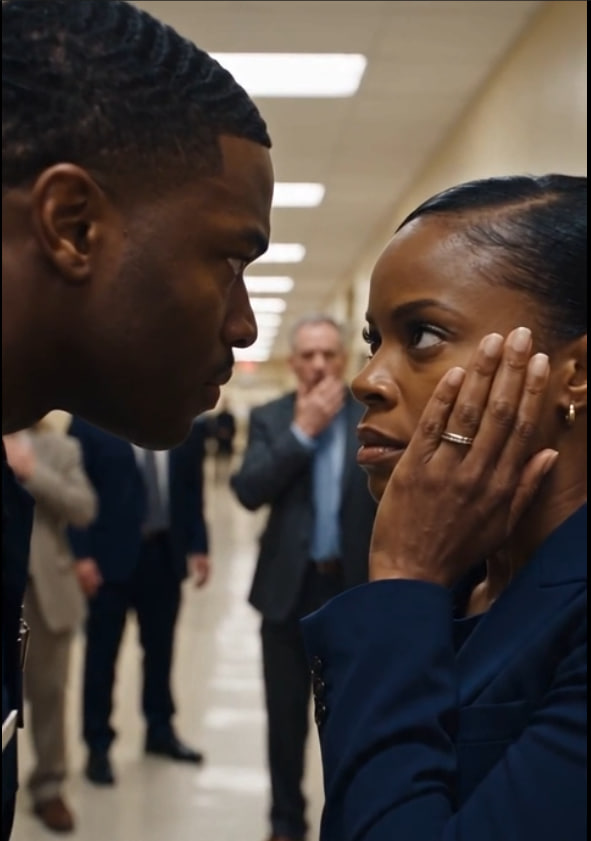
By breakfast, three relatives had contacted me.
Brianna said I was ungrateful.
An uncle asked whether I was exaggerating.
Someone from Celia’s church sent a message about forgiveness, although I had never given her my number.
I put my phone face down.
Dad noticed.
“What happened?”
I showed him.
His expression hardened.
“I’ll handle them.”
“No.”
The word surprised us both.
I took a breath.
“I don't want another person speaking for me.”
He nodded slowly.
“All right.”
I answered Brianna first.
I am not asking you to judge a marriage. Money was taken from me under false claims. There is an investigation. Please stop repeating things you haven't asked me about.
My hands shook after I sent it.
Then I silenced the group chat.
Dad poured me coffee.
He put the mug down gently, as if a sudden sound might hurt me.
I loved him for trying.
I also needed him to understand that I wasn't made of glass.
“Dad?”
“Yes?”
“You can put things down normally.”
He looked at the mug.
Then he laughed once, sadly.
“I don't know how to do this.”
“Neither do I.”
That was the first honest conversation we had without Celia at the center of it.
He told me he had believed I was pulling away.
Celia said I was embarrassed by him, that I wanted privacy, that checking on me would make me feel controlled.
I told him I had believed he was disappointed.
Celia said he was tired of supporting me, that he regretted paying for college, that he thought Mom had spoiled me.
Dad stared across the table.
“She kept us interpreting silence.”
I nodded.
Then I said the thing I had been afraid to say.
“You still could have knocked.”
His eyes closed.
“Yes.”
“You could have called me when you were away.”
“Yes.”
“I kept waiting.”
He didn't defend himself.
That made room for my anger.
I cried while I told him about birthdays spent pretending I had plans.
About the Christmas Celia told him I was working, when I had been upstairs with a headache and no dinner.
About watching his car leave from my window.
He listened to every word.
When I finished, he said, “I failed to check. I believed what was convenient because work gave me somewhere to be.”
I looked at him.
“You weren't convenient.”
That sentence stayed with me all day.
I went back to work the next morning.
Andre asked if I wanted people to know anything.
“No details.”
“Done.”
At my desk, I opened a client spreadsheet and stared at it.
Numbers had always made sense to me.
But now every seven looked like seven hundred.
I went to the restroom, locked myself in a stall, and cried quietly.
Then I washed my face and returned.
I finished one task.
Then another.
At lunch, I scheduled an appointment with a counselor recommended by the employee assistance service.
I didn't tell myself I should be able to handle it alone.
I was tired of that rule.
Three days later, Celia requested a meeting through Tessa.
She wanted to discuss repayment.
Dad asked whether I wanted to attend.
I said yes, but only at Tessa’s office.
Celia arrived with a lawyer.
She wore dark glasses until she sat down.
Without them, she looked exhausted.
For one brief second, I felt guilty.
Then I remembered my boxes.
Her lawyer presented a proposal.
Celia would repay a portion of the rent.
In exchange, I would sign a statement describing the arrangement as a misunderstanding.
I looked at Tessa.
She said I didn't have to respond immediately.
I looked back at Celia.
“Why only a portion?”
“I paid expenses.”
“Dad paid the bills.”
“I gave you a place to live.”
“It was my home.”
Celia’s lawyer leaned forward.
“We’re trying to resolve this without unnecessary conflict.”
I touched the folder in front of me.
Inside was a list I had made.
Every payment.
Every laundry charge I could document.
The estate distribution.
I wasn't guessing anymore.
“I want all the money accounted for.”
Celia removed her glasses from the table.
“You always wanted everything your mother had.”
My breath stopped.
Dad started to speak.
I lifted my hand.
He stopped.
“She wanted me to have it,” I said.
Celia's face changed.
There was no polite version left.
“She made sure you would always come first.”
I sat very still.
For three years, I had thought the problem was my age, my job, my room, my failure to become useful enough.
Now she was telling me the truth.
I had been punished for being loved before she arrived.
Tessa ended the meeting when Celia’s lawyer couldn't produce a complete account of the funds.
Nobody signed anything.
As we stood, Celia looked at Dad.
“You’re throwing away our marriage for a grown woman who needs to move on.”
He picked up my folder.
“I’m ending a marriage in which my daughter was mistreated and my trust was used against her.”
Celia looked at me one last time.
I didn't lower my eyes.
Outside, I sat in the car and let myself breathe.
Dad waited beside the open door.
“Are you okay?”
“No,” I said.
Then I touched the folder on my lap.
“But I know what happened now.”