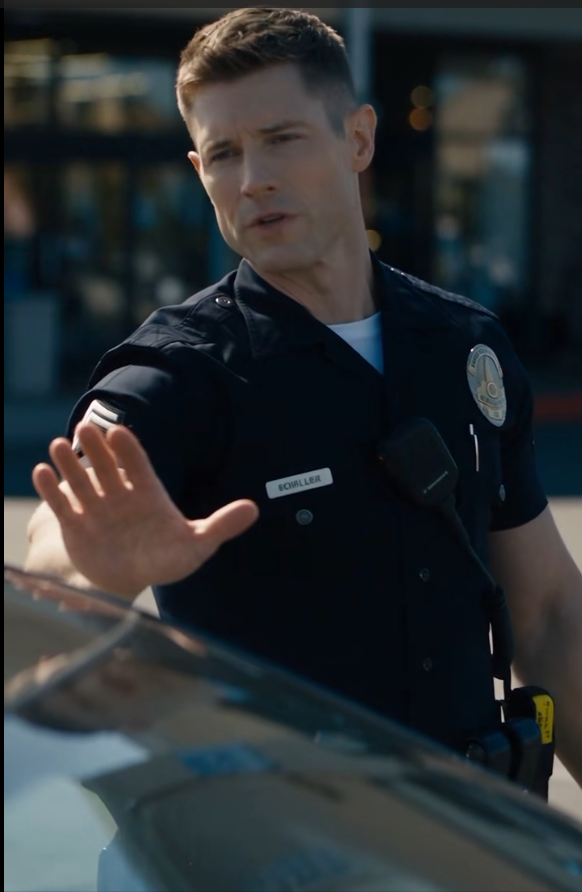
She entered a covert protection program under another identity.
Only three people knew.
My father.
A federal handler.
And Malcolm Reeves.
Then the federal handler was murdered.
My father believed Reeves had betrayed them.
Reeves believed my mother had killed the handler.
Neither trusted the other.
And somewhere inside that paranoia, the entire investigation collapsed.
My father’s letter continued.
There is one person you may eventually be able to trust, but only if she identifies herself using the name I gave you when you were small. The name is not Evelyn. You called her “Morning Star” because she always woke you before dawn. No one outside our family knew that.
I lowered the letter.
Behind me, Bell said, “Judge Henderson?”
I turned.
“I need a list of every woman connected to this investigation.”
It took three days.
No match.
Four days.
Nothing.
On the fifth morning, Isaiah Cole asked to see me.
I refused.
The case was still active.
Then Lena Brooks sent a message through proper channels.
It is not about the lawsuit.
We arranged a meeting with federal agents present.
Isaiah entered carrying a shoebox.
He looked younger than I remembered from court.
Twenty-six.
Thin.
Tired.
He placed the box on the table.
“My grandfather left this with my grandmother.”
“Nathan?”
He nodded.
“She gave it to my mother. My mother gave it to me after the arrest.”
“Why now?”
“Because Ms. Brooks showed me your father’s photograph.”
He opened the box.
Inside were old family pictures.
Documents.
A newspaper clipping reporting my mother’s death.
And a photograph I had never seen.
My mother.
Alive.
Older.
Standing beside Nathan Cole.
The date printed on the back was 2007.
Thirteen years after my father died.
I pressed one hand against my mouth.
Isaiah watched me.
“My family called her Miss Eve.”
I could not speak.
“She helped my grandfather disappear.”
“Where is she?”
“I don’t know.”
“Is she alive?”
“I don’t know.”
Then he removed one final photograph.
A nursing home.
A woman in a wheelchair.
Silver hair.
Thin face.
My eyes.
The photo had been taken six months earlier.
On the back were two words.
Morning Star.
I began crying before I could stop myself.
Not graceful tears.
Not judicial tears.
I bent forward and covered my face.
For fifty-three years I had believed my mother died when I was sixteen.
For thirty-seven of those years, she had been alive somewhere in the same country.
The FBI located the nursing home that afternoon.
Different state.
Different name.
Different life.
She was eighty-two.
Her name there was Eleanor Vale.
I flew out that night.
When I entered her room the next morning, she was sitting beside a window watching birds move between bare branches.
She turned slowly.
I knew immediately.
Not because of photographs.
Not because of records.
Because my body remembered her before my mind did.
Her hand went to her mouth.
“Valerie.”
I could not move.
She began crying.
“My baby.”
I crossed the room.
Thirty-seven years collapsed in six steps.
I fell to my knees beside her chair.
She touched my face with trembling fingers.
“I’m sorry.”
I pressed my forehead against her hand.
“You were alive.”
“Yes.”
“You were alive.”
“I know.”
“You let me bury you.”
Her face broke.
“I know.”
“You let me think you were dead.”
“I know.”
“Why?”
“Because men were watching you.”
I looked at her.
“What men?”
Her eyes moved toward the federal agents outside the door.
“The same kind who watched your father.”
“Malcolm Reeves?”
“No.”
“Then who?”
She reached for my hand.
“You still don’t understand.”
“Then tell me.”
She looked terrified.
Even after all those years.
“Keller wasn’t protecting the police department.”
“Who was he protecting?”
“A judge.”
My stomach turned.
“Which judge?”
She shook her head.
“Not which.”
“What does that mean?”
“Judges.”
She closed her eyes.
“The network survived because everyone kept looking downward. Officers. Supervisors. Prosecutors. But the people who made the evidence disappear permanently sat above them.”
I thought of old corruption files.
Names of judges.
Some dead.
Some retired.
Some prominent.
“Who ordered my father killed?”
My mother opened her eyes.
“I did.”
The room disappeared.
I stared at her.
“No.”
“I gave the order.”
“No.”
“He asked me to.”
My heart seemed to stop.
“What?”
“Charles knew they had found him.”
She was crying now.
“He had documents they wanted. Names. Accounts. Witness locations. If they took him alive, they would force him to reveal where Nathan was. Where I was.”
“No.”
“He had a heart condition.”
“No.”
“He knew exactly what the drug would look like.”
I stood.
“You killed him.”
“He chose it.”
“You killed him.”
“He chose you.”
My entire body shook.
“He chose to die rather than risk them reaching you.”
I could not hear anything except blood rushing in my ears.
My mother reached toward me.
I stepped back.
“Don’t.”
Her hand fell.
For a long time, neither of us spoke.
Then she whispered, “There’s something else.”
I laughed bitterly through tears.
“Of course there is.”
“Derek Mitchell was not sent to scare you.”
“I know. He was sent to force recusal.”
“No.”
I stared at her.
“What?”
“That was Keller’s understanding.”
“And?”
“Mitchell had another instruction.”
My skin went cold.
“What instruction?”
“To make you show identification.”
I stopped.
“Why?”
“Because they needed to know which card you carried.”
I stared at her.
The judicial identification card.
The one I had shown in the parking lot.
“What difference would that make?”
My mother’s voice became barely audible.
“Your judicial card has an embedded security chip.”
I knew that.
Access control.
Secure courthouses.
Restricted elevators.
Emergency verification.
“What about it?”
“Someone cloned it.”
I felt the room tilt again.
“When?”
“When you held it up.”
“That is impossible.”
“Not anymore.”
The FBI agent stepped inside.
“Judge Henderson.”
His expression told me he had just received something terrible.
“What?”
He looked at my mother.
Then at me.
“There’s been a breach at the state evidence archive.”
My throat tightened.
“What was accessed?”
“A sealed judicial storage room.”
“When?”
“Twenty minutes ago.”
“How?”
He swallowed.
“Your credentials.”
I looked at my mother.
Mitchell had never needed to arrest me.
Never needed to threaten me.
Never needed even to touch me.
He only needed to make me do exactly what any reasonable person would do when accused of stealing her own car.
Prove who I was.
The confrontation had been a diversion.
The viral video had been camouflage.
Millions of people had watched the visible crime.
No one had seen the real one.
“What was taken?” I asked.
The agent answered.
“Evidence from the 1994 corruption investigation.”
My mother closed her eyes.
I understood before he said the rest.
“The original ledger is gone.”
The next forty-eight hours became a race.
Federal teams searched homes, offices, storage facilities.
Mitchell confessed that a small scanner had been hidden in the body-camera mount on his uniform.
He claimed he did not know why.
Only that Keller told him to get my judicial card close enough to capture.
Keller claimed he received the device from an intermediary.
The intermediary was found dead.