“Are you inside the building?”
“Yes.”
“Leave.”
Silence.
“Miller.”
“He knows I copied the booking video.”
Sarah closed her eyes.
“How?”
“I don’t know.”
“Leave the building.”
“He told me to turn in my badge.”
“Do it.”
“What?”
“Do not protect the badge. Protect yourself and the evidence. Walk outside.”
“He’ll destroy everything.”
“Then let investigators document him doing it.”
Another silence.
“You really believe that?”
“I believe evidence is replaceable only if you preserve the people who know where it was.”
He breathed out.
“I’m walking.”
Sarah signaled Reed.
He was already reaching for his phone.
On the line, Miller said, “He’s coming out.”
Sarah’s voice sharpened.
“Do not confront him.”
“I’m not.”
A door slammed in the background.
Then Cleary’s voice.
Faint, angry.
“Miller!”
Sarah stood absolutely still.
“Miller, keep walking.”
“You think you’re gonna run to her?”
Closer now.
“Miller.”
Sarah heard footsteps.
Then Miller’s voice, no longer into the phone.
“I’m leaving like you ordered.”
“You stole department evidence.”
“I preserved evidence.”
“You think that general’s gonna save you?”
Sarah’s jaw tightened.
Miller did not answer.
Cleary continued.
“You were nobody before I hired you.”
A pause.
Then Miller said, “Maybe that’s why you thought I’d stay quiet.”
Sarah heard a car door open.
“Get in your vehicle,” she said.
Miller did.
The door shut.
An engine started.
Only then did Sarah sit down.
Reed lowered his phone.
“State investigators are en route.”
“He threatened Miller?”
“Not explicitly.”
“That’s not what I asked.”
Sarah looked at him.
“No. He did not explicitly threaten him.”
Reed understood the correction.
They were still separating facts from interpretation.
Even now.
Especially now.
The records room was intact when investigators arrived.
Cleary had not destroyed the archives.
He had done something stranger.
He had removed three banker’s boxes of paper traffic-stop records and placed them in the trunk of his personal vehicle.
He claimed he was conducting an internal audit.
The investigators seized the boxes under a preservation order before he left the parking lot.
Inside were handwritten citation logs going back nearly six years.
Sarah learned about them that evening.
The federal case remained focused on the secure device.
State authorities handled the traffic evidence.
The separation mattered.
So did the emerging pattern.
Stops involving travelers from outside the county.
Unusually high rates of vehicle searches.
Complaints concentrated among Black and Latino motorists.
Dismissed citations.
Missing camera files.
Reports containing nearly identical phrases.
Aggressive posture.
Failure to comply.
Officer safety concern.
Sarah sat on the edge of the hotel bed reading the preliminary summary.
Reed stood near the television.
“You don’t need to keep doing this.”
She looked up.
“Doing what?”
“Reading every file.”
“I’m not.”
“Close enough.”
Sarah set the papers down.
For the first time since the arrest, fatigue showed plainly on her face.
“He called it the attitude package.”
Reed said nothing.
“I keep coming back to that.”
“Why?”
“Because it sounded practiced.”
Reed looked at the floor.
Sarah continued.
“Not invented. Practiced.”
She picked up another page.
A complaint filed eighteen months earlier described a motorist arrested for disorderly conduct after questioning a lane violation.
Another involved a woman jailed overnight after declining consent to search her vehicle.
A third described Cleary telling a college student that “people passing through ought to remember whose county they’re in.”
Sarah put the page down.
Reed said, “You were right.”
“About what?”
“The next person who doesn’t have helicopters.”
Sarah looked toward the window.
Night traffic moved along the interstate beyond the hotel.
Headlights appeared, crossed the glass, disappeared.
“I wish I hadn’t been.”
Cleary’s temporary administrative suspension came three days after the stop.
He refused to resign.
He called the suspension political.
His supporters gathered outside the courthouse.
So did people who had filed complaints against him.
Oak Haven split into the version of Boyd Cleary people already believed.
Some described him as a tough sheriff targeted for doing his job.
Others described years of intimidation they had assumed nobody outside the county would ever care about.
Sarah declined every television interview.
She also declined a request from the Army’s public affairs office to appear beside General Reed.
“This is not a military victory,” she said.
The officer on the call hesitated.
“No, ma’am.”
“If we turn it into one, we prove Cleary’s argument for him.”
Reed, seated across the room, nodded.
After the call ended, he said, “You hate public affairs.”
“I hate bad public affairs.”
“That sounds exactly like something public affairs would put on a mug.”
Sarah nearly laughed.
The sound surprised both of them.
It lasted only a second.
Then Reed’s phone rang.
His face changed as he listened.
When he ended the call, Sarah was already standing.
“What?”
“Cleary filed a motion through counsel demanding return of his seized administrative records.”
“That’s normal.”
“He also claims Miller fabricated the booking-room copy.”
“That’s predictable.”
“There’s more.”
Sarah waited.
“His lawyer says the original booking archive now shows a twelve-minute gap.”
Sarah stared at him.
“The copy Miller provided doesn’t.”
“No.”
“Meaning?”
“Meaning someone altered the server after Miller made his copy.”
Sarah reached for her jacket.
“Who still had access?”
“Cleary.”
“Anyone else?”
“Miller.”
She stopped.
Reed held her gaze.
“There it is.”
Sarah’s voice lowered.
“The harder choice.”
“What?”
“He’s going to make this about Miller.”
“He already is.”
“No.”
She picked up the printed summary.
“He’s going to say the deputy manipulated evidence to protect a federal official.”
Reed stood.
“And?”
Sarah looked toward the courthouse lights across the street.
“And if investigators cannot establish which copy came first, Miller becomes the reasonable doubt.”
Part V — Final Confrontation
The hearing began nine days after Sarah’s arrest.
It was not a criminal trial.
Not yet.
The state had petitioned for continued preservation of the sheriff’s department’s records, systems, and body-camera archives while investigators examined evidence tampering and misconduct allegations.
Cleary’s attorneys challenged the scope.
They also challenged Miller.
Sarah sat behind the state’s counsel table because she had been subpoenaed as a witness.
She wore civilian clothes.
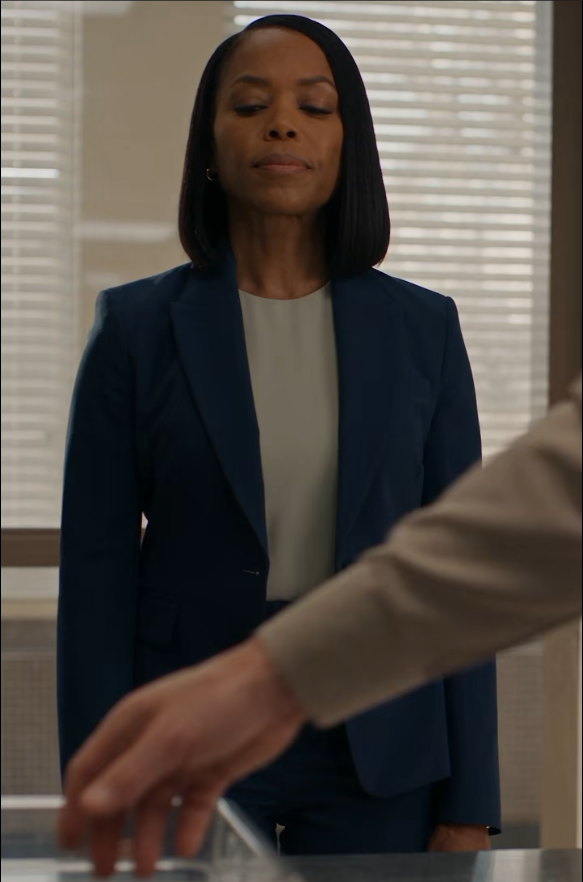
Dark navy suit.
No uniform.
No ribbons.
No stars.
Reed sat farther back, also in civilian attire.
The courthouse had never held so many reporters.
Judge Elaine Parker—an older woman with silver hair and an impatient preference for concise answers—entered at nine sharp.
Sarah watched Cleary.
He sat beside his attorney wearing a charcoal suit.
No sunglasses.
Without the uniform, he looked smaller.
Not weak.
Just human.
That distinction mattered.
Miller testified first.
He described Sarah’s booking.
The secure device.
The sheriff’s attempt to connect it.
The order to delete the booking footage.
The copy he made before reporting to investigators.
Cleary’s attorney stood for cross-examination.
“Deputy Miller, you admire General Hayes, don’t you?”
Miller glanced toward Sarah.
“I respect how she handled herself.”
“You felt indebted to her.”
“No.”
“She specifically told a four-star general that you had not interfered with her.”
“Yes.”
“And that protected you.”
“I did my job.”