Chapter 12
The final surprise came on the first anniversary of Eleanor’s arrest.
The Riverside Community Trust held a small ceremony.
No politicians were invited to speak.
That was Eleanor’s rule.
Instead, children from Lincoln Elementary read essays about community.
A formerly homeless veteran played guitar.
Street vendors provided food.
Morrison attended in plain clothes.
Bradley did not.
He was serving twelve months of supervised release after pleading guilty to official misconduct.
Eleanor had not spoken to him since sentencing.
Shortly before the ceremony began, Marcus approached her.
“There’s someone here.”
“Who?”
“You should probably see for yourself.”
Near the fountain stood a boy.
Maybe eleven or twelve.
Beside him was a woman Eleanor did not recognize.
The boy held an envelope.
Marcus whispered, “That’s Bradley’s son.”
Eleanor looked at him.
“Did Bradley send him?”
“No.”
The woman approached.
“Mrs. Washington?”
“Yes.”
“I’m Laura Bradley.”
Eleanor said nothing.
“Ethan wanted to give you something.”
The boy stepped forward.
He looked terrified.
“Hi.”
“Hello, Ethan.”
He held out the envelope.
Inside was a drawing.
Riverside Park.
The bench.
Pigeons.
People of every age.
Across the top, written in a child’s handwriting:
EVERYBODY BELONGS HERE.
Eleanor’s throat tightened.
“My dad told me what he did,” Ethan said.
Eleanor looked toward Laura.
She nodded.
“All of it?”
“As much as a child can understand.”
Ethan stared at his shoes.
“He said he was mean to you because he thought he was more important.”
Eleanor swallowed.
“He told you that?”
“Yes.”
“He said when I grow up, if I ever have power over somebody, I should remember you.”
Eleanor could no longer speak.
The boy added:
“He said you didn’t ruin his life.”
Tears filled his eyes.
“He said he did.”
Eleanor closed her eyes.
Somewhere behind her, Marcus exhaled slowly.
Then Ethan said something that shocked her.
“My dad wants you to have this too.”
He gave her a second envelope.
Inside was an old photograph.
Eleanor stared.
The image had been taken in 1989.
Lincoln Elementary.
Fourth-grade class.
Twenty-nine children.
Eleanor stood in the center.
One boy had been circled.
The name written on the back:
BRADLEY, JAMES.
Eleanor looked up.
“His name is Bradley James Bradley?”
Laura smiled weakly.
“He goes by his middle name professionally. His first name is James.”
Eleanor stared again at the photograph.
Another former student.
Impossible.
She remembered him slowly.
A loud boy.
Always angry.
Father in prison.
Mother drinking.
He fought constantly.
Once, during recess, he had shoved another child into a fence.
Eleanor had kept him after class.
Not to punish him.
To ask why he was angry.
She remembered what he had said.
Everybody thinks I’m bad anyway.
She had told him:
“Then surprise them.”
Eleanor sat heavily on the bench.
“Oh my God.”
Laura wiped her eyes.
“He found the photograph at his mother’s house after the arrest.”
Eleanor could barely breathe.
“Did he recognize me?”
“Not in the park.”
“When?”
“The night the video went viral.”
Eleanor closed her eyes.
That explained something she had never understood.
Why Bradley had called days later.
Why his shame seemed deeper than public embarrassment.
He had not simply realized he had humiliated an elderly woman.
He had realized he had humiliated the teacher who once believed he could become better than the world expected.
Laura continued.
“He wanted to tell you himself, but he was ashamed.”
Eleanor stared toward the crowd.
Morrison.
Bradley.
Two boys from her classroom.
Two police officers standing in Riverside Park decades later.
One had frozen because of fear.
One had abused power because of anger.
Both had once sat at tiny desks beneath her care.
Marcus sat beside her.
“You okay?”
Eleanor laughed through tears.
“I taught too many children.”
He smiled.
Then Ethan pointed toward the plaque.
“Mrs. Washington?”
“Yes?”
“Who was Reverend Washington?”
“My father-in-law.”
“Was he famous?”
“No.”
“What did he do?”
Eleanor looked around the park.
“He made sure nobody could take this place away from the people who needed it.”
Ethan considered that.
“Like you?”
Eleanor shook her head.
“No.”
She looked toward Morrison.
Then the crowd.
Then the children from Lincoln Elementary.
“Like all of us.”
The ceremony began.
A twelve-year-old girl stepped to the microphone.
She unfolded a sheet of paper.
“My essay is called Who Owns a Park?”
Everyone quieted.
She read:
“A rich person can live next to a park.
A poor person can sleep near a park.
A child can play in a park.
An old person can rest in a park.
But none of them owns the right to decide who deserves to be there.
A public place belongs to everyone, which means everyone must protect it from people who think belonging can be purchased.”
Eleanor covered her mouth.
Marcus leaned toward her.
“You wrote that.”
“No.”
“That sounds exactly like you.”
“I didn’t.”
The girl continued.
“My grandmother says people sometimes become important and forget they were once children who needed kindness.”
Eleanor looked toward Ethan.
He was listening closely.
“So maybe the best way to know what someone will do with power is to remember what they needed when they had none.”
When the girl finished, the crowd rose.
Eleanor remained seated.
Tears rolled freely down her face.
For the first time since the arrest, she allowed herself to remember exactly how frightened she had actually been.
Not of Bradley.
Not of handcuffs.
Of what his words represented.
You don’t belong.
She had heard versions of those words throughout her life.
In stores.
In offices.
In neighborhoods.
Sometimes spoken.
Sometimes hidden behind polite smiles.
And yet here she was.
On the same bench.
Still feeding pigeons.
Still surrounded by people.
Still belonging.
Marcus rested an arm around her shoulders.
“You know what the funniest part is?”
“What?”
“You could have called me immediately.”
She smiled.
“You always were impatient.”
“If you’d called before he cuffed you, none of this happens.”
Eleanor watched a pigeon hop toward her shoe.
“Maybe.”
“You think it was worth it?”
She looked at him sharply.
“No.”
Marcus seemed surprised.
Eleanor continued.
“Pain is never valuable simply because something good eventually grows from it.”
She looked toward Deborah Voss, who had quietly attended the ceremony from the edge of the crowd after completing her community-service sentence.
“That is the mistake people make when they try to justify hurting someone for a greater purpose.”
Marcus nodded.
Eleanor continued.
“But once pain happens, we get to choose whether it becomes only pain.”
She scattered a handful of crumbs.
The pigeons rushed forward.
“So what did yours become?”
Eleanor looked around.
At the park.
At the trust board.
At Morrison.
At Ethan.
At children running beneath the trees.
At the polished brass plaque honoring a man who had understood decades earlier that public space meant nothing if ordinary people were frightened away from it.
Then she smiled.
“A lesson.”
Marcus laughed.
“Of course.”
She looked at him.
“I’m a teacher.”
Months later, one final document surfaced while historians were organizing the Riverside Trust archives.
It was a handwritten letter from Reverend Thomas Washington dated 1978.
Eleanor opened it inside the trust office.
Marcus stood beside her.
The paper was yellowed.
The handwriting shaky.
To whoever serves after us,
If you are reading this, perhaps someone has attempted to convince the city that Riverside would be better if certain people disappeared from it.
They will probably use pleasant words.
Development.
Safety.
Standards.
Investment.
Improvement.
Remember that injustice often learns polite vocabulary before it learns shame.
Eleanor stopped reading.
Marcus whispered, “Keep going.”
She did.
We created the covenant because land near wealth rarely stays available to people without wealth unless someone deliberately protects it.
But legal papers alone cannot save a public place.
People must.
If the city ever forgets that, the trust must belong not to my family, but eventually to the community itself.
Eleanor froze.
“What?”
Marcus leaned closer.
The final paragraph read:
Upon the death or resignation of the final original family trustee, all authority should transfer permanently to a representative community board, and no descendant of mine should retain special ownership.
Eleanor slowly sat down.
Marcus smiled.
“Granddad planned this.”
“The lawyers missed it.”
“Or nobody checked the handwritten instructions.”
Eleanor began laughing.
For nearly a year, newspapers had described her as the woman who inherited control of Riverside Park.
Developers had called her powerful.
Politicians had courted her.
Critics had accused her of benefiting from family privilege.
And all along, Thomas Washington had designed the trust specifically so his family would eventually surrender power.
Marcus shook his head.
“That man really knew us.”
Eleanor stared at the letter.
Then a deeper realization came.
Her father-in-law had not protected Riverside merely from developers.
He had protected it from his own descendants.
From anyone who might one day believe their family name entitled them to more power than anyone else.
Including Eleanor.
She smiled slowly.
Marcus noticed.
“What?”
“I think your grandfather just fired me.”
Marcus laughed.
“Posthumously.”
“Very rude.”
“What are you going to do?”
Eleanor looked out the window toward Riverside Park.
Children ran through the grass.
An elderly man slept beneath a tree.
A woman sold handmade jewelry near the entrance.
Nobody approached to remove them.
Nobody photographed them for a list.
Nobody asked whether they belonged.
Eleanor folded the letter carefully.
Then she called Renee.
“I need you to prepare documents.”
“For what?”
“To dissolve my authority as surviving trustee.”
Silence.
Renee finally said, “Are you sure?”
Eleanor looked toward the park.
“If the lesson is that no single person gets to decide who belongs, then I don’t get to decide either.”
Three weeks later, Eleanor Washington voluntarily surrendered every special legal power she possessed over Riverside Park.
Authority transferred permanently to the community board.
No Washington descendant could reclaim it.
No private corporation could purchase it.
No mayor could quietly lease away its core public rights.
And no police department could ever again enforce an appearance-based removal program without automatically triggering independent judicial review.
Eleanor signed the final document using an ordinary blue pen.
Marcus watched.
“That’s it?”
“That’s it.”
“You just gave away control of land worth hundreds of millions of dollars.”
“It was never mine.”
He kissed her forehead.
“I’m proud of you.”
Eleanor smiled.
“That and four dollars will buy me coffee.”
“Not around Riverside.”
“True.”
The following morning, Eleanor returned to bench seventeen.
No cameras waited.
No reporters.
No military officers.
No lawyers.
Just Eleanor.
A paper bag.
And pigeons.
She sat down at 7:52.
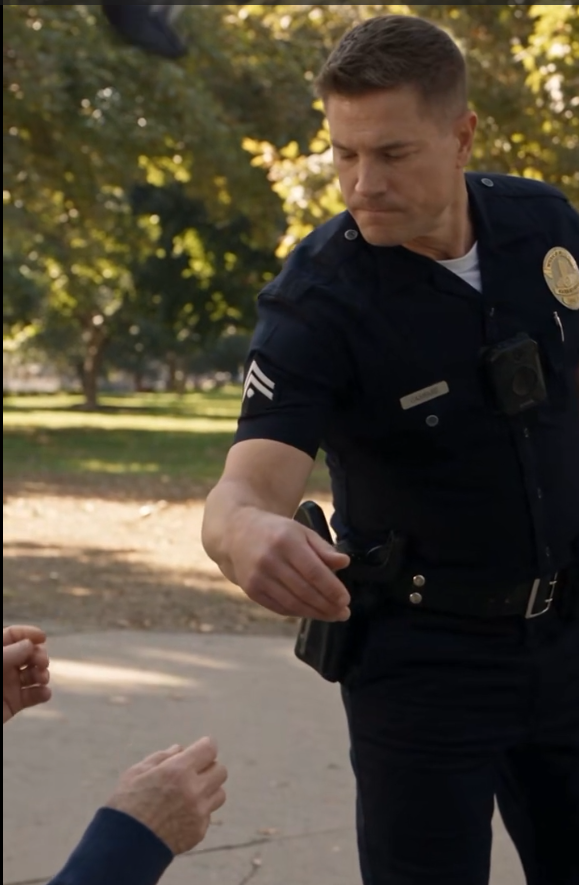
At 8:03, a patrol officer approached.
Eleanor looked up.
It was Morrison.
He was in uniform.
“Morning, Mrs. Washington.”
“Officer Morrison.”
He nodded toward the bag.
“Feeding pigeons again?”
“Apparently I’m a repeat offender.”
He smiled.
“I’ll keep an eye on you.”
“You do that.”
He walked away.
A minute later, a man approached from the opposite path.
Eleanor did not recognize him at first.
He wore jeans and a plain gray jacket.
Thinner than before.
Hair shorter.
Then she saw his face.
Bradley.
He stopped several feet from the bench.
Neither spoke.
He held a small paper bag.
Eleanor looked at it.
Bread.
Bradley swallowed.
“My probation ended yesterday.”
“I heard.”
“I start a new job Monday.”
“What kind?”
“Warehouse supervisor.”
“Honest work.”
“Yes.”
Silence.
He looked at the bench.
“May I sit?”
Eleanor considered him.
Then moved her purse.
Bradley sat.
For several minutes, neither said anything.
Finally he opened his paper bag and scattered bread.
Pigeons gathered.
Eleanor said, “Too much.”
He looked confused.
“What?”
“You’ll spoil them.”
Bradley laughed.
The sound surprised both of them.
Then he became serious.
“I still hear what I said to you.”
Eleanor waited.
“People who actually belong here.”
“Yes.”
He looked toward the trees.
“I don’t know how I became that person.”
Eleanor answered softly.
“Most people don’t become anything all at once.”
He looked at her.
“They practice.”
“Practice?”
“Small choices. Repeated often.”
He nodded slowly.
“So how do you become something else?”
Eleanor picked up a piece of bread.
“The same way.”
Bradley’s eyes filled.
He looked away.
After a moment he asked:
“Do you think I can?”
Eleanor remembered a nine-year-old boy sitting in her classroom.
Angry.
Ashamed.
Convinced everyone had already decided he was bad.
She remembered telling him:
Then surprise them.
Eleanor smiled.
“I answered that question thirty-seven years ago.”
Bradley stared.
Then he understood.
Tears ran down his face.
She placed half the bread bag in his hands.
“Now you have to answer it yourself.”
He nodded.
They sat quietly.
Two people who would never agree on what had happened.
One who had caused harm.
One who had survived it.
No dramatic forgiveness.
No erasure.
No pretending the past had disappeared.
Just a bench.
A morning.
And the possibility of another choice.
At 8:15, investors once scheduled to inspect luxury redevelopment sites would have walked past that exact location.
Instead, a school group arrived.
Children rushed across the grass.
One little boy pointed at Eleanor.
“Look! It’s the pigeon lady!”
His teacher turned bright red.
Eleanor burst out laughing.
Bradley laughed too.
And as dozens of pigeons rose into the morning sky, their wings flashing silver beneath the sunlight, Eleanor looked across Riverside Park and realized the final truth behind everything that had happened.
The most powerful person in the park was never the colonel.
It was never the police officer.
It was never the developer, the captain, the judge, or even the trustee.
It was the ordinary citizen who could sit on a public bench, ask a simple question—
“What law have I broken?”
—and refuse to accept humiliation as the price of belonging.
Because power had tried to move Eleanor Washington.
Instead, Eleanor had forced power itself to move.
And the bench remained exactly where it was.