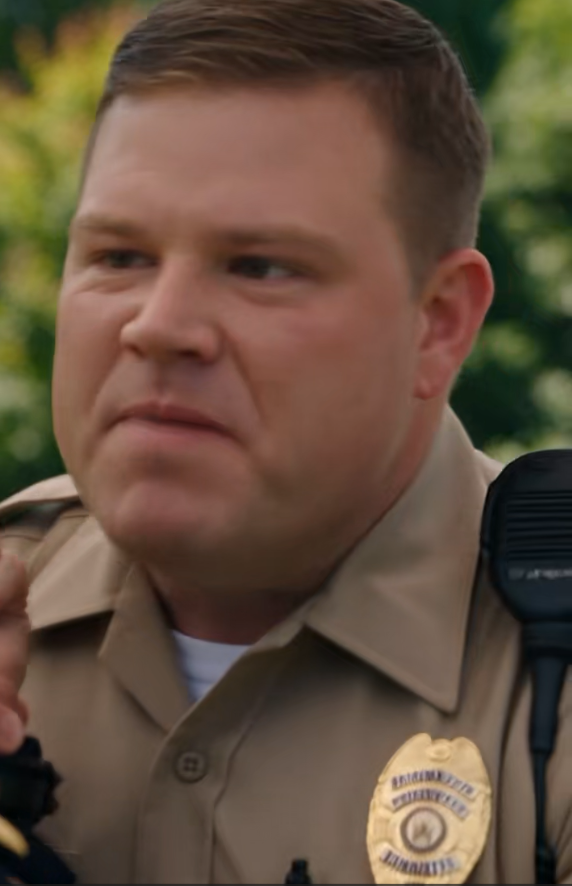
“You admired him.”
“Yes.”
He looked across the yard.
“I thought authority meant being the person who doesn’t hesitate.”
“Sometimes hesitation is useful.”
“I know that now.”
I did not reassure him.
He had not come for reassurance.
“I’m probably done with the department.”
“Maybe.”
“You think I should be?”
I looked at him.
“That’s not my decision.”
“But what do you think?”
The old Derek would have asked because he wanted approval.
This Derek seemed prepared for an answer he disliked.
“I think if you stay in law enforcement, you need to decide whether the badge is there to make people listen to you or to make you responsible for what you do when they don’t.”
He stared at the grass.
“Yeah.”
Then he looked at me.
“Why didn’t you ever tell us?”
“About my rank?”
“Any of it.”
I leaned back.
“At first I did.”
He remembered.
I could see it.
West Point.
Company command.
Deployments.
Each milestone turned into another contest.
“I guess we made that difficult.”
“Yes.”
He nodded.
No defense.
That was new too.
Before leaving, he stopped at the steps.
“Rachel.”
“What?”
“I’m sorry.”
I looked at him.
“For the cuff?”
“For needing the cuff before I understood I was wrong.”
That was better.
“I appreciate that.”
He left.
I did not tell him everything was fine.
It wasn’t.
Forgiveness is not the same thing as restoration.
Sometimes people earn a second chance in inches.
My father and I visited Thomas’s grave the following Sunday.
Christopher came too.
It was the first time he had stood there since childhood.
He carried no flowers.
Neither did I.
Walter brought a small screwdriver.
I stared at it.
“What is that for?”
My father looked embarrassed.
“I didn’t know what people bring to an engineer.”
Christopher laughed.
It sounded like Thomas.
My father heard it too.
He turned away for a moment.
Thomas’s stone was simple.
Name.
Dates.
Nothing about contracts.
Nothing about military systems.
Nothing about the fact that something he preserved inside an obsolete cabinet survived long enough to expose a sheriff.
Christopher stood with his hands in his pockets.
“My mother hated him for years.”
Walter looked over.
“Why?”
“She thought he chose work over us.”
“Did he?”
“I don’t know.”
Walter nodded.
“That sounds like Thomas.”
I looked at the stone.
There were things we would never recover.
His exact last hours.
Whether he knew someone was following him.
Whether the crash was meant to kill him or frighten him.
Whether he believed the archive would ever be found.
I had spent most of my career learning that information rarely becomes complete just because you need it to.
Sometimes you make decisions with missing pieces.
The responsibility is not to know everything.
It is to be honest about what you do not know.
Christopher crouched near the grave.
“He wrote about you.”
I looked at him.
“In the box.”
“What did he say?”
Christopher hesitated.
Then reached into his jacket.
He handed me a photocopy.
A handwritten note.
Not classified.
Not technical.
Just Thomas.
Walter has a daughter who thinks before she moves. People mistake that for distance. It isn’t. She watches the whole board.
If she stays that way, she’ll be dangerous to the right people.
I read it twice.
Christopher smiled faintly.
“He was proud of you.”
I folded the page.
“He barely saw me after I turned sixteen.”
“Apparently he saw enough.”
My father sat on the low stone border beside the grave.
For years, I had resented him without quite naming it.
For minimizing my career.
For telling neighbors I did paperwork.
For avoiding questions when I came home from deployment.
For letting the family’s shallow version of my life stand unchallenged.
Now I understood part of it.
After Thomas died, someone from Mercer’s office had come into our home and used knowledge about me as leverage.
My father had learned that attention could be dangerous.
So when I entered the Army, he did the one thing that made sense to him.
He made me sound unimportant.
Not because he was ashamed.
Because once, importance had put a target on his brother.
Understanding did not erase the years between us.
But it changed their shape.
“You could have told me,” I said.
He nodded.
“I know.”
“I was eighteen, not eight.”
“I know.”
“You let me think you weren’t proud of me.”
His face tightened.
“I know.”
That one cost him.
I sat beside him.
After a while he said, “I am.”
“I know now.”
He laughed softly.
“That’s not much.”
“It’s enough for today.”
Christopher remained near the grave.
Three people.
Three versions of Thomas.
A brother.
A father.
An uncle.
None complete.
Together, closer.
The Army review of the Memorial Day security incident lasted nearly two months.
My role created its own complications.
A general officer directly connected by family to several civilians involved in a restricted-site intrusion was not something anyone enjoyed explaining in briefing slides.
I removed myself from decisions involving Christopher’s prosecution.
I submitted every relevant communication.
I answered questions.
I accepted scrutiny.
That was part of authority too.
Not immunity from examination.
Exposure to it.
Marcus testified about the barbecue.
When I asked afterward how it went, he said, “I told them the truth.”
“That sounds ominous.”
“They asked whether Deputy Nolan resisted removing the cuff.”
“And?”
“I said yes.”
“Anything else?”
“They asked whether you remained calm.”
I looked at him.
“What did you say?”
“That depends on the definition of calm.”
I stared at him.
He almost smiled.
“You’re enjoying this.”
“A little, ma’am.”
The final report concluded that my actions after receipt of the incident notification were appropriate and that no protected information had been improperly disclosed to family members.
The sentence was bureaucratic.
I appreciated it.
Bureaucracy is underrated when it says you did not commit a crime.
Christopher ultimately entered a plea agreement that reflected both the seriousness of what he had done and his cooperation in exposing Mercer’s conduct.
He did not walk away without consequences.
He also did not disappear into prison for decades.
When the agreement was announced, he called me.
“You happy?”
“No.”
“Disappointed?”
“No.”
“What, then?”
“I think ‘happy’ is the wrong standard.”
He was quiet.
“Thomas would probably agree.”
“You knew him for five years.”
“You knew him for eighteen.”
“Neither of us gets to recruit him for arguments.”
Christopher laughed.
“Fair.”
Before hanging up, he said, “I’m going to rebuild the radio.”
“What radio?”
“The model Thomas gave you.”
“You’re not touching mine.”
“I bought one online.”
“That’s acceptable.”
“I thought you didn’t give civilians orders.”
“I make exceptions.”
He laughed again.
It was getting easier to hear Thomas in it.
Not easy.
Easier.
Memorial Day became a reference point in the family.
Not openly.
Families rarely announce when their internal history divides into before and after.
But you can feel it.
Before that afternoon, everyone thought they knew who I was.
Afterward, they became cautious around assumptions.
My mother stopped describing my work for me.