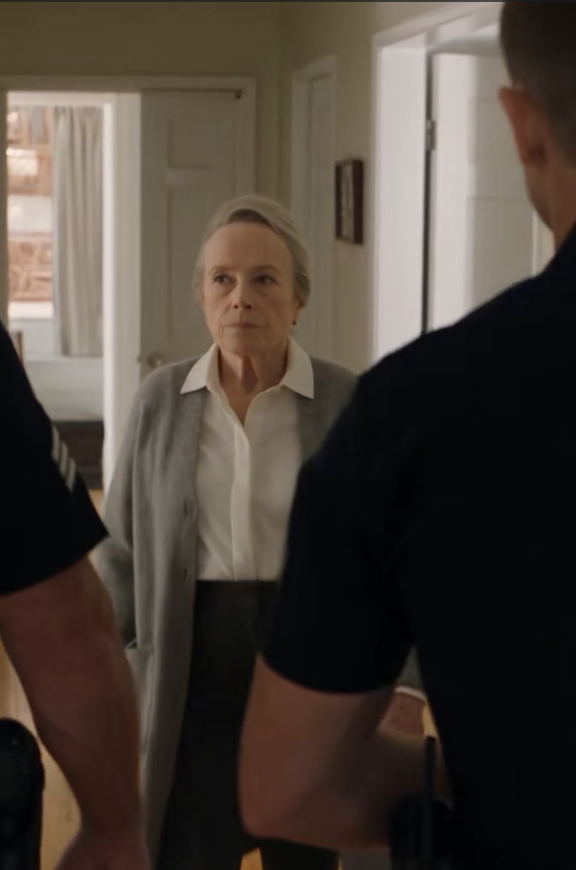
“Still no.”
“Understood.”
Keene left.
Eleanor waited thirty minutes.
Then she called Rafael Salazar.
He answered with suspicion already in his voice.
“What are you planning?”
“That is an offensive greeting.”
“Mara called me.”
“Efficient.”
“She said you refused.”
“I did.”
“So why are you calling?”
“Because the plan is badly designed.”
Silence.
Salazar said, “Eleanor.”
“Nolan will suspect federal involvement if I suddenly contact him.”
“Yes.”
“He knows I’m cooperating.”
“Likely.”
“So the call has to be his idea.”
Another silence.
“What are you proposing?”
“Nothing yet.”
“That sentence has never comforted me.”
Eleanor ignored him.
“What public information does Nolan know about my role?”
“That officers entered your home. Federal agents responded. Lyle was arrested after returning. Parker is cooperating. Your professional background is public.”
“Does he know about the flash drive?”
“No.”
“Emily?”
“No.”
“Danner’s location?”
“No one does.”
Eleanor looked at James’s photograph, which she had brought from home.
Then she saw the path.
Not a trick.
A choice.
“If Nolan thinks Danner came to my house because I had something, he has a problem.”
“Yes.”
“If he thinks federal agents took whatever I had, his problem may be gone.”
“Yes.”
“So he needs a reason to believe they didn’t.”
Salazar became quiet.
Then:
“What do you have in mind?”
The next morning, Eleanor returned home.
Cameras waited across the street.
She ignored them.
At noon, her attorney—an old colleague named Sheila Grant—arrived carrying a cardboard archive box.
Visible.
Deliberate.
Inside were meaningless old tax records.
Sheila stayed forty minutes.
When she left, she carried the box back to her car.
At 2:00 p.m., a local reporter received an anonymous tip that Eleanor had retained “personal case materials” separate from evidence already seized by federal authorities.
The tip was false enough to protect the investigation and true enough to be dangerous.
Eleanor had personal notes.
Federal authorities did not possess them yet.
The reporter called for comment.
Eleanor said only:
“I’m not discussing materials in my possession.”
The sentence aired at six.
At 6:43, Eleanor’s phone rang.
Unknown number.
She answered.
“Mrs. Vale?”
A man’s voice.
Measured.
Professional.
“Who is this?”
“Deputy Chief Nolan, Bellweather Police.”
Eleanor looked toward the lamp.
A tiny camera lens sat behind it.
Federal agents were in a van half a block away.
Salazar had opposed the plan.
Keene had opposed it longer.
Eleanor had won by pointing out that Nolan was already likely to contact her and that a prepared encounter was safer than an unplanned one.
“Deputy Chief.”
“I wanted to personally apologize for what happened at your residence.”
“That’s late.”
“Yes, ma’am.”
She disliked the “ma’am.”
It had Danner’s shape.
“I’d like to speak with you.”
“You are.”
“In person.”
“Why?”
“A matter involving Sergeant Danner.”
Eleanor let several seconds pass.
“What about him?”
“We’re concerned he may have contacted you.”
“Why would he?”
“I think we both know he was looking for something.”
There.
Eleanor stood.
“Do we?”
Nolan lowered his voice.
“Mrs. Vale, there are things happening in this department that are more complicated than the public understands.”
“That sentence has preceded many bad explanations in my experience.”
“I’m trying to help you.”
“No. You’re trying to learn what I know.”
Silence.
Then Nolan said, “Maybe we can help each other.”
Eleanor looked toward the lamp.
“Come tomorrow at ten.”
Keene’s voice immediately sounded in the earpiece hidden beneath Eleanor’s hair.
“No. Public location.”
Eleanor ignored it.
“My house,” she said.
Nolan hesitated.
“Are you sure?”
“Yes.”
“I’ll come alone.”
“So will I.”
She ended the call.
Keene came through the earpiece.
“Absolutely not.”
Eleanor removed it.
The door opened twenty seconds later and Keene entered from the attached garage, furious.
“You agreed to follow the plan.”
“I improved it.”
“You invited him here.”
“He needs to believe I’m confident.”
“He may be armed.”
“So will twelve agents behind the walls, apparently.”
“That is not how houses work.”
Eleanor sat.
Keene paced once across the room.
“You cannot improvise tomorrow.”
“I won’t.”
“You just improvised today.”
“Today was rehearsal.”
Keene stopped.
Despite herself, she laughed once.
Then she pointed at Eleanor.
“Tomorrow, if I say end it, you end it.”
“Agreed.”
“If Nolan reaches for anything, you move away.”
“Yes.”
“If he threatens you—”
“I know.”
“No, you listen to me. You are not on the bench. You do not get to control what happens because you are the calmest person in the room.”
Eleanor looked at her.
Keene’s anger came from fear.
Not condescension.
That mattered.
“I understand.”
Keene held her gaze.
“Do you?”
“Yes.”
And for once, Eleanor meant it without qualification.
Part V — Final Confrontation
Deputy Chief Thomas Nolan arrived at 9:57 the next morning.
Alone.
No marked vehicle.
No uniform.
He wore tan slacks, a pale blue shirt, and a navy blazer despite the heat.
He looked exactly like the kind of man citizens trusted at press conferences.
Silver at the temples.
Measured smile.
Wedding ring.
No visible weapon.
But Eleanor noticed the slight weight at his right hip beneath the jacket.
Keene had told her to notice and then stop noticing.
Federal agents were positioned in the neighboring house, the garage, and a utility van parked near the corner.
Every sound inside Eleanor’s living room was being recorded.
Nolan stepped through the doorway only after Eleanor moved aside.
That detail was not accidental.
“Thank you for seeing me.”
“You asked.”
He looked around.
His gaze traveled no farther than courtesy allowed.
Unlike Danner.
“May I sit?”
“Yes.”
He chose the chair nearest the door.
Eleanor sat opposite.
For several seconds, neither spoke.
Nolan smiled faintly.
“You were known for that.”
“For what?”
“Silence.”
“You watched my courtroom?”
“A few times.”
“Why?”
“I testified before you.”
Eleanor searched her memory.
There had been thousands of officers.
Thousands of faces.
“I don’t remember.”
“I do.”
Something underneath the pleasant tone shifted.
“You suppressed evidence in one of my cases.”
That she remembered more easily.
“Which case?”
“United States v. Harland.”
The name returned.
A warehouse search.
Overbroad warrant.
Officers opening locked containers beyond the authorization granted.
“You were a detective.”
“Yes.”
“The search exceeded the warrant.”
“We found guns.”
“You searched places the warrant didn’t allow.”
“They were illegal guns.”
“The Constitution does not become optional when police expect to be right.”
Nolan’s smile tightened.
“You said almost exactly that.”
“I tend to repeat good sentences.”
He leaned back.
“That ruling cost us a major trafficking case.”
“No. The search cost you the case. My ruling acknowledged it.”
His expression remained polite.
But warmth disappeared.
“You judges always had that luxury.”
“What luxury?”
“Being clean after other people do the dirty work.”
Eleanor watched him.
There it was.
Not proof.
Philosophy.
Sometimes more revealing.
“You didn’t come here to relitigate a case from twenty years ago.”
“No.”
“Then why are you here?”
Nolan looked toward the desk.
The same desk Danner had approached months earlier.
“Danner is unstable.”
“So I’m told.”
“He’s scared.”
“Of what?”
“The consequences of poor decisions.”
“That describes many fugitives.”
Nolan smiled.