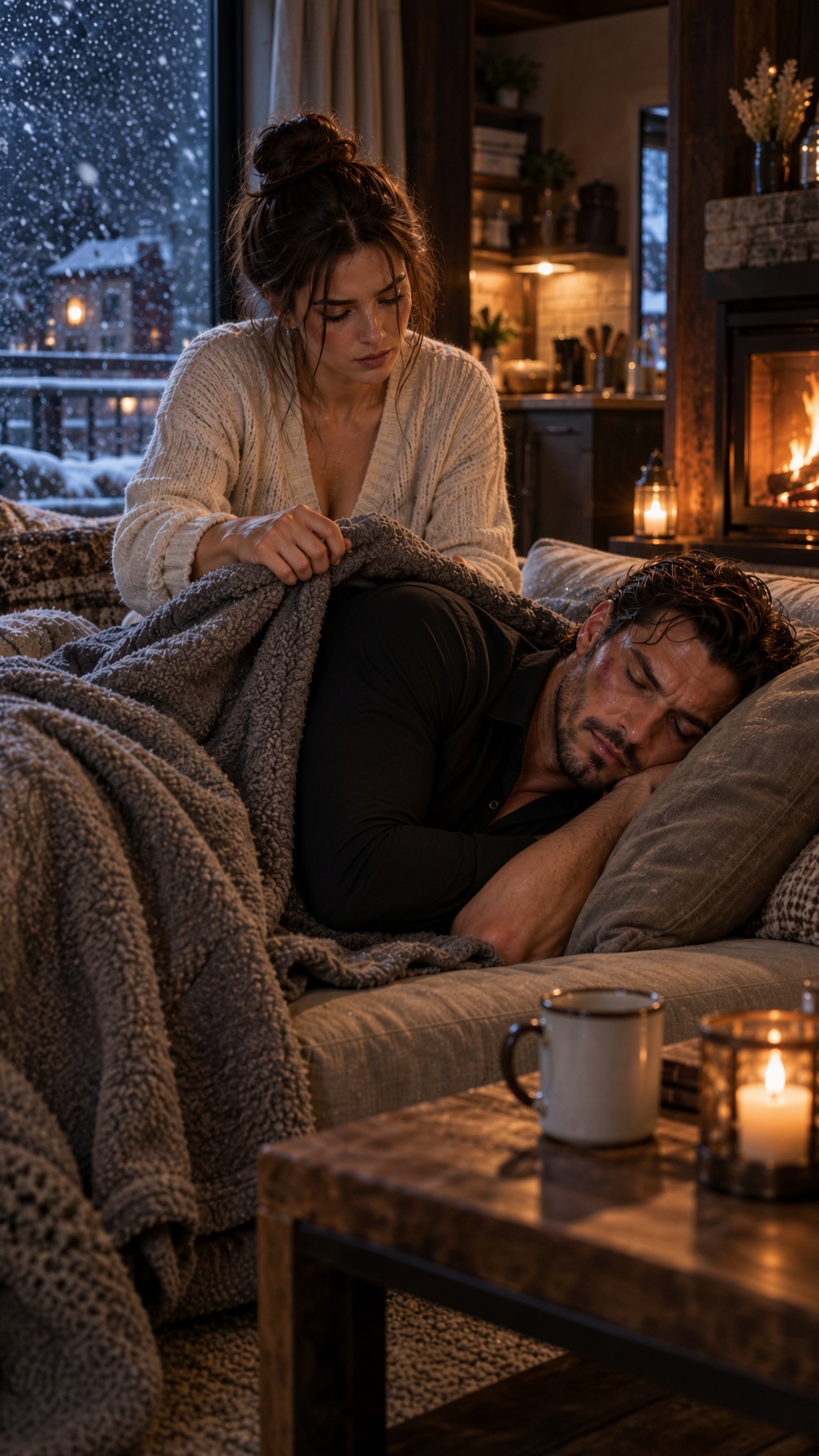
PART 1 — THE MAN IN THE ALLEY
It was the kind of cold that cracked engine blocks and froze pity out of people.
Sheree should have stepped over the bleeding man blocking the way to her apartment.
In this city, minding your own business was not merely good manners.
It was survival.
Instead, she dragged a shivering, dying stranger inside.
At 3:14 a.m., the elevated train smelled of wet wool, burnt brakes, and stale regret.
Sheree Carter rested her forehead against the scratched acrylic window and watched Chicago smear itself into streaks of orange beneath the sleet.
Her feet throbbed in rhythm with the train.
Sixteen hours.
That was how long she had been at St. Jude’s.
Sixteen hours of fluorescent light, alarms, blood, disinfectant, shouting relatives, vomiting children, intoxicated men who woke swinging, and one elderly woman who had held Sheree’s hand and apologized for being afraid to die.
Sheree had told her not to apologize.
Fear was allowed.
By the time her shift ended, Sheree’s own hands were trembling from exhaustion.
All she wanted was a shower.
Hot if the boiler had survived.
Lukewarm if God was feeling indifferent.
Cold if the landlord was being himself.
The train groaned into her station.
Outside, December struck her like a slap.
Wind came off the river and knifed through the seams of her coat. Sheree tucked her chin down, slung her canvas work bag tighter against her ribs, and began walking home with her keys threaded between her fingers.
Six years in the neighborhood had trained certain instincts into her.
Don’t wear headphones at night.
Don’t make eye contact with the man pacing beside the liquor store.
Don’t stop when someone whistles.
Don’t investigate sounds in alleys.
Her apartment building stood on a narrow street lined with tired brick buildings and cars glazed with frozen rain. The front door lock had been broken for eight days.
Mr. Daugherty, the landlord, had promised to repair it three times.
Mr. Daugherty also believed black mold was “mostly cosmetic.”
So Sheree used the rear entrance.
She turned into the alley.
And saw the boot.
Black leather.
Expensive.
Scuffed across the toe.
It protruded from behind the dumpster.
Sheree stopped.
Every instinct in her body said no.
She had spent too many nights in the emergency room learning what happened to people who thought curiosity was harmless.
She took one step backward.
The boot moved.
A sound followed.
Low.
Wet.
Almost lost beneath the wind.
A breath.
“Jesus.”
Sheree closed her eyes.
She could keep walking.
Call emergency services anonymously.
Go to Manny’s twenty-four-hour diner and wait.
Let professionals deal with it.
Then memory arrived the way it always did—without permission.
A telephone ringing at 3:02 in the morning.
Her mother answering.
A police officer asking if they knew Marcus Carter.
Her brother’s coat returned in a plastic evidence bag.
Blood dried black across one sleeve.
A stranger explaining that Marcus had probably been on the pavement for nearly forty minutes before anyone called.
Twenty-six years old.
Gone before the ambulance arrived.
Six years later, Sheree could still remember her mother asking the same question until her voice broke.
Did nobody stop?
Sheree exhaled.
“Damn it.”
She approached the dumpster.
The man was slumped against the brick wall with one leg folded awkwardly beneath him.
He was large.
Not simply tall.
Broad through the shoulders, heavy in the deliberate way of someone who trained his body rather than admired it.
His black wool overcoat was soaked through.
Dark hair clung to his forehead.
A jagged cut ran through his left eyebrow.
And beneath his ribs, the slush had turned red.
Sheree crouched immediately.
“Sir?”
Nothing.
She pressed two fingers to his neck.
Pulse.
Fast.
Weak.
His skin was frighteningly cold.
“Come on.”
She leaned closer.
“Can you hear me?”
His eyelids moved.
That was enough.
Shock.
Blood loss.
Severe exposure.
Thirty more minutes outside might kill him.
Sheree looked toward the street.
No headlights.
No footsteps.
No sirens.
She pulled out her phone.
His hand moved.
Not fast.
Barely.
But his fingers closed over her wrist.
“Hospital,” he breathed.
Sheree bent closer.
“What?”
His eyes opened.
Dark brown.
Almost black in the alley.
“No hospital.”
“That’s not an option.”
“No…”
His jaw tightened.
“Police.”
“You need both.”
His grip strengthened with a suddenness that made Sheree freeze.
“No cops. No hospital.”
It was not panic.
Not exactly.
Even half-conscious, there was command in his voice.
A habit of being obeyed.
Sheree stared down at him.
“Fine. You can die here, then.”
His eyes remained on hers.
For one strange second, something flickered in them.
Almost recognition.
Then his hand slipped away.
Sheree should have noticed that.
Later, she would remember it.
She hooked one of his arms around her shoulders.
“Up.”
Nothing.
“Listen, Dracula, I weigh one hundred and twenty-nine pounds after Thanksgiving dinner. You’re helping.”
His mouth moved.
“What?”
“Hundred…”
His voice was barely audible.
“…thirty-one.”
Sheree stared at him.
“Did you just correct my weight?”
His eyes closed.
“Unbelievable.”
Getting him upright nearly destroyed her spine.
He managed just enough cooperation to stand.
They staggered ten feet toward the rear entrance.
Halfway there, his knees buckled.
“Don’t you dare.”
He grunted.
“Walk.”
They reached the door.
Sheree unlocked it.
The instant they crossed the threshold, he collapsed and dragged her down with him.
Her elbow slammed the tile.
Pain shot into her shoulder.
“Perfect.”
Two flights of stairs took another ten minutes.
By the time Sheree unlocked apartment 2B, sweat had soaked the back of her uniform despite the cold.
She dragged him into the kitchen.
Kicked the door shut.
Deadbolt.
Chain.
The man lay unconscious on faded linoleum while blood and melted sleet spread beneath him.
Sheree stood over him.
Her chest heaved.
“Well.”
She looked at the stranger.
“This is how every woman in a horror movie gets murdered.”
The radiator hissed.
He didn’t move.
“All right.”
Training replaced fear.
Sheree removed her coat.
Washed her hands.
Dropped to her knees.
The overcoat came first.
Then the dress shirt beneath it.
The shirt was expensive.
Ridiculously expensive.
Even soaked in blood, Sheree could feel the quality.
She reached for the buttons.
His hand shot up.
Fingers closed around her wrist.
Hard.
His eyes opened fully.
He looked at her.
At the scissors.
At his open coat.
“Relax.”
No response.
“You’re bleeding into my kitchen.”
His gaze sharpened.
“Where am I?”
“My apartment.”
Something changed in his face.
A tiny movement around the eyes.
“You live here?”
Sheree frowned.
“Yes.”
“What’s your name?”
“You tell me yours first.”
Silence.
“Thought so.”
She reached for the trauma shears.
“Sheree.”
He went still.
She looked up.
“What?”
“Your name.”
“Sheree.”
His stare lingered.
“Last name?”
“Are you filling out a census?”
“Last name.”
“Carter.”
That did it.
Not much.
A breath.
A blink.
But Sheree saw it.
“You know me?”
“No.”
“You reacted.”
“I’m bleeding.”
“Bleeding doesn’t usually make people recognize surnames.”
His eyes closed.
“Cut the shirt.”
Sheree watched him another second.
Then did.
The wound ran along the left side of his ribs.
Deep.
Jagged.