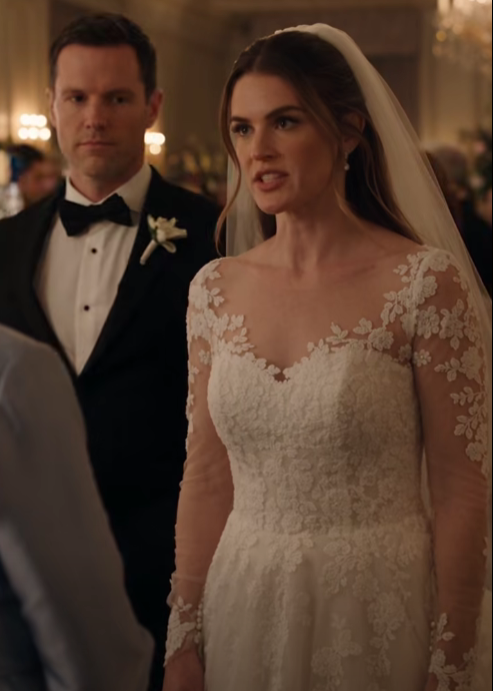
Margaret Bennett had spent months telling herself that the wedding expenses were temporary.
There was always another invoice, another adjustment, another request that seemed small when viewed by itself. More flowers. A different table arrangement. An upgraded menu item. Extra lighting. Transportation changes. A last-minute addition for the reception.
Margaret had agreed to far more than she originally intended because the wedding mattered to her son, and because every new request came wrapped in the same explanation: it was only one day.
So she paid.
By the time the reception arrived, she was tired enough that she no longer wanted to calculate the total in her head.
The ballroom was already full when the latest request reached her.
Around 250 guests filled the tables and gathered near the dance floor. Servers moved between groups carrying trays while the band prepared for the next part of the evening. At the bar, bottles stood in neat rows beneath the lights.
Margaret was there when Tiffany approached her.
“Tell them to put it on your card,” Tiffany said.
She was referring to a bottle of champagne that cost nearly $2,000.
Margaret looked at her future daughter-in-law and answered with one word.
“No.”
Tiffany stared at her.
For months, Margaret had often chosen the easier response. She had approved expenses she considered excessive because she did not want to create tension with her son or make him feel that his wedding had become a financial argument.
But this request felt different.
The champagne was not part of something already arranged. It was an additional luxury being requested at the reception itself, after Margaret had already covered months of wedding costs.
“My father specifically requested that bottle,” Tiffany said.
Margaret did not raise her voice.
“Then your father is welcome to purchase it.”
Tiffany’s father was standing nearby with his arms folded. Her mother said nothing.
Margaret’s son looked increasingly uncomfortable. From his expression, Margaret could tell what he wanted: for the disagreement to disappear quickly.
That had happened before during the planning process. When a disagreement arose, Margaret was often the person expected to absorb it—financially or emotionally—because doing so was considered easier than allowing tension to continue.
This time, she refused.
She explained calmly that she was not trying to embarrass anyone. She had simply questioned why another expensive item needed to be charged to her after everything she had already paid.
Tiffany’s expression changed.
Before Margaret could say anything else, Tiffany stepped toward her and slapped her across the face.
The sound carried farther than either woman probably expected.
Conversations stopped.
Margaret moved backward half a step.
For a moment, one hand remained suspended near her side. Then she slowly raised it to her cheek.
The skin was already beginning to redden.
A server near the bar froze with a glass in his hand. Several guests turned fully toward them. Others remained seated but stared across the room.
Margaret’s son looked stunned.
Tiffany stood in front of her.
No one seemed to know what to say.
Margaret did not immediately respond to the slap.
Instead, she looked past Tiffany.
First toward the bar.
Then toward the band.
Then across the ballroom toward members of the venue staff.
And in that moment, Margaret remembered something that had been easy to overlook during months of planning.
Several of the major wedding services were not contracted under Tiffany’s name.
They were not under Tiffany’s father’s name either.
They were under Margaret’s.
She had signed the agreements.
She was the client responsible for payment.
That meant the disagreement was no longer simply about a bottle of champagne.
Margaret now had to decide whether she was willing to continue financing an event at which the person marrying her son had just struck her in front of hundreds of people.
Her son finally moved toward her.
“Mom—”
Margaret lifted her hand.
Not dramatically.
Just enough to stop him.
She did not want another request to keep the peace.
She had spent months keeping it.
Now she wanted everyone around her to understand that something fundamental had changed.
Margaret turned first to the venue manager.
“I need to speak with you privately,” she said.
The manager had witnessed enough of the confrontation to know that this was no ordinary complaint.
He stepped away from the bar area with her.
Margaret asked a straightforward question: which services could she stop, reduce, or close immediately under the contracts she had signed?
She was not asking whether the wedding itself could somehow be erased.
The ceremony had already happened. Guests were already present. Food had been prepared. Staff had worked. Those obligations were real, and Margaret understood that.
What she wanted to know was what remained under her control.
The answer was significant.
Because Margaret was the contracting party for several parts of the reception, she could decline additional charges and stop optional services from being extended beyond what had already been provided.
The first decision was immediate.
No $2,000 bottle.
Nothing further would be added to Margaret’s account without her direct approval.
Then she addressed the larger issue.
Any optional upgrades still scheduled for later in the evening were to be removed if they could be canceled without violating the existing agreements. No additional premium bottles. No added bar extensions. No extra services requested by Tiffany’s family and charged to Margaret.
The contracted meal and the basic reception would continue.
Margaret was not going to punish the staff or abandon hundreds of guests who had arrived expecting a wedding reception.
But the open-ended spending was over.
The venue manager confirmed the instruction.
Tiffany discovered what Margaret had done within minutes.
She approached again, this time with her parents beside her.
“You’re shutting down my wedding?” she demanded.
“No,” Margaret replied.
Her voice remained controlled.
“I’m stopping my card.”
That distinction mattered.
Margaret was not ordering guests out of the ballroom.
She was not demanding that the music stop immediately or that dinner be removed from the tables.
She was drawing a financial boundary.
Everything already contractually owed would be honored.
Anything extra would now have to be paid for by the person requesting it.
Tiffany’s father objected.
He argued that changing arrangements during the reception would embarrass the family.
Margaret looked at him.
“The bottle you requested is still available,” she said. “You can buy it.”
He did not.
The response exposed the contradiction Margaret had been dealing with all evening.
The purchase was important enough for Tiffany to demand that Margaret pay for it.
It was important enough for Tiffany to invoke her father’s wishes.
But once the cost actually belonged to Tiffany’s father, the urgency disappeared.
Tiffany turned to Margaret’s son.
For several seconds, he looked trapped between them.
Margaret watched him carefully.
What he did next mattered far more to her than the champagne.
He had just watched his wife slap his mother because she refused an expensive charge.
Margaret did not expect him to create another scene. She did expect him to recognize that the situation could no longer be treated as an ordinary family disagreement.
At first, he tried.
“Can everybody just calm down?” he said.
Margaret’s expression tightened.
That sentence confirmed exactly what she had feared.
Calm down.
As though everyone had contributed equally to what had happened.
As though refusing a $2,000 bottle and striking someone across the face were two sides of the same argument.
Margaret looked directly at her son.
“I was hit,” she said.
The words were simple.
They changed the conversation.
Her son stopped speaking.
Tiffany immediately began defending herself, saying Margaret had embarrassed her in front of her family and had been criticizing the wedding expenses all day.
Margaret did not argue about every accusation.
She did not need to.
Dozens of people had seen the slap.
The red mark on her cheek was still visible.
And the original disagreement remained uncomplicated: Tiffany had demanded that Margaret pay for an expensive bottle. Margaret had said no.
Nothing about that justified physical violence.
Tiffany’s mother finally spoke.
She told her daughter that hitting Margaret had gone too far.
Tiffany reacted angrily, insisting that everyone was suddenly taking Margaret’s side.
But that was not what Margaret wanted.
She was not looking for a vote.
She wanted distance.
She told her son that she was leaving the reception.
Before doing so, she spoke again with the venue manager and confirmed her instructions in writing: the existing contracted obligations could be completed, but no new expense was to be authorized using Margaret’s payment information.
If Tiffany, her parents, or anyone else wanted additional alcohol, extended service, or upgrades, they would need to arrange and pay for those themselves.
That was Margaret’s decision about the contracts.
She used the control attached to her name not to