The afternoon sun in Oakridge was thick and golden, casting long shadows over the quiet suburban street. It was just after school pickup, the kind of calm, predictable afternoon parents rely on.
Cars lined up neatly, and the distant sound of children laughing filled the air. Everything was in its place.
Until something didn’t feel right.
A yellow school bus sat dead in the middle of Maple Avenue. Its hazard lights blinked a rhythmic, frantic orange, but the doors remained sealed shut. At first, the parents waiting nearby assumed it was a mechanical delay—a stubborn gear or a stalled engine.
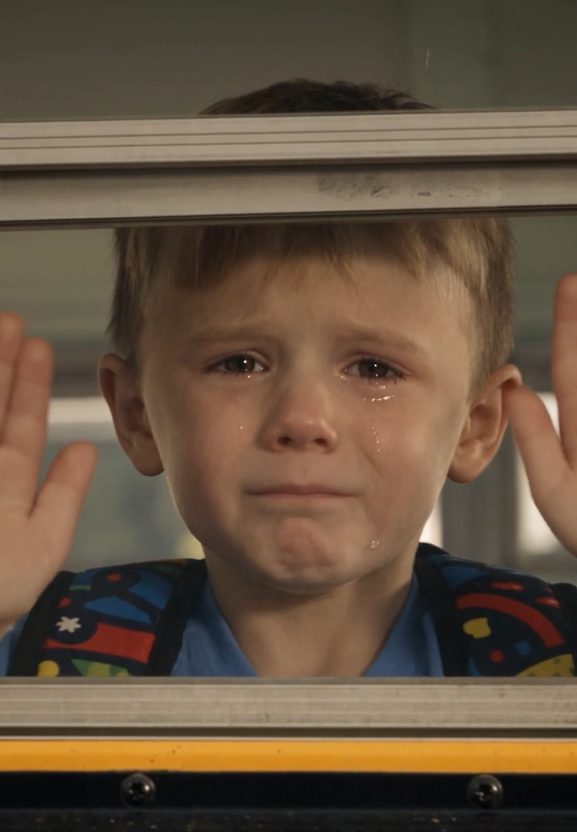
Then, a mother noticed the boy.
He was small, perhaps six years old, pressed hard against the side window. His tiny hands were hitting the glass—not playing, but pleading. Thud. Thud. Thud. Again and again. Inside, the driver was visibly panicking, his hands dancing over the control panel, pressing buttons in a frenzied blur. Nothing worked. The electronic locking system had seized, turning the bus into a yellow steel vault.
The boy started to cry. It wasn’t a loud, dramatic tantrum; it was the muffled, rhythmic sob of a child who realizes they are trapped.
“Hey! Open the door!” someone shouted.
People stepped closer, but they stopped at the curb. Phones came out. Screens lit up as people began to film. Voices overlapped in a chorus of indecision.
“Call 911!”
“Break the window!”
“No—you’ll cut the kids! Wait for the professionals!”
No one acted. Because no one wanted to be the one who made it worse.
Then, a low, guttural rumble cut through the frantic chatter.
A single motorcycle rolled onto the scene, slow and deliberate. The rider was a mountain of a man in a black leather vest, his arms covered in faded tattoos, his shoulders broad enough to block out the sun. He was the kind of man people instinctively moved away from at gas stations.
He didn’t ask questions. He didn’t wait for permission. He kicked the kickstand down, looked once at the bus, and ran toward it.
“What is he doing?” a voice rose from the crowd.Before anyone could move to stop him, the biker grabbed the side mirrors and the window ledges, hauling his massive frame onto the roof of the bus.
The atmosphere shifted instantly from concern to terror.
“He’s crazy!”
“Get him down!”
“Someone stop him, there are kids in there!”
From the outside, it looked like a nightmare: a rugged stranger forcing his way onto a bus full of trapped children. The driver inside looked up, his eyes widening in fear. The boy at the window screamed louder.
But the man on the roof didn’t look down. He didn't care about the cameras or the shouting. He dropped to his knees, his hands searching for the emergency ventilation hatch. He found the metal casing and pulled.
The metal bent with a sharp, violent snap. To the crowd, it looked like a break-in. To the man—whose name was Elias—it was a race against a smell no one else had noticed yet: the sharp, metallic tang of an electrical fire smoldering beneath the floorboards.
Elias reached deep into the mangled hatch, his knuckles scraping against jagged steel until they bled. He wasn't looking for a way in; he was looking for the manual bypass cable that controlled the pneumatic pressure of the doors.
With a roar of effort, he yanked the cable.
PSSSSHT.
The sound of escaping air hissed through the street. The front folding doors suddenly went limp, swinging open just a few inches.
“Get them out!” Elias barked from the roof, his voice like grinding gravel. “Now! The wiring is blowing!”
The driver didn’t need to be told twice. He grabbed the small boy, Toby, and pushed him out into the arms of his waiting mother. The other children scrambled out, a blur of colorful backpacks and tear-streaked faces.
Just as the last child cleared the steps, a thick, acrid coil of black smoke began to pour from the driver's dashboard. A small, orange flame licked at the plastic.
Elias rolled off the roof, hitting the pavement with a heavy thud. He stood up, swaying slightly, wiping blood from his hand onto his jeans. The crowd was silent now. The phones had been lowered. The "menace" on the motorcycle was the only reason the bus hadn't become a furnace.
Toby’s mother was the first to move. She ran past the police line that was just beginning to form and threw her arms around the biker. She didn’t see the tattoos or the leather; she saw the man who didn't wait for someone else to be a hero.
“You saw it,” she whispered into his vest. “You were the only one who moved.”
Elias cleared his throat, looking uncomfortable with the attention. “I used to fix these rigs,” he said quietly. “I knew when that light flickered, the locks were gonna freeze. Just glad the little guy is okay.”
The police arrived, but there were no handcuffs. The lead officer took one look at the smoking bus and another at Elias’s bloodied hands. He simply nodded—a quiet sign of respect.
Elias didn't stay for the news cameras or the thank-yous. He walked back to his bike, his boots heavy on the asphalt. Before he could put his helmet on, Toby ran up to him and pressed something into his hand. It was a small, crumpled sticker of a gold star the boy had earned in class that day.
“For you,” Toby said.
Elias tucked the star into his vest pocket, right against his chest. He kicked the engine to life, the roar of the Harley echoing off the quiet houses of Oakridge. As he rode away into the sunset, the town watched him go, realizing that sometimes the person we fear is exactly the person we’ve been praying for.
.
.
Please follow us if you like this story ❤️🙏✨