The prosecution called Emily on the fourth day of trial.
By then, the jury had already heard from Lauren Pike.
Daniel Brooks.
Jonathan Keller.
Sarah Harrington.
Two Easter guests.
Three financial investigators.
A digital forensics expert.
And Samuel Price.
Samuel testified in person.
When he entered the courtroom, Robert Vale lowered his eyes.
Michael did not.
Michael watched him with the expression of a man examining an inconvenience.
That expression damaged him more than anger would have.
The jury noticed.
Juries notice more than lawyers sometimes realize.
Emily wore a navy suit she had purchased herself.
No stylist.
No jewelry from Michael.
No wedding ring.
She walked to the witness stand at 9:12 in the morning.
I knew the exact time because I could not stop looking at the clock.
The clerk administered the oath.
Emily sat.
The prosecutor approached.
“Please state your name.”
“Emily Collins.”
Not Harrington.
Collins.
Michael’s attorney immediately wrote something.
The prosecutor began with simple questions.
Education.
Work.
Marriage.
Then Easter.
Emily described waking that morning already afraid.
She and Michael had argued the previous night.
She had told him she wanted to move out.
He had taken her car keys.
Her wallet.
Her passport.
He told her she would embarrass herself if she tried to leave.
The next morning, guests arrived.
Emily smiled.
Hosted.
Carried trays.
Answered questions.
Nobody knew.
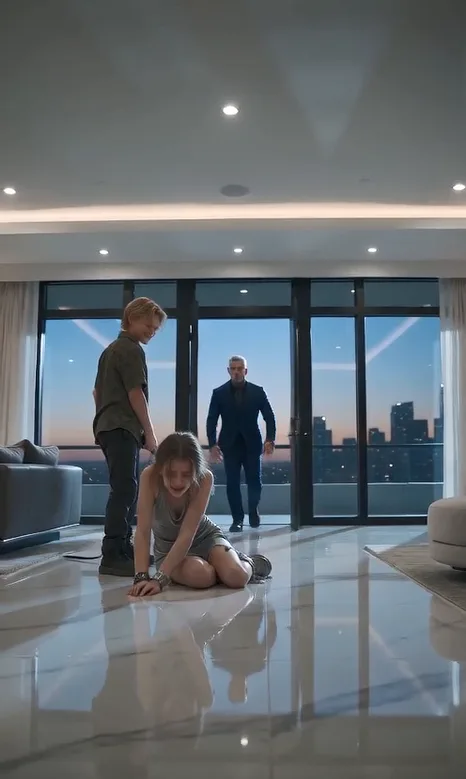
Around ten, she went upstairs to retrieve her phone.
Michael followed.
“What happened?”
“He asked who I had been texting.”
“What did you say?”
“My father.”
I watched the jury.
Every face was focused on her.
“He told me to give him the phone.”
“I said no.”
“What happened next?”
“He grabbed my wrist.”
She stopped.
The prosecutor waited.
Emily continued.
“I told him he was hurting me.”
“He said I was making him angry.”
“He slapped me.”
A juror flinched.
“Then?”
“I tried to leave.”
“He pushed me into a table.”
“I fell.”
“My side hit the edge.”
“Then he kicked my phone.”
Emily’s voice remained steady.
“I got it back when he went downstairs.”
“I started recording.”
“And called your father?”
“Yes.”
“Why?”
Emily looked toward me.
Then back at the prosecutor.
“Because I thought if I didn’t leave that day, I might never leave.”
The recording played.
My daughter’s whisper filled the courtroom.
“Dad.”
“Please come get me.”
Then my voice.
“What happened?”
The pause.
The broken breath.
“He hit me again.”
Listening in my kitchen had been terrible.
Listening inside a courtroom was worse.
Because this time I knew everything surrounding those words.
The recording continued.
Michael entered.
His voice became audible.
“Who are you talking to?”
Emily tried to hide the phone.
A struggle.
A slap.
A cry.
The phone hit the floor.
Then footsteps.
Michael’s voice.
“You are destroying yourself.”
Emily crying.
“Please stop.”
Michael again.
“No one is going to believe you.”
Then Victoria entered.
“What happened?”
Michael replied, “She called Arthur.”
Victoria cursed.
Then came the sentence that changed the room.
“Brooks is downstairs.”
Michael answered, “Good.”
“Tell him we need the file today.”
Victoria asked, “And Arthur?”
Michael laughed.
“Let him come.”
“I’ve been waiting years to watch that man realize he can’t save her.”
The jury heard every word.
For the first time during trial, Michael lowered his eyes.
The recording continued until my arrival.
Then the conversations under the sofa.
Michael telling Brooks to create reports.
Brooks agreeing.
Victoria discussing Keller’s psychiatric notes.
Nobody could call it a misunderstanding now.
The prosecution asked Emily about the years before Easter.
She described the isolation.
The money.
The threats.
The hidden cameras.
The false medical record.
She did not dramatize.
She did not need to.
Truth often becomes more powerful when spoken without decoration.
Then came cross-examination.
Michael’s lead attorney was named Henry Sloan.
Sixty-two.
Brilliant.
Expensive.
Polite enough to be dangerous.
“Mrs. Harrington.”
“Ms. Collins.”
A small pause.
“Of course.”
He smiled.
“Ms. Collins, you continued living with Michael for years after the first incident you described.”
“Yes.”
“You traveled with him.”
“Yes.”
“Posted affectionate photographs.”
“Yes.”
“Attended public events.”
“Yes.”
“Wrote loving anniversary messages.”
“Yes.”
“So anyone observing your marriage could reasonably believe you were happy.”
Emily looked at him.
“Anyone observing it from outside.”
Sloan paced.
“You had access to significant wealth during your marriage.”
“Sometimes.”
“Sometimes?”
“Michael controlled the accounts.”
“But you traveled privately.”
“Yes.”
“Owned expensive clothing.”
“Some.”
“Lived in a mansion.”
“Yes.”
“Had household staff.”
“Yes.”
Sloan faced the jury.
“And yet you describe yourself as trapped.”
Emily replied, “A beautiful room can still have a locked door.”
The prosecutor did not react.
I did not either.
But three jurors wrote the sentence down.
Sloan changed direction.
“Did you ever strike Michael?”
“No.”
“Throw objects?”
“I once threw a glass at the wall.”
“Why?”
“He had locked the bedroom door and taken my phone.”
“But you threw it.”
“Yes.”
“So you were capable of anger.”
Emily almost smiled.
“Yes.”
“I am a human being.”
Sloan’s expression tightened.
He moved toward medical history.
“Have you experienced anxiety?”
“Yes.”
“Panic attacks?”
“In college.”
“Therapy?”
“Yes.”
“Medication?”
“Briefly.”
“So mental health concerns existed before your marriage.”
The prosecutor objected.
The judge allowed limited questioning.
Sloan continued.
“Is it possible your perception of marital conflict was affected by anxiety?”
Emily looked directly at him.
“My anxiety did not fracture my ribs.”
Silence.
Sloan stepped closer.
“You understood a divorce from Michael could result in substantial financial settlement.”
“Yes.”
“So you had financial incentive to portray him negatively.”
“No.”
“No?”
“I signed a postnuptial waiver three months before Easter.”
Sloan stopped.
That document had not helped Michael.
It showed Emily had already agreed to leave most contested wealth behind.
“Why did you sign it?”
“Because Michael said if I wanted freedom, I had to prove I wasn’t after his money.”
“And you agreed?”
“Yes.”
“What did you expect to receive?”
“My clothes.”
“My grandmother’s jewelry.”
“My personal savings.”
“And?”
“My life.”
Sloan changed direction again.
“Your father has a history with the Harrington family.”
“Yes.”
“He investigated Michael’s father.”
“Yes.”
“He believed Charles Harrington was involved in serious crimes.”
“Yes.”
“Could your father’s hostility have influenced you?”
Emily looked toward me.
Then back at Sloan.
“My father welcomed Michael into our family.”
“That was not my question.”
“No.”
“My father’s history did not make Michael hit me.”
Sloan continued for nearly four hours.
By the end, Emily looked exhausted.
But she had not broken.
Then Sloan made his mistake.
“Ms. Collins, isn’t it true that despite everything you say happened, you still told Michael you loved him only two days before Easter?”
Emily became quiet.
“Yes.”
Sloan turned toward the jury.
“No further questions.”
“Wait.”
The judge looked at Emily.
“Ms. Collins?”
She looked at Sloan.
“You asked why I told him I loved him.”
Sloan did not respond.
The judge permitted the explanation.
Emily took a breath.
“Because sometimes telling an angry person what they want to hear is how you get through the night.”
Nobody moved.
Emily continued.
“I loved Michael for a long time.”
“Part of me may always grieve the person I thought he was.”
“But loving someone does not make their violence less violent.”
“And fear does not become consent because the victim stays.”
Sloan sat down.
The prosecutor declined redirect.
There was nothing left to add.
Emily stepped down.
As she walked past Michael, he whispered something.
I could not hear it.
She stopped.
The marshal moved closer.
Emily turned toward him.
“What did you say?”
Michael smiled faintly.
“You always needed an audience.”
Emily looked at the packed courtroom.
Then back at her husband.
“No.”
She said it calmly.
“I needed witnesses.”
She walked away.
The defense rested three days later.
Michael did not testify.
Robert Vale’s separate trial would follow.
The jury began deliberations on a Thursday afternoon.
They continued Friday.
Then Monday.
Every hour felt like punishment.
Emily refused to speculate.
On Tuesday at 10:43 a.m., the court announced a verdict.
We returned.
Michael stood.
The foreperson held the form.
Count after count.
Guilty.
Aggravated asNextlt related charges under applicable state referral.
Guilty.
Witness intimidation.
Guilty.
Evidence tampering.
Guilty.
Conspiracy.
Guilty.
Wire fraud.
Guilty.
Obstruction.
Guilty.
Illegal surveillance.
Guilty.
Not every count.
No case ever gives you perfect symmetry.
But enough.
More than enough.
Michael stared straight ahead.
Victoria began crying quietly behind the defense section.
Sarah did not look at her.
Emily closed her eyes.
I reached toward her hand.
Stopped.
She noticed.
Then she reached for mine.
Only then did I hold it.
Michael was remanded pending sentencing.
As marshals approached, he turned.
His eyes found Emily.
For years, one look had been enough to silence her.
Not anymore.
He said nothing.
Neither did she.
The door closed behind him.
Outside the courthouse, hundreds of reporters waited.
Emily had prepared no statement.
At the last moment, she stopped at the microphones.
She looked at the cameras.
Then she spoke.
“People keep asking why I stayed.”
“I hope someday we ask a different question.”
“Why did he hurt me?”
“Why did people help him?”
“Why did systems listen to his money before they listened to my fear?”
She paused.
“And when someone finally whispers that they need help, why do we make them prove they deserve to be believed before we help them reach safety?”
Then she walked away.
No dramatic victory pose.
No smile.
No revenge.
Just a woman reclaiming the right to leave.