Dr. Morris helped him organize his thoughts without changing his words.
Adrian did not edit.
That was difficult.
Not because Jonah wrote badly.
Because Adrian wanted to fix every painful sentence.
But the statement belonged to Jonah.
The final version was two pages.
I was hungry, but that was not the worst part.
The worst part was when I knew something happened and an adult told me it did not.
I started thinking maybe my brain was wrong.
I know I have Down syndrome. That does not mean I don’t know when my plate has food and then has no food.
Adrian had to stop reading.
Jonah waited.
“You okay?”
“No.”
Jonah looked worried.
Adrian corrected himself.
“I mean, I’m okay enough. It hurts to read because I love you.”
Jonah nodded.
He understood.
The statement continued.
Celeste said I cost money. I thought Dad worked because I cost too much. I thought if I ate less maybe he would be less tired.
Adrian covered his mouth.
That sentence destroyed him.
Every late night at work.
Every canceled dinner.
Every message saying Don’t wait up.
Jonah had connected them to himself.
Not because Adrian ever said so.
Because Celeste supplied the explanation.
The final paragraph was different.
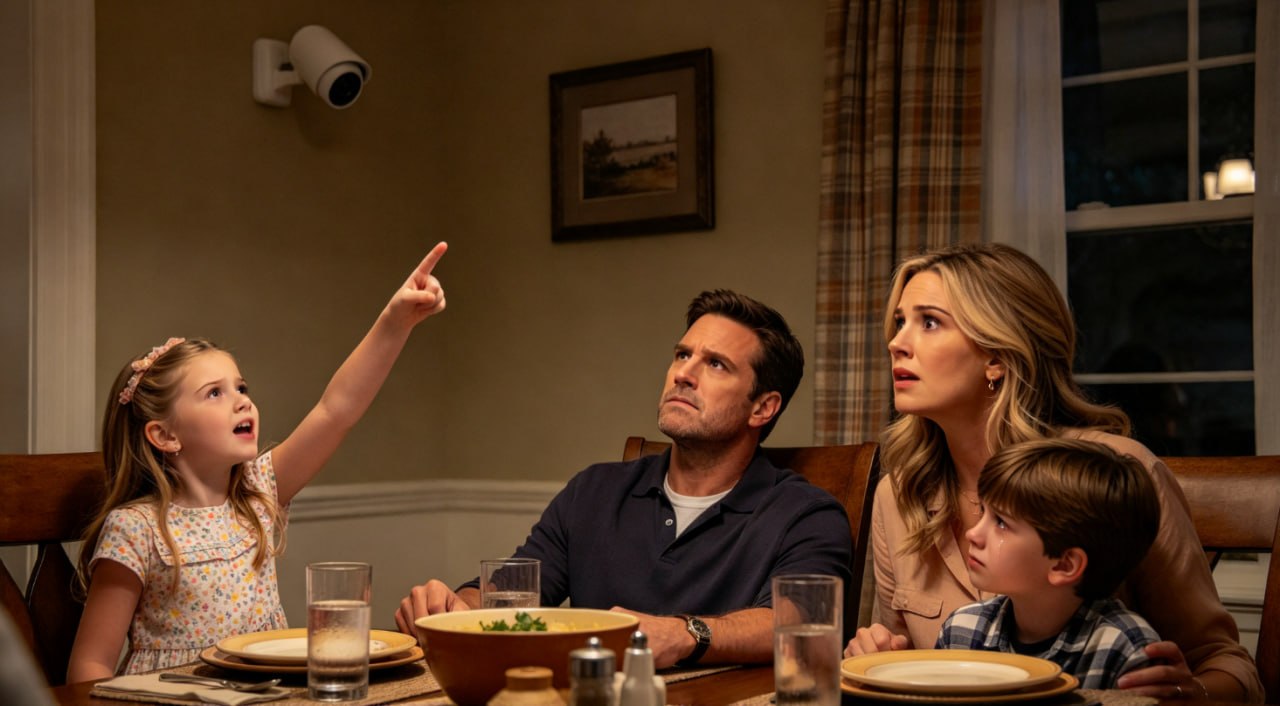
Poppy told Dad to check the camera. The camera did not show dinner because it was unplugged. But it showed other things. I think the camera was not the important thing. Poppy was. She said what happened. Dad listened. I want adults to listen before they need a video.
Adrian cried openly.
Jonah sat beside him.
After a moment he handed Adrian a tissue.
“You use a lot.”
Adrian laughed through tears.
“Apparently.”
The prosecution later informed them that Celeste intended to plead guilty to several fraud and forgery-related counts as part of a negotiated resolution. Other allegations would be handled within the agreement rather than litigated individually.
Marla’s case would resolve separately.
Adrian asked Naomi whether the deal was fair.
She refused to answer in moral terms.
“It avoids a trial. It establishes criminal responsibility. It includes restitution provisions. Sentencing remains with the judge within the legal framework.”
“Jonah won’t testify?”
“Likely not.”
That mattered.
The day of the plea hearing, Adrian did not bring Jonah.
He attended with Naomi.
Celeste stood before the judge.
When asked whether she had knowingly signed Adrian’s name without authorization on financial documents, she said:
“Yes.”
When asked whether she participated in false reimbursement claims, she said:
“Yes.”
Each answer was quiet.
No dramatic confession.
No speech.
Just yes.
Adrian expected satisfaction.
Instead he felt grief.
Because this was the official death of the last fantasy that perhaps he had misunderstood her.
The record now contained what she had spent months denying.
Afterward, Celeste looked at him across the courtroom.
For a moment, neither moved.
Then she approached with her attorney nearby.
“I read Jonah’s statement.”
Adrian said nothing.
“He writes well.”
“He does.”
Her eyes filled.
“I didn’t know he thought you worked because of him.”
“You told him he was expensive.”
“I know.”
“That’s how children build stories.”
She nodded.
“I’m sorry.”
Adrian studied her.
Once, those words would have opened a door.
Now they were simply words.
“You should be.”
Celeste flinched.
He almost apologized for sounding harsh.
Then he remembered:
Guilt/absence.
He let the sentence stand.
Celeste whispered, “Tell him I’m sorry.”
“No.”
She looked shocked.
“You won’t?”
“You don’t get to send your apology through me.”
“What am I supposed to do?”
“Live with the fact that he may never want it.”
Adrian walked away.
At home Jonah was making sandwiches.
He placed turkey on bread.
Then counted slices.
Poppy leaned on the counter.
“I want three.”
“You get two.”
“Three.”
“Two.”
Adrian smiled.
Ordinary sibling negotiation.
He had never imagined how beautiful ordinary conflict could be.
Jonah looked over.
“What happened?”
Adrian knew what he meant.
“She admitted some of the financial crimes.”
Jonah was quiet.
“Did she say she lied?”
“Yes.”
“About me?”
“Not everything was discussed today.”
Jonah nodded.
Then returned to the sandwiches.
Adrian waited.
Finally Jonah said, “Okay.”
That was all.
No celebration.
No relief.
Sometimes accountability did not heal immediately.
Sometimes it simply stopped the argument over whether harm had happened.
Healing had to come afterward.