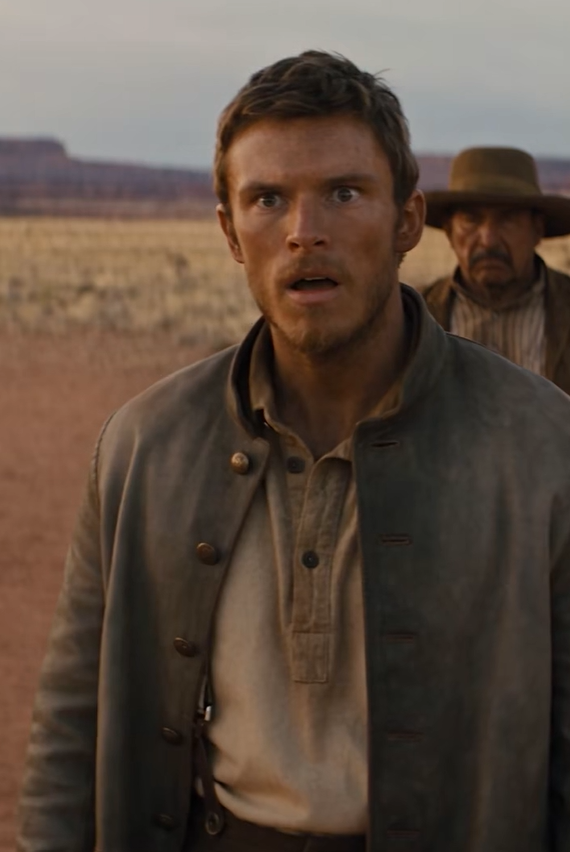
The first gunshot came from the western ridge, and a rider dropped from his saddle before anyone in the valley understood they were under attack. Torches appeared seconds later, racing through the darkness toward the sleeping camp, and Silas Hrix realized with sudden clarity that the men coming through the smoke had not ridden there for horses or cattle—they had come to erase everything.
Only three days earlier, Silas had entered that same valley looking for nothing more complicated than land.
The war had left him thirty-four years old, restless, and carrying a left hand that would never close properly again. A Minié ball had shattered two knuckles outside Chattanooga, and a surgeon working with too little whiskey and too much exhaustion had saved the hand without saving its strength.
Silas could still hold reins. He could still shoot. He could still work harder than most men who looked at his damaged fingers and decided otherwise.
What he no longer had was somewhere to belong.
He had heard about the river valley from a trapper in Santa Fe: clean water, rich grass, enough grazing land to build something permanent. There was only one problem. The Apache people living there controlled it, and everyone Silas questioned told him the same thing.
Don't ask.
Silas asked anyway.
Three riders intercepted him before he reached the camp. Spears remained low, but their expressions made it clear that lowering them had been a courtesy, not weakness.
Silas raised both hands.
“I'm not here for trouble. I came to talk business.”
They brought him to Standing Elk.
The chief stood beside the central fire, broad-shouldered and silver-haired, with old scars crossing his forearms. His eyes had the exhausted hardness Silas recognized from veterans—men who had buried enough people to understand that survival and victory were rarely the same thing.
Standing Elk studied him.
“You came for the riverland.”
“Yes.”
“It is not for sale.”
The answer landed heavily. Silas had ridden three days through punishing heat with a nearly empty canteen because he believed that valley might become the first place since the war where he could stop moving.
“Then I suppose I rode three days for nothing.”
Standing Elk's expression did not change.
“Not for nothing. I have another offer.”
Around them, conversations seemed to quiet.
The chief crossed his arms.
**“Marry my daughters—both of them—and the land becomes yours. Refuse, and leave this valley forever.”**
Silas stared at him.
“Both?”
“Both.”
“I haven't even met them.”
“That is why.”
Silas frowned.
Standing Elk's face hardened, but beneath the hardness Silas saw something else.
Pain.
“Men decide what my daughters are before knowing them. I will not permit another man to do the same.”
Silas looked toward the tents.
“Why me?”
“Because you came asking instead of taking.”
Standing Elk gave him three days.
That evening Silas saw the daughters for the first time.
Sparrow stood alone near the edge of camp, wrapped completely in a white veil. Nothing of her face could be seen. Even when children passed nearby, they gave her distance, as though years of whispers had created an invisible boundary around her.
Stormdancer was different.
She stood near the horse corral with rawhide rope over one shoulder, calming a frightened mustang without force. Her long black hair hung loose, and when she noticed Silas staring, her eyes met his with such directness that he looked away first.
A young warrior noticed.
“That is Stormdancer.”
“Does she always look at strangers like she wants to throw them off a cliff?”
The warrior almost smiled.
“Only the ones she hasn't decided about.”
Silas glanced toward Sparrow.
“And her?”
The man's amusement disappeared.
“Sparrow.”
“What happened to her?”
“Ask her.”
That night Silas lay awake listening to wind press against the hide walls of his borrowed tent.
Two women.
A chief offering riverland.
A marriage he had never imagined.
The entire arrangement sounded impossible, yet something about Standing Elk's words troubled him more than the proposal itself.
Men decide what my daughters are before knowing them.
Silas understood that better than he wanted to admit.
People had looked at his ruined hand and decided what kind of man remained behind it.
The next day he watched Stormdancer work with horses. She never struck them. She waited, observed, adjusted, and somehow persuaded frightened animals to trust her.
Sparrow never appeared.
Silas discovered he was disappointed.
On the second evening, Standing Elk permitted him to ride into town for supplies under escort.
The rumors reached him before he finished buying a clean shirt.
Tomlin, the storekeeper, leaned across his counter.
“You know what people say about the veiled daughter?”
Silas continued folding his purchase.
“No.”
“They say she's hideous.”
Silas stopped.
Tomlin lowered his voice.
“Some say cursed. Men who've seen her have suffered accidents afterward.”
“You ever seen her?”
Tomlin blinked.
“Well, no.”
“Ever spoken to her?”
“No.”
Silas put his money on the counter.
“Then you're telling ghost stories about a woman you've never met.”
Outside, the story had already drawn a crowd.
Ezra Cain, an old riding companion, pushed through it and caught Silas by the arm.
“Tell me you aren't actually considering this.”
“I gave Standing Elk my word I'd return.”
“Returning isn't marrying two women.”
“No.”
Ezra searched his face.
“But you're going to.”
Silas did not answer.
He didn't need to.
Ezra swore under his breath.
“There are other ranches. Other land. Come work with me.”
“I've spent five years working on other men's land.”
“So you're going to marry strangers?”
Silas looked toward the desert.
“Maybe they're tired of being treated like strangers too.”
Ezra's anger faded.
Eventually he squeezed Silas's shoulder.
“If you do this, treat them decently.”
“I will.”
“Whatever those fools say about them, nobody deserves to spend a lifetime being looked at like a monster.”
Silas nodded.
That was when he noticed the man across the street.
Colonel Garrett Vain wore a gray coat despite the heat. He had introduced himself around town as a retired officer turned cattleman, but Silas recognized military discipline in the man's posture immediately.
Vain approached.
“Mr. Hrix.”
“Colonel.”
“I hear you've found yourself an unusual path to some extremely valuable property.”
“That's one way to describe it.”
Vain smiled.
“I offered Standing Elk money for that valley.”
“He refused.”
“He refuses civilization.”
Silas's eyes hardened.
“He refused you.”
The smile weakened.
Vain glanced toward the horizon.
“This territory is changing. Land belongs to whoever has the strength to use it.”
“Funny. I thought it belonged to whoever already lived on it.”
For the first time, Vain's pleasant expression vanished.
Only for a second.
Then it returned.
“Good luck with your marriage.”
Silas watched him walk away with a cold sensation in his stomach.
When he returned to camp, Sparrow stood where he had first seen her.
Silas approached but kept several yards between them.
“Tomorrow I give your father my answer.”
She remained silent.
“I heard what people say about you.”
The veil moved slightly.
Silas swallowed.
“I don't care.”
Still nothing.
“I don't know you. Maybe you'll hate me. Maybe Stormdancer already does.”
From somewhere behind the veil came the faintest sound.
A laugh.