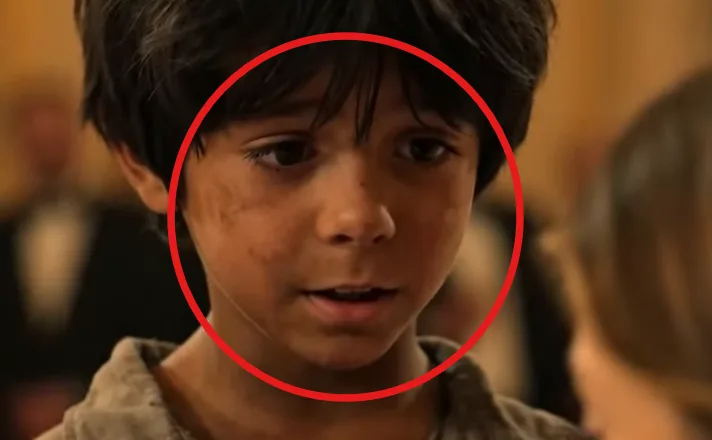
My daughter's fingers were locked around the barefoot boy's hand when I finally heard what he said.
“Her mother asked me.”
Everything inside me stopped.
“What did you say?”
My voice came out sharper than I intended.
The ballroom had been filled with music only moments earlier.
Now I could hear nothing except Sophie's uneven breathing.
My fourteen-year-old daughter stood in front of her wheelchair, trembling so violently I wanted to grab her before she fell.
But she refused to sit.
“Noah,” she whispered.
The boy beside her lowered his eyes.
He looked terrified.
Not of Sophie.
Of me.
“Her mother,” he repeated. “She asked me to find her.”
I stared at him.
My wife had been dead for three years.
Emily had died in a hospital after an illness so aggressive that even the doctors had stopped pretending they could save her.
Sophie had stopped walking months before Emily's death after complications from a spinal infection damaged the nerves controlling her legs.
I had lost my wife.
My daughter had lost her mother, her dancing, and almost every reason she believed the future could be kind.
So when this barefoot teenager appeared at our charity gala and asked Sophie to stand with him, I had nearly ordered security to throw him outside.
Now he was talking about Emily.
“My wife died three years ago.”
“I know.”
His answer made my skin cold.
“How?”
Noah swallowed.
Then reached into the pocket of his torn pants.
Security moved instinctively.
“Stop,” I said.
He pulled out a photograph.
Folded.
Worn.
The corners had become white from being touched too often.
He held it toward me.
I took it.
My knees nearly failed.
Emily.
My Emily.
She sat on a hospital bench wearing the gray sweater I remembered from the final months of her life.
Her hair was shorter than it had been before chemotherapy.
Her face was thin.
But she was smiling.
Beside her sat Noah.
Younger.
Smaller.
Barefoot even then.
I turned the picture over.
There were five words written across the back.
Find my daughter. Make her believe.
I knew the handwriting.
I had received thousands of grocery lists, birthday notes, Christmas cards, and tiny messages from that hand.
“Emily.”
Her name broke in my throat.
Sophie began crying.
“Dad?”
I couldn't answer.
Noah's voice shook.
“I met her outside the hospital.”
I looked at him.
“She found me behind the cafeteria.”
“How old were you?”
“Eleven.”
He gave a nervous laugh.
“I was trying to steal food.”
The security guards shifted.
Noah noticed.
“I didn't.”
He looked back at me.
“Your wife caught me before I could.”
“What happened?”
“She bought me dinner.”
My eyes returned to the picture.
That sounded exactly like Emily.
“She sat with me for almost an hour.”
“Why were you there?”
“My mom was in the emergency room.”
His expression changed.
“She was sick.”
“Did Emily know you?”
“No.”
“And she gave you this?”
“Not that day.”
I stared at him.
Noah looked toward Sophie.
“I saw her four more times.”
My daughter tightened her grip on his hand.
“Mom knew him?”
Noah nodded.
“She talked about you all the time.”
Sophie began crying harder.
I felt something inside me tear.
Emily had known she was dying.
During those final months, she had tried to prepare me for her absence.
She had written letters to Sophie.
Recorded birthday messages.
Chosen jewelry for future milestones.
But she had never told me about Noah.
“Why didn't she tell me?”
Noah looked ashamed.
“I don't know.”
Then he added, “Maybe because she made me promise.”
My anger returned.
“Promise what?”
“That I wouldn't come until the right moment.”
“What moment?”
He glanced at the chandeliers.
“The music.”
I stared.
Noah continued.
“She told me Sophie used to dance.”
My daughter inhaled sharply.
“She said she wore pink dresses and spun around the kitchen until everybody got dizzy.”
Sophie covered her mouth.
“I remember.”
I did too.
Emily cooking.
Sophie dancing between the counters.
Me complaining that someone would break a plate.
Emily laughing and saying plates were cheaper than childhood.
The memory nearly knocked me down.
Noah's voice softened.
“She said Sophie might stop believing she was still that girl.”
Sophie shook her head.
“I wasn't.”
Noah looked at her.
“Your mom thought you might.”
Tears ran down Sophie's cheeks.
“She told me if I ever saw you in a room full of music, I should ask one question.”
I knew before he said it.
“Do you want to try?”
Sophie closed her eyes.
Those words had started everything tonight.
Noah had appeared near the edge of the dance floor.
Bare feet.
Worn clothes.
Security chasing him.
Then he walked directly to Sophie.
He did not say she could walk.
He did not promise a miracle.
He simply held out his hand and asked whether she wanted to try standing.
I had almost stopped her.
Because I had spent three years protecting her from hope.
Doctors had promised nerve recovery.
Specialists had promised new procedures.
Every promise ended with Sophie crying in her room.
I hated hope because I had watched it hurt her.
But Emily had apparently hated something else more.
Hopelessness.
Sophie looked at Noah.
“Can we try again?”
My heart jumped.
“Sophie.”
She looked at me.
“Dad.”
Her eyes were wet.
But they were alive.
“Please.”
I stepped closer.
“If you fall—”
“Then help me up.”
Simple.
I had built my life around preventing her from falling.
My daughter was asking me to believe she could survive it.
I nodded.
Noah positioned himself in front of her.
“I'm not pulling.”
“I know.”
“You do the work.”
“I know.”
“Bossy.”
She laughed through tears.
“You're barefoot in a ballroom. Don't judge me.”
A few guests laughed softly.
I had forgotten they were there.
Sophie pushed from the wheelchair.
Her arms shook.
Her knees trembled.
Noah held her hands.
I moved behind her without touching.
“I'm here.”
“I know.”
She rose.
Not fully.
Then more.
Her body straightened.
I stopped breathing.
Sophie stood.
For one second.
Two.
Three.
Her right foot moved.
Barely.
Then the left.
A tiny dance step.
Noah moved with her.
No music was playing anymore.
It didn't matter.
Sophie laughed.
A sound I had not heard in years.
Her knee buckled.
I caught her from behind.
Noah caught her arm.
We lowered her safely into the chair.
Sophie was crying.
So was Noah.
So was I.
“Dad.”
I covered my face.
“You moved.”
“I know.”
“You danced.”
“One terrible step.”
“It was beautiful.”
She smiled.
Then looked at the photograph still in my hand.
“Mom knew?”
I stared at Emily's handwriting.
Find my daughter. Make her believe.
“Yes.”
My voice broke.
“Somehow she knew you might need someone to remind you.”
Noah shook his head.
“I didn't make her believe.”
We looked at him.
He wiped his face.
“She already wanted to.”
Sophie reached for his hand again.
He took it.
And under those chandeliers, surrounded by strangers who had paid to watch my daughter become an inspirational story, I finally understood what Emily had left behind.
Not a miracle.
Not a cure.
A promise.
She had found one lonely boy in a hospital hallway.
Fed him.
Listened to him.
Trusted him with five words.
And three years later, he had crossed half the city barefoot to keep them.
But as I stared at the photograph, another question began growing inside me.
Why had Emily chosen Noah?
And what else had my dying wife trusted a homeless eleven-year-old boy to carry that she had never trusted me to hear?