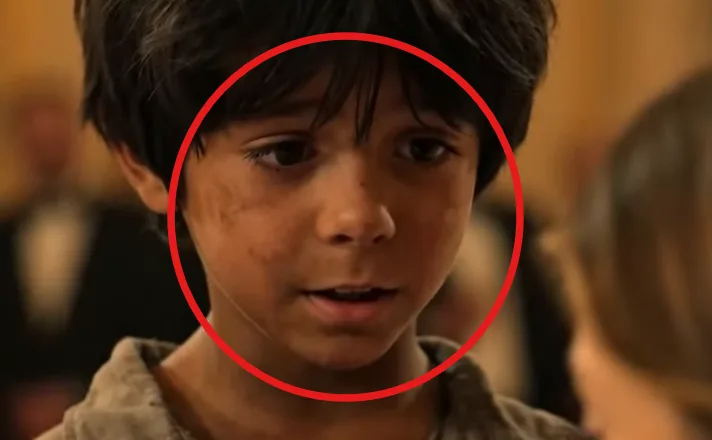
I found Noah at the bus stop three blocks from the hotel.
He sat beneath a broken light with his arms wrapped around himself.
He looked younger outside the ballroom.
Less mysterious.
More like a fourteen-year-old kid who had nowhere safe to go.
I parked.
He didn't look at me.
“You're bad at running.”
“I wasn't running.”
“You've used that one already.”
He almost smiled.
Then his face hardened.
“I don't want your money.”
“I didn't offer money.”
“You will.”
“Probably.”
He looked at me.
“At least you're honest.”
I sat beside him.
“Where are you sleeping tonight?”
He shrugged.
“That is not a location.”
“Friend's place.”
“Which friend?”
“Why?”
“Because you're fourteen.”
“I've survived this long.”
That sentence told me enough.
“Emily asked me to help you.”
His jaw tightened.
“She's dead.”
“Yes.”
“So she can't make you.”
“No.”
I looked at him.
“But Sophie asked too.”
He looked away.
That mattered more.
“She doesn't know me.”
“She chose your hand.”
“That was different.”
“Why?”
He couldn't answer.
I offered one night in our guest house.
No contract.
No promise.
No security guards standing outside his door.
He finally agreed.
Sophie was waiting when we returned.
She tried pretending she hadn't been terrified.
“You're an idiot.”
Noah nodded.
“Frequently.”
“Don't disappear again.”
“You're bossy.”
“Yes.”
I watched them.
Something about the way Noah responded to her made me understand Emily's choice a little more.
He never treated Sophie like glass.
He didn't worship her for surviving.
He didn't pity the chair.
He argued with her.
For my daughter, that seemed strangely healing.
At seven the next morning, we drove to Grand Central's long-distance terminal.
Michael Grant, my attorney, joined us.
I trusted Michael because Emily had trusted him.
At least I hoped she had.
Locker 317 stood at the end of a corridor.
The key turned.
Inside was a metal document box.
No money.
No jewelry.
No dramatic secret photograph.
Files.
Dozens.
Michael put on gloves.
“Before we start pulling things out, we document everything.”
I wanted to rip the box open.
Sophie's voice came from behind me.
“Let him.”
I looked at her.
She smiled faintly.
“Growth.”
Cruel child.
We carried the box into a private security office.
Inside were medical records from St. Catherine's Rehabilitation Center.
Sophie's name appeared everywhere.
I felt my stomach tighten.
The first folder covered the months after her spinal infection.
The official story I knew was simple.
Severe neurological damage.
Incomplete recovery.
Minimal voluntary leg function.
Long-term wheelchair dependence likely.
But Emily had circled several entries.
One read:
Unexpected bilateral motor response following trial treatment.
Another:
Recommend continued neuromuscular stimulation.
Then a handwritten note:
Program discontinued per administrative instruction.
“Who instructed them?” I asked.
Michael kept reading.
“No name.”
Sophie leaned closer.
“Trial treatment?”
“I don't remember this.”
Neither did I.
Noah sat by the wall.
Silent.
The next folder contained billing records.
Charges for experimental electrical stimulation.
Insurance denials.
Foundation payments.
I frowned.
“The foundation didn't exist yet.”
Michael looked at me.
“Apparently something called the Hale Family Medical Fund did.”
Emily and I had created it privately after Sophie's illness.
Only a small circle knew.
I flipped further.
Then stopped.
Payment authorization.
Signed by my father.
Charles Hale.
My blood went cold.
My father had died eighteen months ago.
Sophie whispered, “Grandpa?”
I read the attached note.
Discontinue experimental protocol immediately.
Patient response is creating unrealistic family expectations.
I stared.
“That doesn't make sense.”
My father had always pushed for aggressive treatment.
At least publicly.
Michael examined the signature.
“You recognize it?”
“Yes.”
Then Noah spoke.
“Maybe that's what Emily found.”
I looked at him.
“You knew about this?”
“No.”
“But my mom said your wife kept asking why people wanted Sophie to stop getting better.”
The room went silent.
“What people?”
“She didn't know.”
I opened another folder.
Letters between Emily and a Dr. Raymond Pike, then director of St. Catherine's.
Emily wrote:
You told us Sophie's response was temporary. Why do internal notes describe measurable improvement?
Pike answered:
Mrs. Hale, isolated muscle activation should not be overstated.
Emily replied:
Then why was the treatment stopped rather than evaluated?
No answer was included.
Another document followed.
A confidentiality agreement.
Emily had refused to sign it.
Then something stranger.
An incident report.
Eleven-year-old male found in restricted rehabilitation corridor.
Noah sat up.
“That's me.”
I looked at him.
“What?”
He came closer.
The report described a hungry child entering the hospital cafeteria through a service door.
Emily Hale intervened before security removal.
Noah stared.
“She saved that?”
“She saved everything.”
Attached was another sheet.
Patient-family complaint.
Emily had complained that security used excessive force against Noah.
My chest tightened.
Noah looked embarrassed.
“They grabbed me.”
“What happened?”
“Your wife yelled at them.”
That sounded exactly like her.
Then Michael found a handwritten page.
Emily's personal notes.
Noah's mother, Elena Reyes, works nights in laundry department.
Elena says trial-treatment equipment has been removed from fourth floor.
Why?
I turned toward Noah.
“Your mother worked there?”
“At the hospital.”
“You said she was a patient.”
“Later.”
He looked down.
“She cleaned rooms before she got sick.”
Now pieces began fitting.
Emily met Noah because Elena worked at St. Catherine's.
She asked Elena questions.
A worker people barely noticed could see things wealthy families didn't.
“What did your mother find?”
Noah rubbed his hands.
“She told me equipment was moved at night.”
“Where?”
“Storage.”
“Why?”
“She didn't know.”
Another folder answered.
Maintenance transfer orders.
All trial stimulation equipment moved off site.
Authorized by Charles Hale.
My father.
Again.
Sophie looked at me.
“Why would Grandpa stop my treatment?”
“I don't know.”
But my mind was already searching old memories.
My father believed in control.
Reputation.
Protecting the family name.
He hated experimental medicine becoming public because investors watched everything connected to Hale Industries.
Could he have stopped treatment to avoid attention?
Even that seemed monstrous.
Michael opened the final envelope.
Inside was a photograph.
My father.
Dr. Pike.
And Vanessa Mercer.
I stopped breathing.
“No.”
Sophie stared.
“Vanessa?”
At the time of Sophie's hospitalization, Vanessa had not been my fiancée.
I had supposedly met her two years later at a foundation dinner.
Yet there she stood in a hospital conference room beside my father three years before our “first” meeting.
I turned the photograph over.
Emily's handwriting.
She knows Charles.
She lied about meeting us.
My skin went cold.
Sophie looked at me.
“You said Vanessa met you after Mom died.”
“She did.”
“At least that's what she told me.”
Noah whispered, “Maybe that's why Emily didn't trust anyone.”
I stared at the photograph.
My father.
The rehabilitation director.
The woman who later entered my life, gained my trust, and almost became Sophie's stepmother.
All connected before Emily died.
Michael's phone rang.
He stepped away.
When he returned, his face had changed.
“What?”
He looked at Noah.
“Your mother's grant application.”
Noah stood.
“What about it?”
“My office found it.”
My chest tightened.
“Why was it denied?”
Michael swallowed.
“It wasn't.”
Noah stared.
“What?”
“The medical review approved Elena Reyes for full treatment funding.”
Silence.
“Then why didn't she get it?”
Michael looked at me.
“Someone overrode the approval.”
“Who?”
He turned the tablet around.
Executive authorization.
Vanessa Mercer.
Noah stopped breathing.
Sophie covered her mouth.
I stared at the signature.
Two years ago, Vanessa had denied life-saving funding to the mother of the boy Emily had trusted.
And suddenly Noah's presence in our ballroom no longer felt like fate.
It felt like someone had spent years trying to make sure Emily's promise died before it ever reached my daughter.