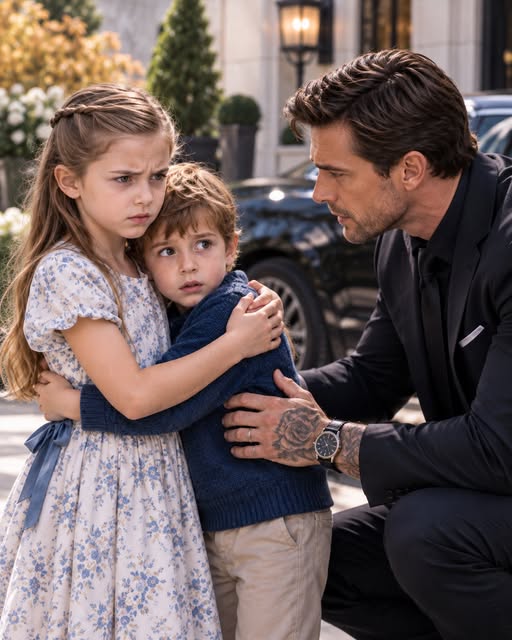
Laura Carter arrived in Portland forty-eight hours later.
She came alone.
That mattered to me.
A woman searching for control would have arrived with attorneys.
A woman searching for a child came carrying an old photograph in both hands.
I watched from my library window as she stepped out of Natalie’s car.
Mid-thirties.
Brown hair.
Simple gray sweater.
She looked ordinary.
Almost painfully ordinary.
Emma stood behind me.
“You don’t have to meet her,” I said.
“She’s Mama’s sister?”
“Yes.”
“Why didn’t Mama tell me?”
“I don’t know.”
Emma squeezed the stuffed dog Joshua had loaned her.
“Does she want me?”
The question landed with more force than she understood.
“Yes.”
Emma’s face tightened.
“Why?”
Children who knew they were loved never asked that question quite the same way.
I crouched.
“Because you’re family.”
“Greg said family is whoever pays bills.”
“Greg was wrong about a lot of things.”
She considered that.
“What if she takes me?”
I refused to lie.
“She might eventually become part of where you live. Natalie and the court will decide what’s best.”
Emma looked toward the window.
“Do I get to decide?”
“You get to be heard.”
“That’s different.”
She was six.
And somehow already understood bureaucracy.
“Yes,” I admitted. “It is.”
Laura waited in the sitting room.
When Emma entered, Laura covered her mouth.
She didn’t rush forward.
Didn’t touch her.
She simply cried.
Quietly.
“Oh, Emma.”
Emma froze.
Laura lowered herself to her knees.
“You look like Rebecca.”
Emma’s eyes narrowed.
“You knew my mama?”
“She was my little sister.”
“My mama didn’t have a sister.”
Pain moved across Laura’s face.
“She did.”
“Then why didn’t you come?”
Laura looked at me.
Then Natalie.
Neither of us rescued her.
That answer belonged to Laura.
“Because I didn’t know where you were.”
Emma hugged the stuffed dog tighter.
“Why?”
“Your mom left.”
“Why?”
Laura took a shaky breath.
“Our father wasn’t a nice man.”
The room became still.
“He drank too much. He got angry. When Rebecca turned eighteen, she left home.”
“You didn’t go?”
“I was older. Married. I tried to help her.”
“Did you?”
“Yes.”
“Then why did she hide?”
Laura looked down.
“Because our father found her once.”
Emma said nothing.
“She was afraid he would find you too.”
The story unfolded slowly.
Their father had died five years ago.
Laura had spent years searching after that.
Private investigators.
Social media posts.
Old friends.
Hospital records where legally available.
Nothing worked.
Rebecca had changed addresses constantly.
Then Greg entered her life.
Laura had never met him.
“Rebecca called me once,” Laura said.
“When?” I asked.
“About seven months before she died.”
“What did she say?”
“Almost nothing. She asked whether Dad was really dead.”
“And you told her yes.”
Laura nodded.
“I begged her to tell me where she was. She hung up.”
“Why?”
“I don’t know.”
Emma whispered, “Mama was sick then.”
Laura closed her eyes.
That knowledge hurt.
“I wish I’d known.”
Emma stared at her.
Then asked, “Would you have come?”
“Yes.”
No hesitation.
No explanation.
Just yes.
Emma looked down.
“I waited for Greg.”
Laura began crying again.
“I know.”
“No, you don’t.”
Laura flinched.
“I waited a lot.”
“I’m so sorry.”
“He didn’t come.”
“I know.”
“I got hungry.”
Daniel Anderson, the man Portland feared, stood helplessly in his own living room while a six-year-old explained abandonment to an aunt who had spent years searching for her.
There were no powerful words for that moment.
Only truth.
Laura reached into her bag.
“I brought something.”
She produced a small wooden music box.
Emma looked at it.
“Your mom had one like this when we were girls.”
Laura turned the key.
A melody played.
Four notes.
Then four more.
Joshua, watching from the doorway, gasped.
“Star song.”
Emma’s face changed.
“Mama sang that.”
“So did our mother,” Laura whispered.
The song hadn’t belonged to Sarah.
Or Rebecca.
It was simply an old lullaby carried through two unrelated families.
But to Joshua and Emma, it felt like magic.
Maybe adults needed magic sometimes too.
Emma moved one step closer.
Laura didn’t reach for her.
Instead, she placed the music box on the coffee table.
“You can keep it.”
Emma touched the lid.
That was the beginning.
Not instant love.
Not a dramatic embrace.
Trust didn’t work that way.
But something began.
Unfortunately, Greg wasn’t finished.
That afternoon, local media received an anonymous tip.
By sunset, vans were parked outside my gates.
MAFIA FIGURE HIDING HOMELESS CHILD, one website announced.
Another asked whether I had manipulated authorities.
A third dragged Sarah’s death into the story.
Joshua saw my photograph on television.
“Daddy, why are people outside?”
“Because people are curious.”
“Are they mad?”
“Some.”
“Did you do something bad?”
“No.”
Emma stood behind him.
“This is because of me.”
“No.”
“Yes.”
She backed away.
“Emma.”
“If you didn’t find me, they wouldn’t be here.”
I moved toward her.
She retreated.
“Greg said bad things happen when people help me.”
I stopped.
“That isn’t true.”
“He said Mama got sick because she worried about me.”
Rage flashed through me so quickly I nearly lost control of my expression.
“He told you that?”
She nodded.
“Emma, listen carefully.”
I knelt.
“Your mother did not get sick because of you.”
She stared at me.
“People don’t get cancer because children worry them.”
“He said—”
“Greg lied.”
Tears appeared.
“He said I ruined everything.”
“He lied.”
“He said Mama would still be here if—”
“He lied.”
My voice cracked.
Emma froze.
I lowered it.
“Your mother loved you. Nothing about you caused her illness.”
Her face crumpled.
I opened my arms but didn’t move closer.
She made the choice.
Emma stepped forward.
I held her.
She cried against my shoulder.
And I understood something then that I should have understood years earlier.
Power could frighten people.
Money could solve problems.
Influence could open doors.
But there was no shortcut for rebuilding a child someone had convinced she was unwanted.
That required time.
The next morning, the court scheduled an emergency custody review.
Laura formally requested kinship placement.
I requested continued temporary placement with me.
The social worker warned both of us not to turn Emma into a prize.
We didn’t.
Greg did.
He appeared at the courthouse with a lawyer.
Where he found money for one, I didn’t know.
The hearing remained private, but the hallway was not.
Greg spotted Emma before security could redirect him.
“Em.”
She stopped.
His voice changed instantly.
Soft.
Friendly.
The voice of a man trying to rewrite history.
“Hey, kiddo.”
Emma grabbed my hand.
“You okay?”
She nodded, but her fingers tightened.
Greg smiled.
“You remember me.”
She didn’t answer.
“I came back for you.”
Emma whispered, “When?”
His smile faltered.
“I’ve been looking everywhere.”
“When?”
“Emma, it’s complicated.”
“You said wait.”
“I know.”
“How long?”
Greg glanced around.
People were watching.
That was when he made his mistake.
He reached toward her.
Emma recoiled.
Joshua stepped between them.
My five-year-old son stood in front of Emma with both fists clenched.
“Don’t.”
Greg blinked.
I moved immediately, placing one hand on Joshua’s shoulder.
“Buddy.”
“He scared her.”
“I know.”
A bailiff approached.
Greg stepped back.
“I have a right to talk to her.”
“No,” Natalie said from behind us, “you don’t.”
She held a document.
Greg’s lawyer looked concerned.
“What is that?”
Natalie’s expression remained professional.
“An emergency protection order.”
Greg’s face changed.
“For what?”
“For allegations of abandonment, financial exploitation, and falsified guardianship documents.”
“I didn’t—”
“You can discuss that with investigators.”
For the first time, Emma looked at Greg without fear.
Not because he had changed.
Because the room had.
There were adults between them now.
Adults who believed her.
Greg was escorted away.
The hearing lasted two hours.
Laura spoke.
I spoke.
Natalie spoke.
Howard Bell appeared by video.
Emma spoke privately with the judge.
When the decision came, my heart stopped.
Emma would remain with me for thirty days while Laura underwent a full kinship evaluation.
After that, placement would be reconsidered.
Thirty days.
Joshua celebrated.
Emma did not.
That night, I found her packing the few clothes Rosa had purchased.
“What are you doing?”
“Practicing.”
“For what?”
“Leaving.”
I sat on the bed.
“You aren’t leaving tonight.”
“I know.”
“Then why pack?”
“So it won’t hurt as much.”
There are sentences adults should never hear from children.
I gently removed a shirt from her bag.
“Unpack.”
“Why?”
“Because you’re living here today.”
“What about thirty days?”
“We deal with day thirty when it comes.”
“What if they make me go?”
“Then we make sure wherever you go is safe.”
Her eyes narrowed.
“You wouldn’t stop them?”
“If it’s good for you, I won’t stop it.”
She looked almost offended.
“You want me to leave?”
“No.”
It was the first time I admitted it.
Her expression changed.
“I don’t want you to leave at all.”
Silence.
“But loving somebody means caring about what they need, not just what you want.”
She considered that with a seriousness far beyond six years.
Then she slowly unpacked her bag.
Before I left, she asked, “What if what I need is here?”
I looked at the glow-in-the-dark stars around her door.
Down the hall, Joshua was singing badly.
The house no longer felt too large.
“Then,” I said, “we make sure the judge knows.”
Thirty days suddenly felt impossibly short.
And Greg, locked behind an investigation he had created for himself, still held one final secret.
A secret hidden in Rebecca’s missing bank records.
One that would change who had the strongest claim to Emma forever.
---