The Iron in the Bone: How a Deserter of the Tonto Basin Massacres Found Salvation in the Jaws of an Arizona Bear Trap and the Mercy of Chief Takakota.
The Iron in the Bone: How a Deserter of the Tonto Basin Massacres Found Salvation in the Jaws of an Arizona Bear Trap and the Mercy of Chief Takakota
The cold of November 1867 was not a passive thing.
In the high timber of the Mogollon Rim, it moved with the deliberate cruelty of an occupying army, finding the seams in buffalo hide, creeping through the homespun wool of a Union surplus coat, and settling into the marrow of a man’s bones until his knees creaked like ungreased axle trees.
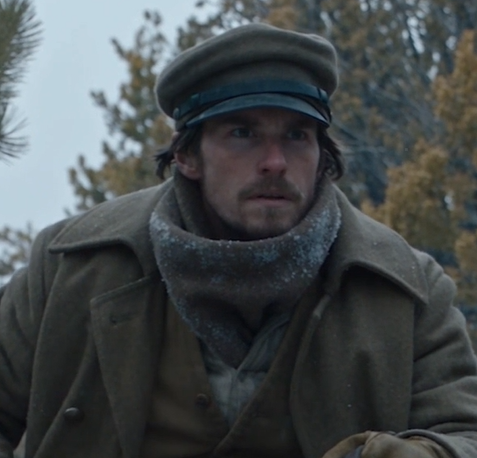
Caleb Morrison rode hunched against the northern blow, his chin buried deep into the collar of his coat, his slouch hat pulled so low that the horizon was reduced to a narrow strip of frost-whitened pine needles and the twitching ears of his horse.
His mount was a seven-year-old dun gelding named Rust, an animal with thick fetlocks, a stubborn Roman nose, and the steady, unhurried temperament of a creature that had crossed five territories without ever throwing a shoe or spooking at a mountain lion.
Rust knew the man on his back was hollowed out.
Horses know such things better than church folk do.
For three years, since the spring of 1864, Caleb had spoken scarcely a hundred words to living souls, spending his days drifting along the spine of the Arizona high country, trapping enough beaver to buy powder and lead, and sleeping in hollows where the wind could not reach him.
He was running, though anyone watching him from a ridge would have thought he was barely moving at all.
He was running from the smell of burning green cedar and greasy black smoke.
He was running from the memory of the Tonto Basin.
Whenever Caleb closed his eyes, the high red-rock canyons of the Tonto did not return to him as landscape; they returned as noise.
He heard the sharp, dry crack of Springfield rifles echoing against sandstone walls.
He heard the shrill, bird-like wailing of women darting through the brush with infants pressed to their breasts.
He heard the cold, brisk voice of Captain James Woolsey barking orders from a bay mare: Burn the stores. Burn the corn baskets. Don’t leave them a seed to plant come spring.
Caleb had been twenty-two then, a private in the Arizona Volunteers, wearing a uniform that smelled of sweat and bacon rind.
He had told himself he was a scout, not an executioner.
He had kept his carbine pointed down at the shale.
When the line advanced through the smoking jacales, he had fired his rounds into the dirt at his feet, praying the noise would be taken for duty.
But when the burning was finished and the dead lay sprawled across the trampled squash patches, Caleb had looked into the open, dust-filmed eyes of an old man whose skull had been crushed with a rifle butt, and he had known that a man who watches a murder without screaming is merely a partner who brought no rope.
The government gave him an honorable discharge and twenty-six dollars in depreciated greenbacks.
Caleb took the money, bought Rust from a Mexican drover in Prescott, threw his uniform jacket into a lime pit behind the fort, and turned his back on the settlements.
Discover more
Legal
Home & Garden
Family & Relationships
He thought the mountains would freeze the memory out of him.
He was wrong.
The cold merely preserved it, keeping the shame as fresh and red as butcher’s meat hung in a winter larder.
Midway through the afternoon, the pale sun vanished behind a shelf of bruised slate clouds, and the snow began to sift down through the yellow pines—not in flakes, but in hard, dry pellets that hissed like salt against the dry brush.
Rust stopped dead.
Caleb did not nudge him.
When a horse of that temper halted in the deep woods, he generally had a better reason than the man holding the reins.
Caleb pulled his wool muffler down below his nose and listened.
At first, there was only the soughing of the wind through the ponderosa boughs, that deep, oceanic sigh that makes a man feel smaller than a beetle on a rock.
Then came another sound.
It was faint, muffled by the falling pellets of ice, but it had an edge that did not belong to the woods.
Clank.
A sharp, metallic violence.
The sound of tempered iron striking against granite.
It was followed by a wet, ragged gasp—a sound torn from the bottom of a man’s lungs, bitten in half before it could fully leave his teeth.
Rust snorted, a plume of grey steam erupting from his nostrils, his ears swivelled hard toward a limestone outcrop thirty yards up a steep, spruce-choked draw.
Caleb rested his hand on the receiver of the Winchester ’66 carbine tucked into the scabbard beneath his stirrup leather.
Every instinct honed over four years of frontier warfare told him to turn the dun’s head, cut down the ridge toward the dry washes, and put three miles of timber between himself and whatever was dying in that draw.
The high country of the Arizona Territory in 1867 was not a place for curiosity.
If a white man was up there, he was either an outlaw or an Indian hunter who would shoot first to save his tobacco.
If it was an Apache, there was likely a war party waiting on the benches above to turn any stranger into pincushions of mescal-hardened ash wood.
Leave it, his mind whispered. A beast in an iron jaw is none of your affair. A man in an iron jaw is already dead.
The metal clanked again.
This time it was accompanied by a shuddering, rhythmic scrape—the sound of an anchor chain dragging over stone, heavy and desperate.
Caleb exhaled.
His breath froze instantly in his dark beard, forming tiny beads of white ice along his lip.
He looked at the trail behind him, already filling with snow, leading back toward an empty cabin on the Verde River where he had spent the last winter staring at his own boots.
“Damn you, Caleb,” he murmured to himself.
He swung his right leg over the cantle and dropped down into the snow.
The crust broke under his boots with a dry crunch.
His knee, stiffened by an old horse-kick, protested with a dull ache.
He pulled the Winchester from its leather, levered a cartridge into the chamber with a smooth, oiled clatter, and took Rust’s split reins in his left hand, leading the horse forward into the scrub oak.
The draw narrowed until the limestone walls rose forty feet on either side, their faces streaked with black water-ice and pale green lichen.
At the head of the ravine, sheltered partially by an undercut ledge where wild grape vines hung like dry ropes, a massive fallen Douglas fir lay half-rotted across the scree.
The snow there was not white.
It was churned into a grey, slushy lather, trampled and splattered with dark, currant-colored blood.
Caleb stopped behind the trunk of a split pine, his rifle held across his chest.
Against the base of the limestone wall sat an Apache warrior.
He was a big man, broad across the shoulders and deep-chested, built like the mountain cedar that grows out of cliff cracks.
He wore high-topped buckskin moccasins that reached nearly to his thighs, but the left leg had been reduced to a horrific pulp of shredded hide, wool lining, and mangled meat.