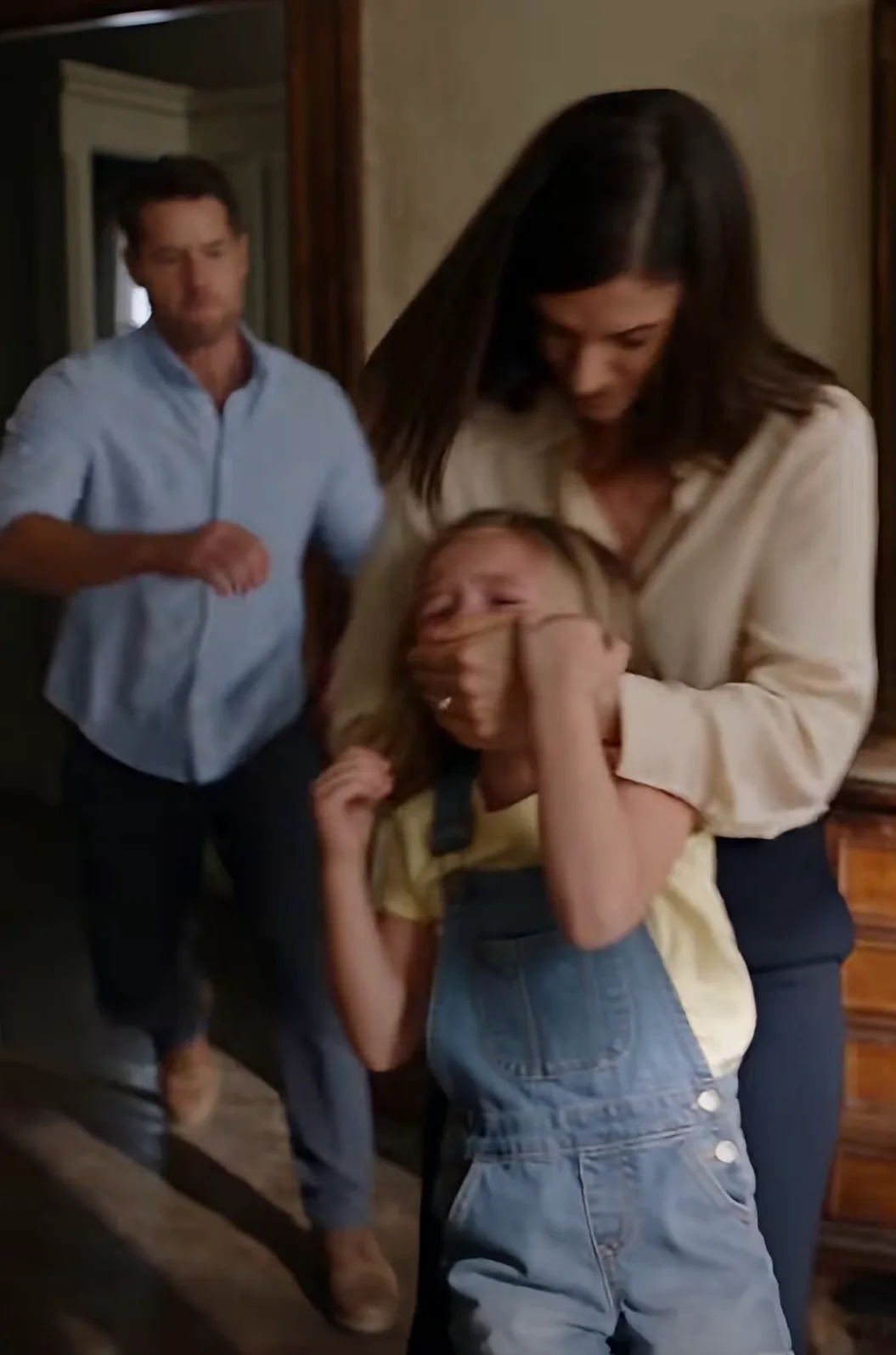
Six months later, we removed the wardrobe.
Not moved.
Removed.
I donated it.
Lily complained because she liked hiding inside it.
I told her she could choose something else.
She chose a bright yellow bookshelf shaped like a house.
The hidden wall remained open during the investigation.
Then one Saturday, Claire and I stood in the storage room while contractors prepared to close the corridor permanently.
“Are you sure?” she asked.
“No.”
That had become an acceptable answer.
We did not need certainty to make every decision.
Sometimes enough truth was enough.
The criminal investigation expanded.
Michael Trent was charged with conspiracy, extortion, attempted kidnapping, obstruction, and financial crimes.
Margaret cooperated.
She was also charged.
That devastated Claire.
Her mother had protected her.
Her mother had controlled her.
Both were true.
The prosecutor treated the coerced-disappearance structure seriously but did not erase Margaret’s voluntary financial conduct.
She eventually accepted a plea on fraud and obstruction counts.
Claire visited her.
I did not ask what they said unless Claire wanted to tell me.
Vanessa entered a cooperation agreement.
She admitted her role in infiltrating our lives.
She turned over design files, communication logs, and information about other trust-linked properties.
She did not ask us to forgive her.
That helped.
Adrian’s death was officially ruled homicide after investigators connected Michael to the mechanic who altered the motorcycle brakes.
My brother had done terrible things.
He had also tried to stop.
I mourned him differently the second time.
Robert’s role became public too.
My father helped build the original influence system with Thomas Hale.
Not the later coercion network in its final form.
But enough.
His clean legacy disappeared.
I let it.
The Mercer Foundation board resigned.
A court-appointed independent board took control.
The hidden biological-heir provisions were challenged and eventually voided as against public policy and because Robert’s revocation changed the governance chain.
Lily did not inherit a billion-dollar control mechanism.
Good.
She inherited what children should inherit.
Money in a protected trust.
Photographs.
Stories.
Some good.
Some ugly.
No job to save a dynasty.
Claire and I did not simply “get back together.”
People expected that.
Reporters wanted it.
Friends asked carefully.
Lily assumed it.
Reality was harder.
Claire had lied.
Vanessa had lied.
I had failed to listen before Claire disappeared.
I had built my identity around certainty and punished questions that threatened people I loved.
We started therapy.
Separate first.
Together later.
Some sessions ended with hope.
Some ended with us sitting in separate cars.
Eighteen months does not disappear because a door opens.
One night Claire said, “I watched you sleep.”
I stared.
“In the hidden room?”
“On cameras.”
“How often?”
“Too often.”
“Did you watch me grieve?”
She cried.
“Yes.”
“Did you ever almost come out?”
“Every time.”
“Why didn’t you?”
“Fear.”
I looked away.
“That answer is not going to satisfy me.”
“I know.”
She did not try to make it.
That was progress.
Lily adapted faster and slower than both of us.
She was overjoyed Claire was alive.
Then furious.
Then clingy.
Then angry again.
For two months she refused to let Claire leave the room without saying where she was going.
Claire complied.
Not forever.
Long enough.
One evening Lily asked, “Mommy, did you leave because I was bad?”
Claire’s face collapsed.
“No.”
“Did Daddy make you leave?”
“No.”
“Did Grandma?”
“Partly.”
“Did you?”
Claire swallowed.
“Yes.”
The hardest answer.
Lily thought.
“Okay.”
Children do not need perfect parents.
They need truthful ones.
We began rebuilding from that.
Margaret remained in custody pending sentencing.
Claire took Lily to visit once.
Afterward Lily said Grandma looked smaller.
That seemed accurate.
Evelyn—my mother—continued declining.
Some days she remembered the music box.
Some days she thought Claire was Margaret.
One lucid afternoon she told me why she hid the token beneath Robert’s grave.
“Your father loved secrets too much.”
“So did you.”
She smiled sadly.
“Yes.”
“Why help Claire?”
“Because Robert asked.”
I stared.
“When?”
“Before he died.”
My father had given her the revocation and told her to protect the biological heir if Thomas’s system activated.
She did.
Badly.
Secretly.
But she did.
“Why not tell me?”
She patted my cheek.
“You never listened when people insulted Adrian.”
That hurt because it was true.
“I listen now.”
“Good.”
She forgot me ten minutes later.
Life does not arrange emotional closure on schedule.
The hidden corridor yielded one final surprise.
Contractors removed a section of soundproofing and found a child’s drawing taped behind it.
Blue bird.
Red house.
Three stick figures.
Claire.
Me.
Lily.
On the back, Claire had written during her first return:
I keep telling myself I am doing this for her.
If I ever use that sentence to justify never going home, I am becoming them.
I showed Claire.
She sat on the floor and cried.
“You knew.”
“Yes.”
“And still stayed.”
“Yes.”
“Why?”
“Because recognizing fear does not automatically make you stronger than it.”
I understood.
Not forgave.
Understood.
There is a difference.
We framed the drawing.
Not because the hidden room deserved memorializing.
Because the sentence did.
A warning.
Protection can become control.
Loyalty can become blindness.
Fear can become a system.
And people can know all of that while still failing.
The storage room became Lily’s art room.
Her idea.
She painted the reopened wall bright blue.
Not subtle.
Not elegant.
Claire laughed.
“Interior designer nightmare.”
Vanessa would have hated it.
Or maybe loved it.
We never asked.
The first week, Lily drew doors everywhere.
Doors in castles.
Doors in trees.
Doors floating in clouds.
Then windows.
Then people.
One afternoon I found her drawing the mansion.
No hidden wall.
I asked, “Where’s the secret room?”
She shrugged.
“Don’t need it.”
I almost cried.
A year after Lily screamed at me to open the wall, Claire moved back into the house.
Not into our bedroom.
Into the guest suite.
People thought that was strange.
It was honest.
We dated.
Imagine that.
After marriage, disappearance, criminal conspiracies, and eighteen months of grief, we went for coffee.
We learned each other again.
Claire liked black tea now.
I hated crowded restaurants more than before.
She slept with a lamp on.
I checked locks twice.
We were changed.
Love had to meet the new people, not resurrect the old ones.
Six months later, she moved into our bedroom.
No ceremony.
Lily carried one pillow down the hall and announced, “Finally.”
Claire laughed.
I laughed.
Then we both cried because normal happiness still surprised us.
The foundation case ended with restitution, governance reforms, and years of civil litigation.
No grand fortune recovered in a suitcase.
No single villain responsible for everything.
Thomas built the architecture.
Robert helped build the early financial system.
Margaret maintained it.
Michael enforced it.
Adrian profited and later rebelled.
Vanessa infiltrated and later defected.
Claire hid.
I ignored warning signs.
Different choices.
Different guilt.
That mattered.
One evening, I stood in Lily’s art room while rain tapped against the windows.
She was asleep upstairs.
Claire entered.
“Contractor says the last panel can come out tomorrow.”
A narrow section remained from the original hidden corridor.
I touched it.
“So that’s it.”
“Yep.”
“Want to keep a piece?”
“No.”
I smiled.
“Me neither.”
Claire leaned against me.
“What if we need somewhere to hide evidence?”
I looked at her.
She smiled.
Joke.
A dark one.
Progress.
“Use a lawyer.”
“Boring.”
“Good.”
We stood together.
For eighteen months, I thought the worst thing that happened to our family was Claire leaving.
Then I thought the worst thing was learning she had been alive.
Then I thought it was finding out everyone around us had manipulated the story.
I was wrong.
The worst thing was how easily fear convinced each of us that silence protected someone.
Lily broke that pattern by doing the simplest thing.
She heard a voice.
She pointed at a wall.
And she screamed for me to open it.
The next morning, the final panel came down.
Sunlight from the storage-room window reached a strip of floor that had been hidden for years.
Lily stood barefoot in the dust.
She looked at the open space.
Then at me.
“Dad?”
“Yeah?”
“Can we put my paint table there?”
I smiled.
“Absolutely.”
No vault.
No surveillance monitors.
No letters waiting for disaster.
A paint table.
Claire brought in brushes.
Lily opened a jar of bright yellow paint.
Then she looked at the bare wall and grinned.
“What should I paint?”
I thought about blue birds.
Red houses.
Missing mothers.
Dead brothers.
Old trusts.
Hidden rooms.
All the symbols adults had loaded with meaning.
“You choose.”
She dipped the brush.
And for the first time in years, that felt like the safest answer I could give.
The next week, Lily taped one rule above her paint table:
NO SECRET DOORS.
Claire added beneath it:
UNLESS THEY LEAD TO SNACKS.
Lily approved.
I did too.
After everything, ordinary jokes felt like evidence of recovery.
Lily painted the first thing herself.
A crooked yellow sun.
No code.
No message.
No hidden meaning.
Just a sun.
That may have been the most beautiful thing anyone ever put on that wall.