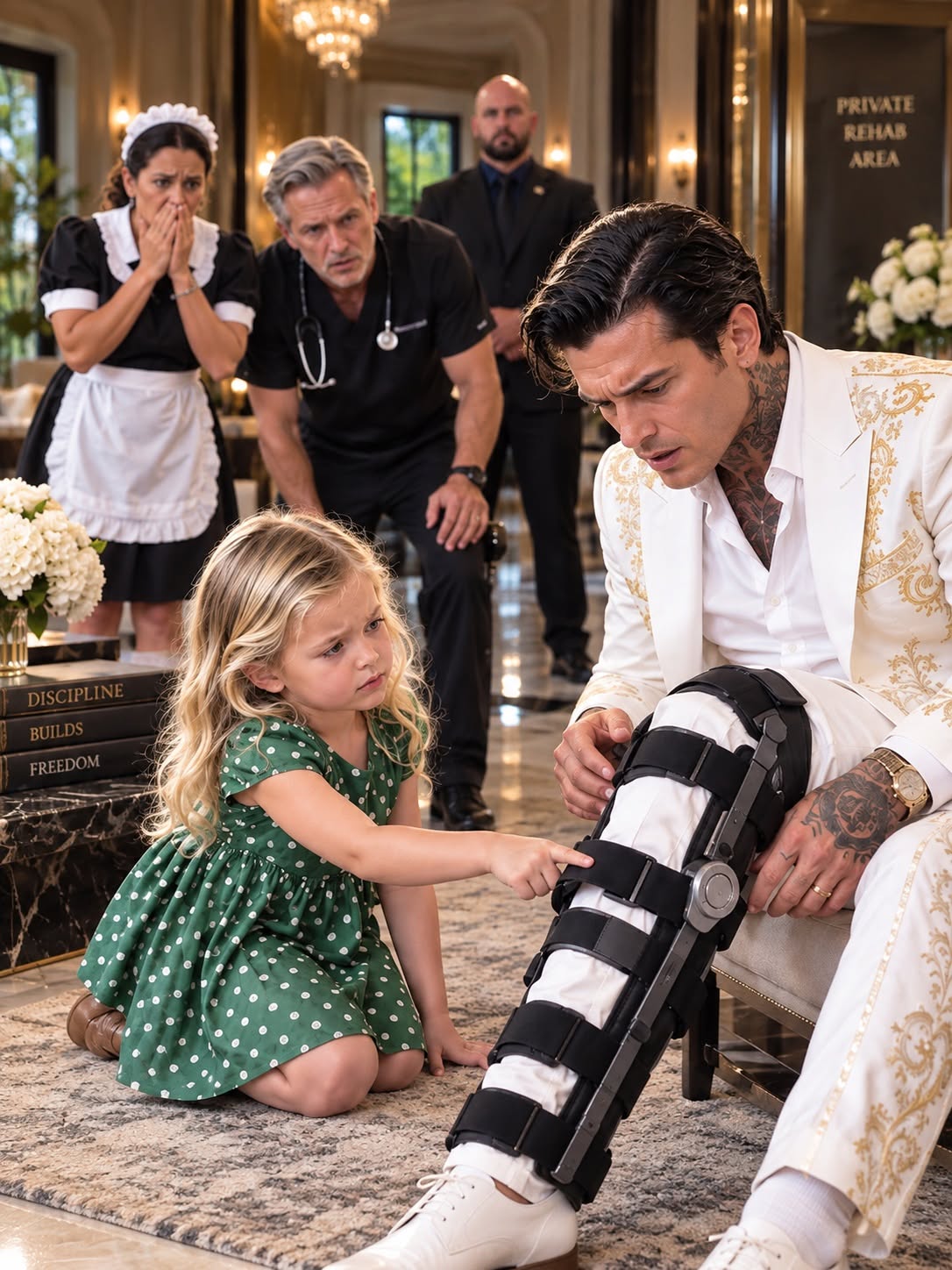
Chapter 15 - What the Smallest Hands Saved
Six months later, Ellie built a birdhouse with three locks.
None of them were necessary. Birds, as I explained, generally did not carry keys. Ellie said that was exactly why the locks were for squirrels. Dominic listened solemnly to this engineering proposal as if she were presenting to a board of directors.
He had learned to do that.
Listen.
Not because he had become harmless. Dominic Romano would never be harmless. Men still lowered their voices when he entered rooms. Deals still shifted around his silence. The wolf did not turn into a lamb because a child noticed a backward pin.
But he had changed the direction of his teeth.
Romano Recovery was dismantled and rebuilt under public oversight. The accident network became a federal case large enough to ruin men who had believed themselves untouchable. Doctors lost licenses. Judges resigned. Matteo went to prison, not a shallow grave, because Dominic handed over enough evidence to make disappearance unnecessary.
Serafina called that weakness.
Then she donated half her foundation’s reserves to a patient-safety institute and pretended it had been her idea first.
Dr. Kline became the director of the new Romano-Voss Center for Adaptive Design, a place where engineers, doctors, patients, and caregivers sat at the same tables because Daniel had believed the person using a device should matter as much as the person billing for it.
His name was on the wall.
The first time I saw it there, I cried so hard Ellie handed me a napkin and said, “Mommy, your face is leaking proud.”
She was not wrong.
Our apartment was repaired, but we did not return to it.
At first, I told myself the move into a small carriage house on Dominic’s property was temporary. A security precaution. A mother choosing practicality over pride. It had two bedrooms, a garden patch, and windows that faced east. Ellie loved the old workbench in the back room. I loved the lock on the front door because it belonged to me.
Dominic never entered without knocking.
That mattered more than flowers would have.
There were no sudden declarations. No dramatic proposal beneath chandeliers. Love, when it came, arrived like trust often does for people who have survived too much: slowly, suspiciously, through repeated proof.
Dominic showed up for Ellie’s school science night wearing a suit too expensive for a cafeteria and sat on a folding chair without complaint. He let her explain pulley systems for twenty-three minutes. When a boy called her project weird, Dominic only looked at him.
The boy apologized to the pulley.
I told Dominic not to intimidate children.
He said he had intimidated no one, only broadened the boy’s understanding of consequences.
I laughed before I meant to.
That was the beginning, perhaps.
Or maybe the beginning was earlier, when he let my no mean no. Or when he told my daughter her courage was not a price. Or when he stood in Daniel’s burned workshop and chose law over revenge, not because it was easy, but because a dead man and a little girl had both trusted him to become better than his inheritance.
A year after Ellie found the backward lock, Dominic walked without the heavy brace.
Not perfectly. Some days pain marked his face before breakfast. Some nights he sat by the window with one hand pressed to his knee and old ghosts moving behind his eyes. But he walked.
On the anniversary of Daniel’s death, we visited the center together.
Ellie placed a little metal fish on the memorial shelf beneath her father’s photograph. Then she took Dominic’s hand with the casual authority children grant only to adults they have decided belong.
“Daddy would like your new lock,” she told him.
Dominic looked at me.
“What new lock?”
I smiled.
“The one on the birdhouse. Very exclusive. No squirrels.”
Ellie sighed. “Mommy doesn’t understand security.”
“No,” Dominic said. “But she understands freedom.”
The way he said it made my throat tighten.
Later, after Ellie ran ahead to show Dr. Kline her improved hinge design, Dominic and I stood in the quiet hallway beneath Daniel’s name.
“I cannot give back what my family took,” he said.
“No.”
“I wish I could.”
“I know.”
He looked older than he had the day I met him. Not weaker. More human. Grief had carved truth into him, and truth, unlike violence, left room for tenderness.
I took his hand.
“You helped build what comes after.”
For a long moment, he said nothing.
Then he lifted my hand and kissed my knuckles as if asking permission even in that.
Ellie shouted from down the hall, “Mommy! Mr. Dominic! Come see! The hinge works both ways now!”
Dominic’s mouth curved.
“Should I be concerned?”
“Always.”
We walked toward her together.
Not into a perfect life. Those exist only in stories people tell when they are afraid of scars. We walked into something better: a life where the scars were not hidden, where the dead were honored by the living, where a child’s small voice had been enough to stop a powerful machine from breaking another body.
The lesson, if life offers such things, was not that innocence saves monsters.
It was that truth often arrives through the people everyone else overlooks.
A maid.
A dead mechanic.
A little girl in a green dress who saw one lock facing the wrong way.
And a wounded wolf who finally chose to open the door.