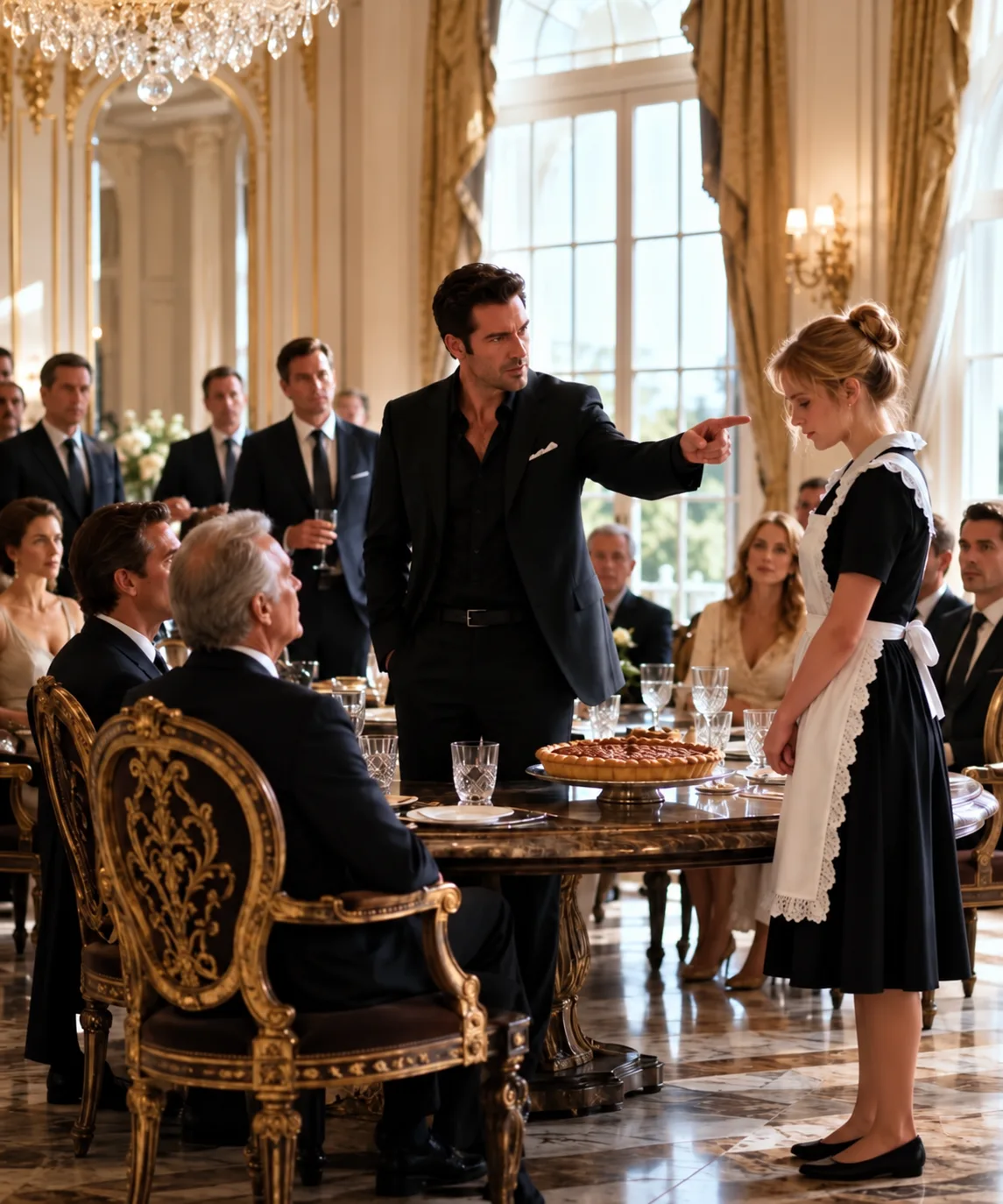
Six months after Carmine Orsini asked who made the pecan pie, a line formed before sunrise on Magazine Street.
Nell stood inside the new bakery watching people gather outside.
She could not move.
The sign above the door read:
FONTAINE & DAUGHTER
Emmett had objected.
“It should say Fontaine Bakery.”
Nell had refused.
“You nearly died. You're staying on the sign.”
He had smiled.
“Bossy.”
“Genetics.”
The building looked nothing like the one destroyed years earlier.
That had been intentional.
Nell wanted memory without captivity.
The old bakery had dark brick walls and a cramped kitchen.
The new one was bright.
Tall windows.
Warm wood.
Blue tile.
A long counter where customers could watch dough being rolled and pastries glazed.
On one wall hung photographs.
Her mother.
Young Emmett.
Nell at seventeen holding her first ruined croissant.
The old storefront.
And near the back, a photograph of Dante Orsini shaking hands with Emmett.
Nell had never seen it before.
Frankie Bellacqua found it inside an old box.
It had been taken the week before the fire.
Two stubborn men who knew trouble was coming and still believed they could fix it.
Near the rear exit, the plaque remained.
Every exit opens freely. Always.
Nell touched it every morning.
Not because she feared the door anymore.
Because she liked knowing she could leave.
And had chosen to stay.
At six fifty-five, Carmine entered through the kitchen.
Nell looked at the clock.
“We open in five minutes.”
“I know.”
“You're not supposed to be back here.”
“I financed nothing, own nothing, and apparently have no privileges.”
“Correct.”
He carried a small box.
“What is that?”
“A gift.”
“No expensive gifts.”
“It isn't expensive.”
“Your definition of expensive is broken.”
He handed it to her.
Inside was a kitchen timer.
Old-fashioned.
Metal.
The dial stopped prominently at seven minutes.
Nell stared.
Carmine looked almost embarrassed.
“For syrup.”
She laughed.
Then cried.
Then laughed again.
“You're terrible at normal gifts.”
“I've never needed normal gifts.”
“Obviously.”
He reached for her hand.
Their relationship had changed during the bakery construction.
Not suddenly.
There had been no dramatic moment when either decided.
One evening, after closing a legal meeting, Carmine had walked her home.
At her door, Nell said:
“You know you don't have to keep checking whether I'm safe.”
He had answered:
“I know.”
“Then why are you here?”
“Because I wanted another ten minutes with you.”
She kissed him.
Simple as that.
Even afterward, Carmine never tried to make decisions for her.
He offered.
She refused often.
He complained.
She ignored him.
It worked.
At seven, Nell unlocked the front door.
Customers entered.
Palmira arrived first despite already having been inside twenty minutes earlier.
“This is ceremonial,” she explained.
Behind her came Benny.
Frankie.
Odette.
Three former Fontaine customers.
Half the neighborhood.
Reporters waited outside, but Nell had requested no interviews during opening day.
The bakery was not a crime-scene story.
It was not a Salerno story.
It was hers.
By nine, nearly every pastry case was empty.
At ten, the first pecan pie came out.
Palmira clapped.
Carmine stood near the espresso machine pretending not to watch.
Nell cut one slice.
Placed it on a plate.
Carried it across the room.
The bakery became quieter.
People understood the symbolism without explanation.
She placed the plate in front of Carmine.
He looked up.
“Should I be concerned?”
“Probably.”
He took one bite.
Chewed.
Stopped.
Exactly as he had six months earlier.
Nell folded her arms.
“Well?”
Carmine looked serious.
“Too sweet.”
The room gasped.
Nell narrowed her eyes.
Palmira started laughing.
Carmine smiled.
“I'm kidding.”
“You have five seconds to leave my bakery.”
He took another bite.
“Perfect.”
“Better.”
Emmett watched from a nearby chair.
His hands shook slightly now.
His walking remained slow.
But his eyes were clear.
He raised his coffee cup toward Carmine.
“To seven minutes.”
Carmine raised his fork.
“To seven minutes.”
Nell looked around the room.
For three years she had lived quietly in someone else's house.
She learned footsteps.
Schedules.
Which floorboards creaked.
Which guests left glasses on windowsills.
She became skilled at moving through rooms without drawing attention.
Invisible people saw everything.
That had protected her.
But it had also nearly erased her.
Now people called her name constantly.
“Nell!”
“Mrs. Fontaine—”
“Chef!”
“Can I get another tart?”
She smiled each time.
The sound no longer frightened her.
Around noon, Odette approached.
She wore no housekeeper's uniform.
After Vincent's arrest, she retired from the Orsini estate.
Palmira claimed retirement meant Odette now visited every morning and criticized the staff without being paid.
Odette held a small wrapped package.
“For you.”
Nell opened it.
Inside was her old white housekeeping apron.
Clean.
Pressed.
Folded carefully.
Nell stared.
“I thought you might want to burn it,” Odette said.
Nell shook her head.
“No.”
“Throw it away?”
“No.”
“What will you do with it?”
Nell walked toward the hallway leading to the office.
She framed it later.
Not because she loved those years.
Because she survived them.
The plaque underneath read:
The uniform I wore when nobody knew my name.
Odette cried when she saw it.
That afternoon, a reporter slipped past the staff.
“Ms. Fontaine!”
Nell turned.
“What does it feel like to have Carmine Orsini restore everything your family lost?”
The bakery went quiet.
Carmine watched from across the room.
He did not intervene.
Nell appreciated that.
She faced the reporter.
“He didn't restore everything.”
The reporter blinked.
“Excuse me?”
“My father survived. The courts corrected the record. People told the truth. Mr. Orsini helped uncover it.”
She looked toward Carmine.
“But nobody can give me back those three years.”
Carmine's expression remained steady.
Nell continued.
“And nobody built this bakery for me.”
The reporter glanced around.
“I built it. My father helped. My staff helped. My customers helped.”
She smiled.
“Carmine helped by doing something much harder for him.”
The reporter looked interested.
“What?”
“He stayed out of my way.”
The room laughed.
Carmine shook his head.
The reporter asked:
“So what is your relationship?”
Nell looked at Carmine.
He raised an eyebrow.
She smiled.
“Ask him.”
Everyone turned.
Carmine nearly choked on coffee.
Palmira laughed louder than anyone.
The reporter approached him.
“Mr. Orsini?”
Carmine looked at Nell.
“You're enjoying this.”
“Very much.”
He addressed the reporter.
“I'm a frequent customer.”
Nell laughed.
“A very frequent customer.”
The story appeared online that evening.
Not about the criminal investigation.
Not primarily.
The headline read:
BAKER RETURNS TO MAGAZINE STREET AFTER FIRE DESTROYED FAMILY BUSINESS
The photo showed Nell standing beside Emmett.
Carmine was in the background.
Exactly where he belonged.
Three months later, Vincent Salerno accepted a plea agreement that guaranteed he would spend the rest of his life in prison.
Dr. Bell lost his medical license and received a federal sentence.
Julian Mercer cooperated with investigators.
Chef Reynolds received a reduced sentence after testifying.
The family of the missing fire investigator finally learned what happened.
He had attempted to expose Salerno after accepting the bribe.
Salerno arranged for him to disappear before he could testify.
His remains were recovered near an abandoned property outside Houma.
It was not a happy ending for everyone.
Some endings could not be repaired.