Part I — The Name
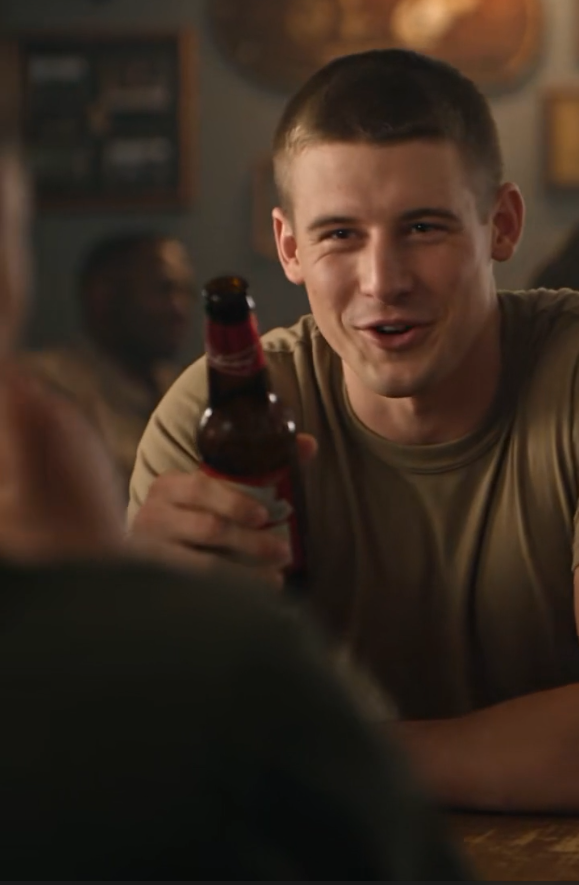
Corporal Mason Reed raised his bottle and laughed.
“There’s no damn way they really gave you a call sign.”
The Marines packed around the scarred table laughed with him, loud enough to draw glances from the pool tables and the far end of the bar. It was the easy kind of laughter people used when they were certain of the room—certain of their own place in it, certain of everyone else’s.
I set my glass down and looked directly at Mason.
“Iron Ten.”
The laughter disappeared.
Not gradually. Not awkwardly.
It stopped.
The low electric hum from the beer sign above us suddenly seemed louder. So did the refrigerator behind the bar, the clink of ice in somebody’s glass, the scrape of a boot somewhere near the door.
Mason was still smiling.
The Marines around him weren’t.
He spread one hand toward me as though presenting the punch line everyone else had somehow missed.
“Look at the office girl pretending she’s a soldier.”
Across from him, his older brother had been lifting a bottle toward his mouth.
Sergeant Reed never took the drink.
He stopped halfway.
His eyes locked on mine, and I watched recognition move through his face in stages. First confusion. Then disbelief. Then something harder.
“Ma’am,” he said quietly, “did you just say Iron Ten?”
Nobody moved.
Mason laughed again, but the sound came out thin.
He looked around the table, expecting someone to rescue the joke.
No one did.
A Marine near the wall lowered his drink. Another stopped chewing. Someone shifted a chair behind me.
Mason frowned at his brother.
“What?”
Sergeant Reed lowered his bottle.
His attention remained on me.
Mason pointed his beer in my direction. “She’s messing with you, Sergeant.”
Sergeant Reed turned so sharply Mason’s hand stopped in midair.
“Reed, shut your mouth.”
Mason blinked.
I could see the offense register before the confusion did. A corporal being corrected by a sergeant in front of half the bar was ordinary enough. A younger brother being shut down by his older brother with that particular tone was something else.
“You serious?”
Sergeant Reed did not answer him.
I reached for my glass.
My jacket shifted against the back of the chair, and the corner of the cream-colored envelope in my inner pocket slipped into view.
Sergeant Reed noticed it immediately.
The contractor emblem stamped near the edge was small, nearly colorless under the amber bar lights.
It was enough.
His fingers tightened around his bottle.
He shoved his chair back, the legs grinding against the floor.
Mason followed his gaze toward my jacket. His grin finally disappeared.
“What the hell is going on?”
Sergeant Reed stood.
The relaxed man who had been trading stories with his Marines thirty seconds earlier was gone. His shoulders squared automatically.
I took a slow sip.
“Sit down, Sergeant.”
He stayed standing.
Mason looked at me, then back at his brother.
“Why is she giving you orders?”
Sergeant Reed swallowed.
“She isn’t.”
The silence around the table thickened.
Then he added, quieter, “She doesn’t have to.”
I let that sit for a moment.
Then I put my glass down.
“I’m not here to ruin anybody’s night.”
Mason gave a short, humorless laugh. “Could’ve fooled me.”
His brother looked at him.
That was enough to stop him.
I slid two fingers inside my jacket and removed the envelope.
Every pair of eyes at the table followed it.
It had been sealed when I entered the bar. I broke the flap with my thumb.
Mason leaned back.
“What is that?”
“Something your brother asked me to look at.”
Sergeant Reed’s jaw shifted.
I watched him carefully.
Three nights earlier, he had sent a message through a private contractor reporting channel. It had been eleven lines long, stripped of emotion, full of serial numbers, test dates, temperature readings, and a sentence at the end that mattered more than the rest.
I need somebody outside the chain to look at this before we certify it.
Twelve hours later, he had withdrawn the report.
That was why I was sitting in a Marine bar instead of my hotel.
I removed a folded page from the envelope and placed it on the table.
Mason reached for it.
His brother caught his wrist.
“Don’t.”
Mason stared at him.
I said, “It’s the thermal failure log from the relay package your section is scheduled to certify tomorrow.”
Several Marines at the table stopped looking curious.
They started looking uncomfortable.
Mason slowly pulled his hand free.
“That thing again?”
I turned toward him.
“You know about it?”
He looked at his brother before answering.
Sergeant Reed said, “Mason.”
“What? Everybody knows about it.”
“Everybody?”
Mason glanced around the table.
Nobody volunteered.
He looked back at me. “It threw warnings during the last field run. That doesn’t mean it’s defective.”
“How many warnings?”
He shrugged.
His brother did not.
I asked again.
“How many?”
Mason took a drink before answering.
“Four.”
Sergeant Reed said, “Six.”
Mason’s eyes snapped toward him.
I unfolded another page.
“Eight.”
That changed the room again.
Not because eight was dramatically larger than six.
Because Sergeant Reed knew I had records he did not.
I laid the page flat.
“Eight thermal warnings across three units. Two automatic resets. One hard shutdown.”
Mason leaned forward. “That shutdown was because they stacked the load wrong.”
“Was it?”
“That’s what the contractor said.”
“I work for the contractor.”
He opened his mouth.
I waited.
He closed it.
For the first time since I had sat down, Mason studied me instead of performing for the room.
Sergeant Reed lowered himself into his chair.
“You came because of my report.”
“I came because you withdrew it.”
His eyes dropped briefly to the papers.
“I resolved the issue.”
“No, you changed the status.”
His brother’s head turned.
“What status?”
Sergeant Reed said nothing.
I did.
“He changed his report from an unresolved safety concern to an operator-training issue.”
Mason looked at him.
“You did what?”
Sergeant Reed’s expression hardened. “Not here.”
“Why not here? You brought her here.”
“I didn’t bring anybody here.”
That part was true.
We had agreed to meet outside the front entrance at twenty-one hundred. Sergeant Reed had been inside with his section. I had arrived early. Mason had seen me waiting alone near the bar and asked if I was lost.
Then he had asked what I did.
Then whether I had ever “actually been around Marines.”
Then, smiling, whether civilians at my company got fake call signs to make themselves feel operational.
I had given him several chances to stop.
He had kept going.
Now Sergeant Reed looked at me.
“You were supposed to call.”
“I did.”
He pulled his phone from his pocket.
The screen showed three missed calls.
He exhaled through his nose.
Mason looked from him to me.
“Okay. Somebody tell me why everyone nearly swallowed their teeth when she said Iron Ten.”
No one answered.
Mason pointed toward a lance corporal near the end of the table.
“You know?”
The young Marine shook his head.