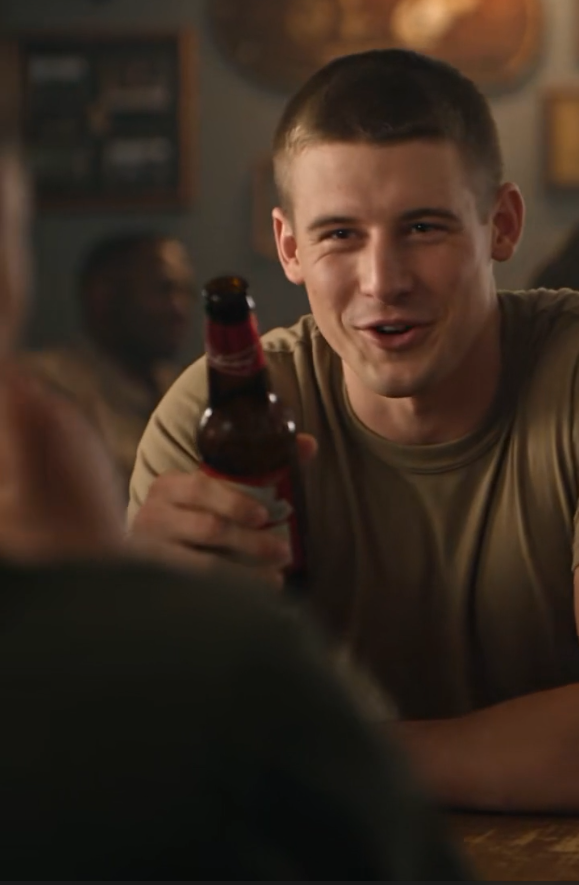
I thought of the review afterward, with its careful phrases.
Environmental contribution.
Maintenance variance.
Low-probability cascading fault.
Nobody had lied.
That was the part people misunderstood.
A disaster did not require a liar.
Sometimes it only required enough people choosing the explanation that cost least in the moment.
I slid the conditional-acceptance form back across the table.
“No.”
The director stared at it.
Then at me.
“You’re refusing to sign?”
“Yes.”
“On two units.”
“On an unqualified component installed across the batch.”
“Until replacement.”
“Until retest.”
He leaned back.
“And if I assign another reviewer?”
“Then they’ll have my findings.”
“You’re making this personal.”
“No.”
“You always do this.”
That caught Sergeant Reed’s attention.
I said nothing.
The director continued.
“Every system becomes that convoy for you.”
The sentence was quiet.
Precise.
He knew exactly where to put it.
Sergeant Reed turned toward me.
I looked at the director.
“Careful.”
“Someone should say it.”
“Not you.”
“You think because you were right once, every warning is the same warning.”
I kept my voice level.
“And you think because nothing failed badly yesterday, today’s risk is acceptable.”
“I think engineers manage risk. They don’t eliminate it.”
“Agreed.”
“Then what are we doing?”
“Managing it.”
“By stopping everything.”
“Until the defect is understood.”
He shook his head.
“You know what the difference is between judgment and fear?”
“Yes.”
“What?”
“Documentation.”
He stared at me.
I pushed the production deviation toward him again.
“This is documented.”
The meeting ended nine minutes later.
He left with the conditional-acceptance form unsigned.
Sergeant Reed remained.
Neither of us spoke until the door closed.
Then he said, “He knows about the convoy.”
“Everyone in my division knows enough.”
“He was there?”
“No.”
“Then he shouldn’t use it.”
I gathered my papers.
“He was trying to get a signature.”
“That makes it worse.”
“That makes it work.”
He watched me.
“You okay?”
“Yes.”
He looked unconvinced.
I stood.
“Don’t do that.”
“Do what?”
“Turn me into the fragile one because somebody mentioned an old failure.”
“I didn’t.”
“You were about to.”
He leaned back.
“Maybe I was going to ask whether he was right.”
I stopped.
“About what?”
“Whether every warning looks like that night to you.”
I looked at him.
“That’s a fair question.”
“What’s the answer?”
“Sometimes.”
He waited.
I continued.
“That’s why I don’t get to sign based on instinct. I sign based on evidence.”
He nodded slowly.
“And the evidence?”
“The component wasn’t fully qualified. Same failure signature on two units. Missing traceability in the packet. Earlier field note closed without resolution.”
“Mason’s note.”
“Yes.”
Sergeant Reed looked toward the table.
“So you’re not doing this because of what happened to us.”
“No.”
“Would you be looking this hard if it hadn’t?”
That question took longer.
Finally I said, “Maybe not.”
He appreciated the answer because it was not clean.
“Then maybe he was a little right.”
“Maybe.”
I put the papers into my folder.
“Doesn’t make the connector less hot.”
That made him laugh.
A short sound, but real.
Then he became serious again.
“I need to talk to Mason.”
“Yes.”
“You going to be there?”
“No.”
“Why?”
“Because this time you don’t need an observer.”
Mason found me two hours later beside the maintenance shelter.
I knew from his face that the conversation had happened.
He stopped six feet away.
“You put my note in the report.”
“Yes.”
“My full name.”
“Yes.”
He looked toward the equipment rack.
“He told you.”
“Yes.”
“Everything?”
“Enough.”
Mason nodded.
He kicked lightly at a seam in the concrete.
“He does that.”
“I know.”
“No, you know one example.”
“That’s usually how patterns introduce themselves.”
He looked at me.
“I spent half my life trying to get out from under him.”
“And?”
“Turns out he was holding the roof up.”
“That doesn’t mean you asked him to.”
He gave me a sharp look.
Then looked away.
“Was my note useful?”
“Yes.”
“How useful?”
“It proves the heat signature existed before the failed test and was documented.”
His mouth moved slightly.
“So I wasn’t crazy.”
“I didn’t know that was in question.”
“It was.”
He looked toward the building where his brother was working.
“Not to him.”
“Then to who?”
“Myself.”
That answer was quieter than I expected.
He folded his arms.
“When they closed it as duplicate, I thought maybe I’d overreacted. Then the next unit threw a warning and they said install issue. So I thought maybe I screwed something up.”
“You didn’t.”
“You don’t know that yet.”
“No.”
He glanced at me.
I added, “But the evidence doesn’t point there.”
He nodded.
After a moment he said, “You know why I was giving you crap at the bar?”
“I assumed natural charm.”
A reluctant smile.
Then he shook his head.
“My brother spent all week acting like nothing was wrong. Wouldn’t tell me why he was on his phone all the time. Wouldn’t tell me who he was meeting.”
“So you decided to annoy a stranger.”
“Basically.”
“Solid strategy.”
“I saw the contractor badge clip on your bag.”
I remembered.
I had taken it off before entering the bar, but not before walking from the parking lot.
“You knew I was with the company.”
“Yeah.”
“And you thought I was there about the system.”
“I thought you might be.”
“So the call-sign question?”
He winced.
“That was me being a jerk.”
“At least we agree on the diagnosis.”
He stared at the concrete.
“I figured if you were some office rep coming to tell us the system was fine, I wasn’t going to make it easy.”
“And instead?”
“Instead I called Iron Ten an office girl.”
“Yes.”
“That’s going to follow me forever, isn’t it?”
“Only if your brother loves you.”
“He does.”
“Then yes.”
Mason laughed.
This time it did not sound like the bar.
Then he looked at me.
“Why’d you tell him they saved themselves?”
“Because they did.”
“He says you kept them alive.”
“Your brother remembers being on the ground. I remember being in a room with a headset.”
“That’s not an answer.”
“It’s the only one I have.”
Mason considered that.
Then he said, “He says you never disconnected.”
“I couldn’t.”
“Why?”
“Because they were still transmitting.”
He nodded as though that explained more than I intended.
Then his expression changed.
“What happens if the replacement parts don’t get here?”
“We wait.”
“And lose the slot.”
“Maybe.”
He looked toward the test pad.
“You really willing to do that?”
“Yes.”
“For a connector.”
“For whether the system works.”
“You make everything sound simple.”
“Your brother said the same thing.”
“He hates that.”
“I noticed.”
Mason stood in silence for a while.
Then he held out his hand.
I looked at it.
“What?”
“Proper introduction.”
I shook it.
“Mason Reed.”
“I know.”
“Yeah. That ruined it.”
I smiled.
He released my hand.
Then he said, “For what it’s worth, I’m glad you’re the one signing.”
It was the kindest thing he had said to me.