Z
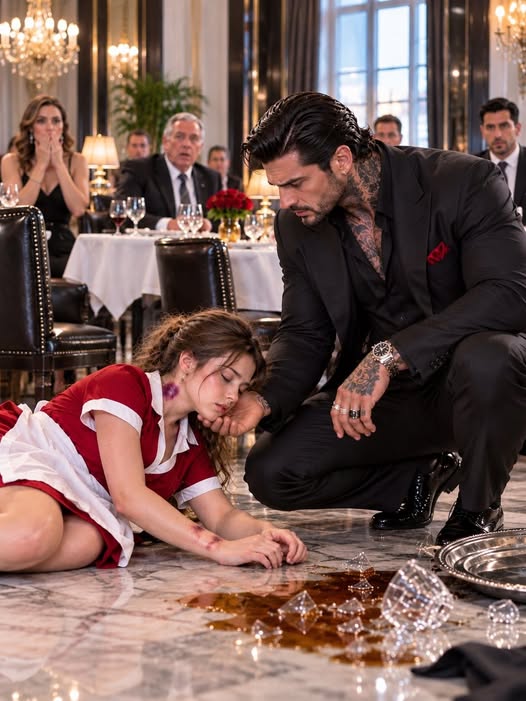
Two years after Harper Monroe collapsed at table seven, the Velvet Onyx closed for one private evening.
Chef Henry complained about losing Friday-night revenue.
Then Gabriel showed him the guest list.
Henry stopped complaining.
Harper arrived at seven wearing a dark green dress.
Not red.
Gabriel noticed immediately.
“You look disappointed.”
“I was promised consistency.”
“You’re becoming predictable.”
“That is slander.”
Harper smiled.
The restaurant looked almost exactly the same.
Amber lights.
Jazz near the bar.
Velvet curtains.
Heavy oak doors.
But table seven was different.
Tonight it held twelve chairs.
Emily.
Rosa.
Dominic.
Marco.
Dr. Bell.
Henry, who refused to stay in the kitchen.
Two women from the support center.
A federal investigator who had helped prosecute Pike.
And Gabriel.
Harper stopped beside the table.
“What is this?”
Gabriel looked suspiciously innocent.
“Dinner.”
“No.”
“Yes.”
“You rented the entire restaurant.”
“Henry gave me a discount.”
Henry shouted from across the room.
“I absolutely did not.”
Harper laughed.
Then noticed a folder at her place.
She opened it.
Inside were incorporation papers.
MONROE HOUSE FOUNDATION.
Harper stared.
“What?”
Gabriel pulled out her chair.
She did not sit.
“What is this?”
“A nonprofit.”
“I can read.”
“I was beginning to worry.”
She glared.
Gabriel continued.
“Emergency housing. Legal assistance. Employment support. Counseling.”
Harper looked at him.
“You did this?”
“No.”
“What?”
“You did.”
“I absolutely did not.”
Dominic raised one finger.
“Technically, you’ve been designing it for eighteen months.”
Harper turned.
“What?”
Dominic opened another folder.
“All those security policies you built. Survivor relocation procedures. Employment partnerships. Legal referral systems.”
Emily smiled.
“You’ve been building this forever.”
Harper looked back at Gabriel.
He lifted both hands.
“I provided money.”
“How much?”
“Enough.”
“Gabriel.”
Dominic whispered, “Do not ask.”
Harper’s eyes narrowed.
Gabriel sat.
“It’s not yours.”
“What?”
“The money.”
“That sentence made no sense.”
“It came from seized Vale-connected assets that were legally eligible for restitution funding, plus private donations.”
Harper stared.
“You arranged it.”
“I helped.”
“And my name?”
Gabriel’s expression softened.
“That decision belongs to you.”
Harper looked down.
MONROE HOUSE.
Her mother’s name.
Her own.
Emily’s.
Not Mitchell’s.
Not Kane.
Not Vale.
Monroe.
She sat slowly.
“I hate you.”
Gabriel smiled.
“No, you don’t.”
“Currently undecided.”
Dinner lasted three hours.
There were speeches Harper had not authorized.
Dominic told the story of the first time she told Gabriel he was wrong in front of six executives.
Marco described her security training as “aggressively argumentative.”
Rosa cried.
Emily cried.
Henry cried before pretending steam from the kitchen caused it.
Eventually, everyone left.
Harper remained.
Gabriel stood near table seven.
The restaurant had gone quiet.
Harper walked toward him.
“This is where it happened.”
“Yes.”
She looked at the carpet.
The exact place where she had collapsed was impossible to identify now.
That surprised her.
Some memories made locations feel permanently marked.
Reality was less sentimental.
People walked over the same floor.
Tables moved.
Wine spilled.
Life continued.
“You caught me,” Harper said.
Gabriel shook his head.
“What?”
“You didn’t.”
She frowned.
“I remember.”
“I slowed you.”
He stepped closer.
“You still hit the floor.”
Harper laughed.
“Romantic.”
“I’m correcting the record.”
“You really are terrible at this.”
Gabriel looked toward the curtain.
“The first thing I noticed wasn’t your face.”
“I know.”
“Your arms.”
Harper’s smile faded.
“You were protecting your ribs.”
“Yes.”
“I hated whoever did it before I knew his name.”
Harper studied him.
“That sounds unhealthy.”
“Probably.”
“You should see someone.”
“I live with someone who recommends therapy constantly.”
Harper blinked.
“Live with?”
Gabriel stopped.
She smiled slowly.
“You said live with.”
“I meant spend unreasonable amounts of time near.”
“No.”
“Harper.”
“Nope.”
Gabriel sighed.
She laughed.
Then he became serious.
“I want to ask you something.”
Harper’s heart changed rhythm.
Gabriel reached into his jacket.
She immediately pointed at him.
“Do not get on one knee.”
He froze.
“Why?”
“Because everyone gets on one knee.”
“That is traditionally—”
“I know.”
Gabriel stared.
“Fine.”
He stayed standing.
Then pulled out a small box.
Harper covered her mouth.
“Gabriel.”
“I had a speech.”
“Oh God.”
“That reaction is encouraging.”
She laughed through sudden tears.
“Continue.”
He opened the box.
The ring was simple.
Elegant.
Nothing enormous.
Gabriel knew her.
Of course he did.
“I spent most of my life believing loving someone meant protecting them from everything.”
Harper’s eyes filled.
“I was wrong.”
He took one breath.
“Loving you has mostly meant learning when to stand beside you and when to get out of your way.”
Harper laughed softly.
“That sounds difficult.”
“Extremely.”
“Poor baby.”
He ignored her.
“You don’t need me.”
Harper became still.
Gabriel continued.
“That is one of my favorite things about you.”
Her tears fell.
“You built your own life. Your own work. Your own safety.”
He looked at her.
“And if you want me inside that life for the rest of it, I would consider myself very fortunate.”
Harper stared at him.
“You practiced that.”
“Dominic edited it.”
“Of course he did.”
“He removed three threats.”
She laughed.
Gabriel smiled.
Then he asked.
“Harper Monroe, will you marry me?”
She did not answer immediately.
Not because she doubted.
Because once, years earlier, every important decision in her life had been made under fear.
Stay.
Leave.
Speak.
Hide.
Work.
Sleep.
Apologize.
Tonight there was no fear.
Only choice.
Harper looked at Gabriel.
“Yes.”
Something passed across his face.
Relief so enormous it almost made her laugh again.
“You’re sure?”
She raised an eyebrow.
“You asked.”
“I know.”
“You seem surprised.”
“I planned for several outcomes.”
“Did one involve me saying no?”
“Yes.”
“What would you have done?”
“Taken you home and complained privately.”
Harper laughed.
Then kissed him.
Gabriel placed the ring on her finger.
It fit.
Of course.
When they separated, Harper looked at table seven.
“Funny.”
“What?”
“The worst night of my life happened here.”
Gabriel shook his head.
“No.”
She looked at him.
“The worst nights happened before.”
Harper understood.
The Velvet Onyx had not been the place where she broke.
It had been the place where someone finally saw what she could no longer hide.
But even that was not the reason everything changed.
Gabriel could have seen.
Henry could have asked.
Doctors could have noticed.
Emily could have begged.
None of them could make the final decision for her.
Eventually Harper had spoken.
Then chosen.
Again.
And again.
Until choices became a life.
Six months later, Monroe House opened its first emergency residence.
Within the first year, it helped seventy-three women and nineteen children relocate safely.
Harper personally interviewed every security coordinator.
Gabriel was banned from the interviews after terrifying three candidates.
He protested.
Harper ignored him.
Emily became the foundation’s communications director.
Dominic provided legal work at a rate Harper described as “suspiciously affordable.”
Marco built the security program.
Rosa brought food nobody requested.
Gabriel donated quietly.
Mostly.
Their wedding was small.
Forty people.
No newspapers.
No politicians.
No business associates Harper did not know personally.
She wore a simple ivory dress.
Gabriel cried.
Dominic witnessed it and promised lifelong blackmail.
When Harper walked down the aisle, nobody gave her away.
She had asked Emily to walk beside her.
Halfway forward, Harper stopped.
Gabriel looked confused.
She smiled.
Then finished the final steps alone.
Not because she rejected family.
Not because she rejected love.
Because she wanted to.
Gabriel understood.
At the reception, Harper stood beneath warm lights while snow fell outside.
For one moment, she remembered the woman she had been.
Exhausted.
Bruised.
Concealer cracking beneath restaurant lights.
Apologizing for a broken glass.
Believing survival required silence.
Harper wished she could reach backward through time.
Not to rescue that woman.
She no longer believed rescue was the right word.
She would simply sit beside her.
Tell her the truth.
You are not weak because you are afraid.
You are not responsible for what he chose to do.
One day, you will stop apologizing for taking up space.
One day, your home will feel like yours.
One day, somebody will love you without demanding ownership in return.
And one day, you will understand the most important part.
Nobody saved Harper Monroe.
People helped her.
People stood beside her.
People opened doors.
But Harper was the one who eventually walked through them.
At midnight, Gabriel found her alone near the window.
“What are you thinking about?”
“The night we met.”
“The bourbon?”
“You really need to let that go.”
“It was excellent bourbon.”
She elbowed him.
Gabriel smiled.
Then Harper held out her hand.
“Dance with me.”
“There’s no music.”
“I know.”
“That seems inefficient.”
“Gabriel.”
He took her hand.
They moved slowly anyway.
No music.
No audience.
No danger.
Just snow beyond the glass and Gabriel’s hand against hers.
Harper rested her head against his chest.
For years, she had believed safety meant nobody could hurt her again.
She knew better now.
Nobody could promise that.
Safety was knowing she could leave.
Knowing she could speak.
Knowing she could ask for help.
Knowing love did not require fear.
Knowing her life belonged to her even when she chose to share it.
Gabriel kissed the top of her head.
Harper closed her eyes.
The woman who had once collapsed before the most dangerous man in the restaurant was gone.
Not erased.
Not forgotten.
She had simply become someone else.
Someone who stood.
Someone who chose.
Someone free.
And this time, when Harper Monroe heard silence around her, she did not mistake it for danger.
It sounded like peace.