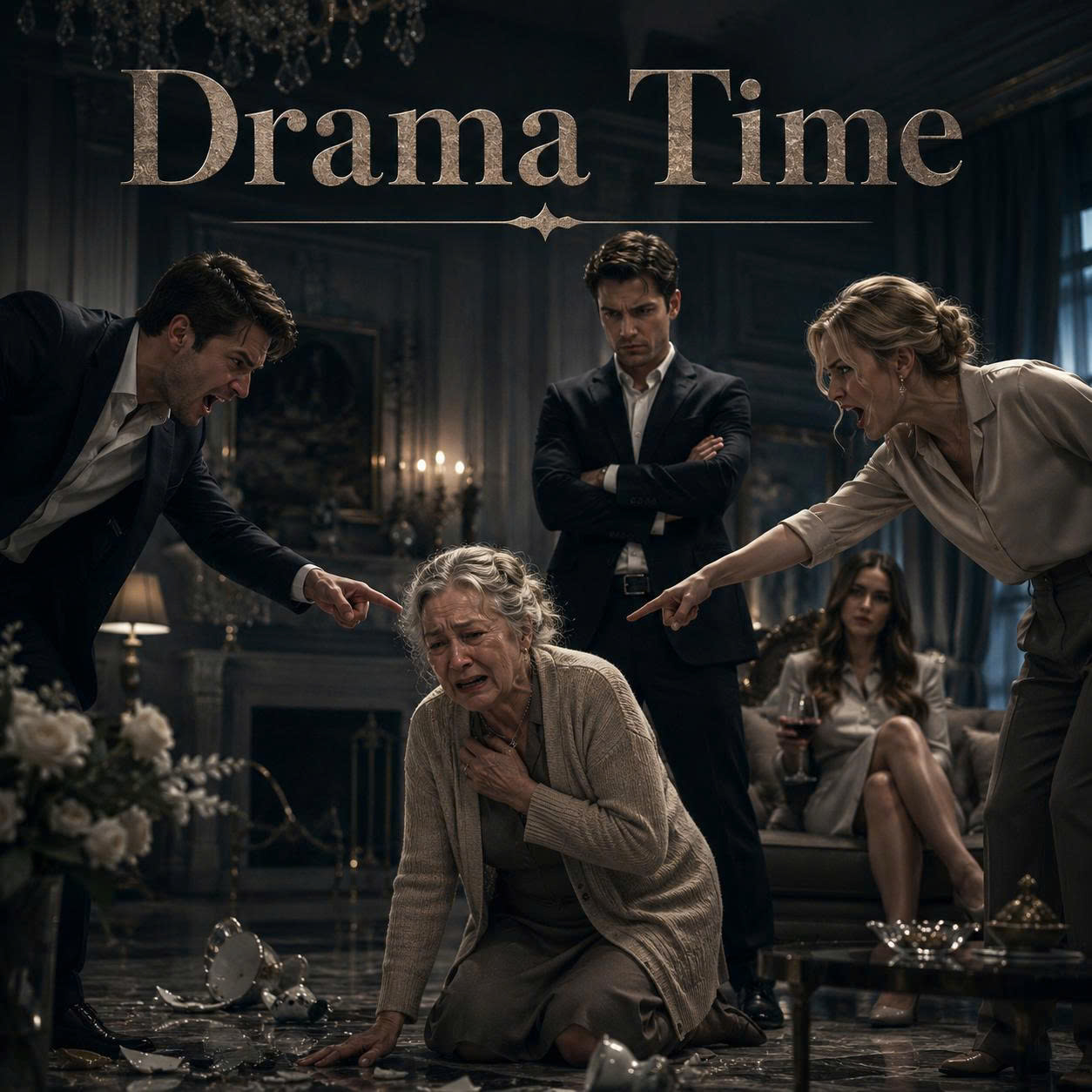
At dinner, my son’s mother-in-law spat into my plate and said, “Old lady, this is what you deserve.” My son clapped his hands and whispered, “Mom, please don’t make things worse.” I smiled, calm but ice-cold, then took out my phone and texted: “Execute the plan.” What happened that night is something my son will remember for the rest of his life.
At dinner, my son’s mother-in-law spat into my plate and said, “Old lady, this is what you deserve.” My son clapped his hands and whispered, “Mom, please don’t make things worse.” I smiled, calm but ice-cold, then took out my phone and texted: “Execute the plan.” What happened that night is something my son will remember for the rest of his life.
This is what you deserve.
Those were the words I heard as I looked at my fine porcelain plate, now stained with the saliva of Laura Vanderbilt, my daughter-in-law’s mother. Fifteen people witnessed that moment. Fifteen pairs of eyes silently watched as that sixty-three-year-old woman, dressed in her pearl-colored Chanel suit, leaned over the mahogany dining table and spat at me as if I were trash.
But what truly broke me wasn’t the spit.
It was my son’s voice.
“Mom, please behave yourself. Don’t provoke her.”
Robert. My Robert. The boy I raised alone, cleaning other people’s houses to pay for his college. The man who now looked at me with embarrassment, begging me with his eyes to be quiet, to swallow this humiliation, to not ruin his perfect Thanksgiving dinner.
In that moment, something inside me didn’t break.
It hardened.
I reached into my purse with hands that didn’t tremble, took out my phone, typed three words, and pressed send.
Execute the plan.
Laura let out a laugh.
“Who are you texting, Sophie? Your little sewing circle? Are they going to come defend you with needles and thread?”
I got up from the table, wiped my lips with the linen napkin, and spoke with a calm I didn’t recognize in myself.
“My lawyers.”
What happened next, no one at that table saw coming.
My name is Sophie Miller. I’m fifty-five years old. For a long time, I was the invisible woman, the sacrificing mother, the compliant grandmother, the humble seamstress who always bowed her head. But that night, in front of that imported mahogany table and hand-embroidered tablecloths, I remembered something I had forgotten about myself—that humility doesn’t mean letting people destroy you, and that a quiet woman can be preparing the most powerful move of her life.
Let me tell you how a simple seamstress ended up sitting at that table… and how that same seamstress taught everyone a lesson they will never forget.
Three years earlier, my life was simple, but it was mine.
I lived in a small house in a neighborhood in Queens, New York, with a tiny yard full of purple petunias and a sewing workshop that smelled of clean fabric and Singer machine oil. Every morning I got up at six, made my regular coffee with a dash of vanilla, and sat in front of my window to watch the sun light up the geranium pots. My world was small, yes, but it was honest.
I sewed prom dresses, fixed hems, embroidered tablecloths for weddings. My clients were neighborhood ladies, working women like me, who paid with crumpled bills and often brought me a six-pack of Diet Coke or a donut.
“Ms. Sophie,” they’d say affectionately, “you have golden hands.”
I would smile. I didn’t have much, but I had dignity.
And I had Robert—my son, my pride, the man who achieved everything I couldn’t. He studied business administration at New York University, graduated with honors, got a job at a real estate firm in Manhattan, and climbed the ladder until he became a regional director.
Every suit he wore, every meeting he attended, every accomplishment he celebrated—I knew how much it had cost. How many early mornings washing other people’s clothes. How many knees on the ground mopping office floors. How many nights sewing until my fingers bled just to pay for one more semester.
But it was worth it.
Or so I believed.
The day Robert introduced me to Valerie, I knew something had changed.
It was a Sunday in October. They came to my house without warning. I was in the yard watering my plants, wearing my old apron, my hair pulled back in a messy braid.
“Mom,” Robert said with a nervous smile, “I want to introduce you to someone.”
Valerie Vanderbilt was beautiful—tall, thin, with that polished kind of beauty that usually comes with old money. Straight mahogany-colored hair, perfect nails, clothes that probably cost more than three months of my rent.
“Nice to meet you, Mrs. Miller,” she said with a correct but cold smile, barely extending the tips of her fingers.
“The pleasure is all mine, dear,” I replied, wiping my hands on my apron. “Come in. I’ll make some coffee.”
Valerie glanced at Robert. A quick, almost imperceptible look. But I saw it. It said, Seriously? Your mother lives here?
We sat in my small living room. I served regular coffee in mismatched mugs. Valerie took hers carefully, as if she were afraid of catching poverty.
“Mom,” Robert said, taking Valerie’s hand, “we have news. We’re getting married.”
My heart skipped a beat—joy, fear, something in between.
“Oh, son, how wonderful,” I said, getting up to hug him. “Valerie, welcome to the family.”
She smiled, but her eyes didn’t.
“Thank you, Mrs. Miller. Robert has told me a lot about you. About your job.”
The way she said your job pierced me like a cold needle.
“I’m a seamstress,” I said, lifting my chin, “and very proud to be one.”
“Of course,” Valerie replied, that polite smile never leaving her lips. “It’s a humble profession.”
Robert didn’t say anything. He just squeezed her hand and changed the subject.
That night, after they left, I sat in front of my sewing machine and cried without knowing exactly why. Maybe because, for the first time in my life, I felt small.
Two weeks later, I was invited to meet Valerie’s family.
The Vanderbilt house was in Beverly Hills, Los Angeles. It wasn’t a house. It was a mansion. Electric gate, manicured gardens, a fountain at the entrance with marble cherubs. I rang the doorbell with sweaty hands, holding a carrot cake I’d baked since five in the morning.
A uniformed employee opened the door.
“Mrs. Miller,” he said politely. “Please come in. They’re waiting for you on the terrace.”
I walked through marble hallways, past enormous paintings and furniture I had only seen in magazines. My old shoes squeaked against the floor. I wanted to disappear.
On the terrace, under a vine-covered pergola, sat the entire family. Laura Vanderbilt, the matriarch, perched like a queen in a white wicker armchair. Her husband, Ernest, a corpulent man with a gold watch. Two daughters with their husbands. And Valerie, radiant beside Robert.
“Mom,” Robert stood up, smiling. “This is my mom, Sophie.”
“How lovely, Mrs. Miller,” Laura said without getting up, examining me from head to toe. “Please, have a seat.”
I sat at the edge of the sofa, cake in my lap.
“I brought a little dessert,” I said shyly. “A carrot cake. It’s my specialty.”
Laura looked at the cake as if I’d offered her poison.
“What a thoughtful gesture. Daniela!” she called to an employee. “Take this to the kitchen.”
The cake disappeared.
We never saw it again.
For two hours, I listened to the Vanderbilt family talk about things I didn’t understand. Trips to Europe. Investments. Properties. Wine brands I couldn’t pronounce. No one asked me anything. No one included me in any conversation. I was furniture—an awkward ornament someone had forgotten to remove.
When we finally said goodbye, Laura gave me two air kisses that never reached my skin.
“Mrs. Miller,” she said with a sharp smile, “how sweet that Robert has such humble roots. It makes him so authentic.”
On the way back, Robert drove in silence.
“Isn’t Valerie’s family incredible?” he finally said.
I looked out the window.
“Yes, son. Incredible.”
But inside, something had cracked.
The wedding was in June, in a garden in Newport, Rhode Island, that looked like a movie set. I arrived alone, in a navy blue dress I’d sewn myself over three weeks. Elegant, simple, dignified.
When I saw the guests in their designer dresses and jewelry shining in the sun, I felt like an intruder at my own son’s celebration.
Laura looked spectacular in a champagne dress and an enormous hat. She greeted me with that cold smile I now knew too well.
“Sophie, you look lovely. Did you make your dress yourself?”
“Yes, Mrs. Vanderbilt.”
“Oh, how talented. Though next time I can recommend an excellent boutique, you know, for important events.”
I swallowed the humiliation like bitter medicine.
During the ceremony, I cried, but I wasn’t sure if it was from happiness or fear. Robert at the altar, so handsome in his tuxedo, looking at Valerie with eyes full of love. I wanted to feel only joy. I wanted to believe everything would be fine.
But inside, I knew I was losing my son.
At the reception, they sat me at a table in the back, far from the main table, with Valerie’s distant aunts, who barely spoke to me. From there I watched Robert laugh with the Vanderbilts, toast with them, belong to a world I would never touch.
When it was time for the mother-son dance, Robert came to find me. I walked toward him with my heart in my throat.
“Mom,” he whispered as we danced, “thank you for everything. For every sacrifice. I’ll never forget it.”
“I know, my love. I just want you to be happy.”
“I am, Mom. Valerie is incredible, and her family has opened so many doors for me.”
I nodded, swallowing the words I wanted to say.
What about me? I’m important too.
But I kept quiet.
As always.
After the wedding, the months passed in a strange haze.
Robert and Valerie moved into a townhouse on the Upper East Side that the Vanderbilts gave them as a wedding gift. Three floors, a terrace, a view of the park trees.
I stayed in my little house in Queens, sewing dresses, waiting for Robert’s calls, which grew fewer and farther between.
One day, six months after the wedding, Robert called, excited.
“Mom, I have news. Valerie’s pregnant. You’re going to be a grandmother.”
My heart filled with pure, almost childish joy.
“Oh, son. How wonderful. I’m coming over right now—”
“Wait, Mom. I’ll call you later to coordinate. Valerie’s resting. And… you know how these things are.”
“Of course, son. Whatever you need.”
But the call to coordinate never came.
All through Valerie’s pregnancy, I felt like I was watching my son’s life through glass—close, but unable to touch. On Facebook, I saw spectacular baby showers, nursery pictures worthy of a magazine, professional photoshoots. And there I was in my workshop, knitting a baby blanket with my own hands, wondering if my grandson would ever use it.
When Matthew was born, Robert called me from the hospital.
“He’s here, Mom. A beautiful boy. His name is Matthew Vanderbilt Miller.”
I was silent for a second.
“Vanderbilt Miller, not Miller Vanderbilt?”
“Well, Valerie’s family has a tradition. The maternal surname comes first for the first male grandchild.”
Another silent humiliation. Swallow it down.
“That’s fine, son. When can I see him?”
“Tomorrow afternoon… but only for an hour. Valerie needs to rest. And her mom’s here helping with everything.”
Of course Laura was there.
Laura would be there for the first smiles, the first nights, the first magical moments.
I would go home to my empty house and be the second-class grandmother.
The next day I arrived at the hospital with my knitted blanket, a teddy bear, and my heart full of hope. In the private room, surrounded by expensive flowers and elegant balloons, Valerie lay in bed, radiant despite her fatigue. Robert held Matthew. Next to him, like a territorial guard, stood Laura.
“Sophie, I’m glad you came,” Robert said. “Look, Mom. Your grandson.”
I approached with tears in my eyes. Matthew was perfect—small, pink, eyes closed, tiny fists clenched.
“Can I hold him?”
Robert looked at Valerie. Valerie looked at Laura. Laura nodded as if granting permission.
“Of course, Sophie. But be careful. He’s very delicate.”
As if I hadn’t raised a child alone. As if these hands that had worked for years to give Robert a decent life were suddenly dangerous.
I held Matthew with a tenderness that hurt. I looked at him, touched his soft little face, breathed in that magical newborn smell.
“I brought you a little blanket,” I whispered to him. “I made it myself with all my love.”
Laura stepped closer. She examined the blanket with a critical eye.
“How charmingly rustic. Although, you know, Sophie, hand-knitted fabrics sometimes have fibers that can cause allergies. We’d better put it away and use the organic cotton blankets we already bought.”
It felt like a slap.
Robert said nothing. Valerie smiled sadly but didn’t intervene. I stayed twenty more minutes. No one offered me a seat. No one included me in the conversation about the baby’s plans, private pediatricians, or the nanny they’d already hired.
When I left, I hugged Robert.
“Son, if you need help with the baby, I can—”
“Don’t worry, Mom. Valerie’s mom has everything organized. She’s staying with us for the first few weeks.”
Of course she was.
On the taxi ride home, I cried uncontrollably. The driver asked if I was okay.
“I just met my grandson,” I lied. “They’re tears of happiness.”
The following months were a slow, quiet torture.
I called Robert to ask about Matthew. He answered with short messages.
Everything’s fine, Mom. I’ll call you later.
Later almost never came.
On Facebook, I saw photos of Matthew constantly—in Laura’s arms, in their huge house, at Vanderbilt family parties I was never invited to.
One Saturday, I gathered my courage and went to Robert’s house without warning. I rang the doorbell. An employee opened.
“I’m here to see my son, Robert Miller.”
“Do you have an appointment, ma’am?”
An appointment. To see my own son.
“No, but I’m his mother.”
“One moment, please.”
I waited at the door like a street vendor. Finally, Valerie appeared with Matthew in her arms.
“Sophie, what a surprise. You should have called. Robert went golfing with my dad, but come in—for a little while. Matthew has a strict nap routine.”
I stepped into the house that smelled of expensive candles and French perfume. I sat on the edge of the sofa, an unwanted visitor. I held Matthew for fifteen minutes while Valerie watched like a hawk, correcting how I held him, how I talked to him.
“Oh, Sophie, not so close to your face. He could catch something.”
“I’m not sick, Valerie.”
“I know, but you never know. My mom says it’s better to be cautious.”
Your mom. Always your mom.
When I left that house, something inside me died. It wasn’t just sadness. It was resignation. The terrible realization that I’d lost my place in my son’s life.
That night, sitting in my workshop, I looked at my sewing machine—the old Singer my mother had left me. The machine that had fed Robert, paid for his school, his university, his dreams.
I wondered if it had all been worth it. If raising a son alone, sacrificing everything, breaking my back, working myself to the bone—only for him to treat me like a burden now—was really the destiny I deserved.
I cried until I fell asleep on the worktable, my hands resting on the cold metal.
Life, as always, had other plans.
Three months later, the signal arrived.
It came as an unexpected call on a Tuesday afternoon. I was sewing a first communion dress when my phone rang—an unknown number.
I almost let it ring out.
The needle was halfway through a row of tiny white pearls, rain tapped softly against the workshop window, and I had spent enough months learning not to expect good news from phones.
But something made me answer.
“Mrs. Sophie Miller?”
The woman’s voice was warm, precise, professional.
“Yes?”
“My name is Rebecca Lawson. I’m the creative director at Bellamy House.”
I stopped sewing.
Even I knew Bellamy House. Their linens were displayed in department-store windows where I never shopped, folded beneath spotlights like works of art. Their tablecloths appeared in magazines. Their wedding collections cost more than some of my clients’ monthly rent.
“I think you have the wrong Sophie Miller.”
The woman laughed softly.
“I don’t think I do. Did you embroider a wedding tablecloth for a Mrs. Eleanor Ruiz in Astoria six months ago?”
I looked toward the wooden shelf where I kept my pattern books.
“Yes.”
“She brought it to a charity luncheon last week. Our founder saw it.”
There was a pause.
Then Rebecca said the sentence that changed my life.
“We would like to meet the woman who made it.”
I sat perfectly still.
For years, people had told me my hands were good.
No one had ever told me they were worth finding.
The meeting was the following Thursday.
I wore the navy dress I had sewn for Robert’s wedding.
Not because it was my finest dress.
Because it was the dress I had once worn while feeling like the poorest woman in the room, and I wanted to know what it felt like to wear it without apologizing.
Bellamy House occupied two quiet floors of an old building near Bryant Park. No marble cherubs. No servants. No one looked me up and down.
Rebecca shook my hand with both of hers.
On the conference table lay photographs of my work.
My work.
The petunia border I had designed after staring at the flowers outside my Queens window.
The tiny climbing-vine stitch my mother taught me when I was fourteen.
The lace corner I had developed because one bride could not afford imported French trim.
Rebecca touched the photograph carefully.
“These don’t look mass-produced,” she said.
“They aren’t.”
“That’s why we called.”
They offered me a small licensing contract for six designs.
I read the number three times.
Then I asked them to let me take the papers home.
Rebecca smiled.
“Please do. Have an attorney look at everything.”
That sentence mattered more than she knew.
Because for most of my life, when someone put a paper in front of me, I believed educated people understood things I didn’t.
Robert understood contracts.
The Vanderbilts understood investments.
People like me understood thread.
That evening, I did something new.
I did not call my son.
I called an attorney.
Her name was Helen Morris, and she had been one of my sewing clients years earlier, back when she was a young public defender who could barely afford alterations on her one good suit.
She came to my kitchen after work, loosened her scarf, ate two slices of carrot cake, and read every page.
When she finished, she looked at me over her glasses.
“Sophie, this is a good contract.”
My hands tightened around my coffee mug.
“Good enough that I won’t embarrass myself?”
Her expression changed.
“Who taught you to ask that question?”
I looked down.
Helen closed the folder.
“You are not being invited into that room as charity. They need something you made.”
Something in my chest loosened.
I signed.
The first collection sold better than Bellamy House expected.
Then the second one did too.
I did not become a millionaire overnight.
There were no limousines, no magical checks, no sudden mansion.
What happened was quieter.
Better.
I hired two women from my neighborhood.
Then four.
I converted the back room of an empty storefront near my house into a workshop.
I bought new machines but kept my mother’s Singer beside my desk.
I paid people on time.
I learned invoices.
I learned licensing.
I learned to say, “Let my attorney review that.”
And slowly, without anyone in the Vanderbilt family noticing, the woman they had decided was too humble to matter built something with her own name on it.
Sophie Miller Atelier.
Robert heard about it from someone else.
He called one evening.
“Mom, why didn’t you tell me?”
I looked at the pile of fabric on my worktable.
“You’ve been busy.”
There was a silence.
“You should have called me. I could’ve helped with the business side.”
“I had help.”
Another silence.
From the other end, I heard Valerie asking who he was talking to.
Robert lowered his voice.
“Are you angry with me?”
I wanted to say yes.
Instead I said, “I’m tired, Robert.”
He didn’t understand the difference.
Not yet.
Laura noticed when Bellamy House announced a holiday collection featuring my name.
Her first call came the same afternoon.
“Sophie. What an unexpected little success.”
Little.
I smiled into the phone.
“Thank you.”
“We should have lunch. I’ve been thinking there may be opportunities for you.”
Opportunities.
For the first time, I recognized the word for what it was.
A door someone wanted credit for opening after you had already walked through it yourself.
We met at a hotel restaurant in Manhattan.
Laura arrived twenty minutes late.
She kissed the air beside my cheeks and ordered for both of us without asking.
Then she placed a glossy folder on the table.
The Vanderbilt family, she explained, was preparing a luxury home collection through one of their private companies.
Linens.
Table settings.
Decorative textiles.
She wanted my designs.
Not me.
My designs.
“We could elevate your little operation,” she said. “Give it legitimacy.”
I looked at her.
“What would happen to my name?”
Laura blinked.
“We’d probably fold it under Vanderbilt Heritage. Consumers respond to established names.”
“And mine?”
She smiled as though explaining weather to a child.
“Sophie, surely you understand that the Vanderbilt name has value.”
I thought of my mother’s Singer.
My petunias.
My clients bringing donuts because they could not afford tips.
I closed the folder.
“So does mine.”
Laura’s smile disappeared.
I left before dessert.
Two months later, Helen called me into her office.
She had three Bellamy House catalogs spread across her desk beside screenshots from a newly announced Vanderbilt Heritage collection.
My stomach turned cold.
There, printed on expensive ivory fabric, was my climbing-vine border.
Not similar.
Mine.
There was the petunia corner.
Mine.
There was the lace pattern I had drawn by hand at two in the morning fifteen years earlier.
Mine.
Laura had not needed me to say yes.
She had simply decided a woman like me would never know how to stop her.
Helen watched my face.
“Do you have your original drawings?”
“Every one.”
“Dated invoices?”
“Yes.”
“Pattern books?”
“Yes.”
“Bellamy’s licensing records?”
“Yes.”
Helen leaned back.
“Then don’t call Laura.”
I swallowed.
“What do I do?”
Her answer was quiet.
“We document everything.”
So we did.
For weeks, I said nothing.
That was the part Laura misunderstood.
She thought silence meant fear because silence had always worked for her.
But my silence had changed.
I was no longer swallowing humiliation.
I was gathering dates.
Copies.
Invoices.
Catalogs.
Photographs.
Emails.
Bellamy House joined the case because its contract gave it exclusive rights to several designs Laura’s company had reproduced.
Their attorneys were less sentimental than I was.
By early November, the evidence filled two thick binders.
Helen asked me what I wanted.
Money?
A public apology?
A lawsuit?
I stared at the binder.
“I want my work to stop carrying her name.”
Helen nodded.
“That we can ask for.”
Then came the Thanksgiving invitation.
Robert called me himself.
“Mom, please come.”
I nearly refused.
Then he said, “Matthew keeps asking about you.”
My throat tightened.
“He knows who I am?”
Robert hesitated.
“Of course he does.”
The pause before of course told me there was more to that story.
But I went.
Not for Laura.
Not even for Robert.
For Matthew.
When I entered the dining room that Thanksgiving night, fifteen people were already seated.
Laura wore pearl-colored Chanel.
Robert stood when he saw me, then glanced toward his mother-in-law before coming to kiss my cheek.
That tiny hesitation told me everything.
And then I saw the tablecloth.
My tablecloth.
Not literally the one I had sewn.
Worse.
A machine-produced copy of my petunia design stretched beneath Laura Vanderbilt’s crystal glasses.
She was serving Thanksgiving dinner on my stolen work.
Laura followed my eyes.
“Lovely, isn’t it?”
I touched the edge with one finger.
“Very familiar.”
She gave me a long look.
Then smiled.
Dinner began.
For forty minutes, I listened.
Laura talked about the success of Vanderbilt Heritage.
She accepted compliments for the “family aesthetic.”
She described the collection as inspired by generations of Vanderbilt women.
My hand went still around my water glass.
Generations.
My mother had taught me that stitch.
My mother, who had died without ever owning a dress worth more than a week’s groceries.
Laura had not only taken my design.
She had taken my history and renamed it hers.
When I corrected her—quietly—she laughed.
When I told one of the guests that the petunia border came from my original pattern book, Laura’s face tightened.
“Sophie,” she said, “must everything become about your sewing?”
I looked at Robert.
He stared at his plate.
I should have known what would happen next.
But even after everything, I did not believe she would go that far.
Laura leaned forward.
“This is what you deserve.”
Then she spat into my plate.
The room froze.
And Robert said the words that finally ended the mother I had been to him.
“Mom, please behave yourself. Don’t provoke her.”
That was when I took out my phone.
Execute the plan.
Helen had been waiting for that message.
Not to destroy anyone.
Not to create a scene.
To stop me from changing my mind.
At 8:14 p.m., while Laura laughed about my “little sewing circle,” Helen authorized the filing we had prepared with Bellamy House.
At 8:17, formal notices went to Vanderbilt Heritage’s distributors.
At 8:19, Bellamy’s attorneys notified the company that continued sale of the disputed collection would be challenged immediately.
At 8:23, Ernest Vanderbilt’s phone began vibrating beside his plate.
He ignored it once.
Then twice.
On the third vibration, he looked down.
His face changed.
“Laura.”
She was still smiling at me.
“What?”
Ernest turned the screen toward her.
I could not read the message from where I stood.
I didn’t need to.
Laura did.
The color drained from her face.
Robert looked between them.
“What happened?”
Ernest’s voice was low.
“Vanderbilt Heritage has been served with notice over the textile collection.”
Laura straightened.
“This is absurd.”
Ernest kept reading.
“Bellamy House is involved.”
Her eyes snapped toward me.
For the first time since I had met her, Laura Vanderbilt looked at me without seeing a seamstress.
She saw an adversary.
“You,” she whispered.
I picked up my purse.
“No.”
My voice barely rose above the chandelier’s faint electric hum.
“You did this.”
Valerie stood so abruptly her chair scraped the floor.
“Mom, what is he talking about?”
Laura lifted one hand.
“Sit down.”
“No.”
It was the first time I had ever heard Valerie say that word to her mother.
Not loudly.
But clearly.
Laura turned.
“Valerie.”
“What did you do?”
Ernest slowly placed his phone on the table.
Nobody was eating now.
The candles flickered between faces that suddenly seemed stripped of all social polish.
Ernest looked at me.
“Mrs. Miller, are these your designs?”
“Yes.”
“How many?”
“Eleven in the current collection. Six are under an exclusive agreement with Bellamy House.”
Laura laughed once, sharply.
“Don’t be ridiculous. Decorative stitching isn’t ownership.”
Helen had prepared me for exactly that sentence.
So I opened my purse.
Not for another phone.
For a photocopy.
I placed one page on the table.
My original pattern sheet.
Fifteen years old.
My handwriting in blue ink.
A coffee ring in the upper corner.
And beneath the petunia border, one small note my mother had written before she died.
Make the stems softer, Sofía. Flowers bend before they break.
Valerie stared at the handwriting.
Robert did too.
Laura did not touch the page.
Ernest looked at his wife.
“Did you know?”
Laura’s silence answered before she did.
“I knew Sophie had made similar patterns.”
“Similar?”
His voice sharpened.
Laura’s chin lifted.
“She refused a perfectly reasonable business arrangement.”
Valerie’s mouth opened.
Then closed.
“You asked her?”
“I offered to help her.”
I almost laughed.
Instead I said, “She offered to erase my name.”
Laura turned on me.
“You should be grateful anyone wanted your little hobby.”
The words hung there.
And something extraordinary happened.
Nobody rescued her from them.
Not Ernest.
Not Valerie.
Not Robert.
Not one of the fifteen witnesses.
The power in the room changed so quietly that at first Laura did not notice.
Then Robert stood.
His napkin fell from his lap onto the floor.
“Stop.”
Laura stared at him.
Robert’s face was pale.
He looked at me, but I could not give him what he wanted.
Not yet.
He turned back to Laura.
“She raised me by herself.”
Laura rolled her eyes.
“Robert, please.”
“She cleaned houses so I could go to NYU.”
“Everyone has a sob story.”
Robert flinched as though she had struck him.
And I realized he was finally hearing her the way I had heard her for years.
Not through ambition.
Not through gratitude for opened doors.
Not through the polished language of opportunity.
Just hearing her.
Valerie’s eyes filled, but her voice stayed steady.
“Mom, you told me Sophie was jealous of us.”
Laura looked at her daughter.
“You were overwhelmed after the baby. I protected you.”
“You told me she was intrusive.”
“She was.”
“You told the staff not to let her in without an appointment.”
Robert turned toward Valerie.
“What?”
Valerie covered her mouth.
Laura’s expression hardened.
“She needed boundaries.”
I felt the old wound open again.
Standing on my own son’s doorstep.
Waiting like a stranger.
Valerie looked at me.
“I thought Robert knew.”
Robert shook his head.
“I didn’t.”
I believed him.
And somehow that hurt almost as much.
Because he had never asked.
He had allowed the distance to become normal because normal was convenient.
Robert moved toward me.
“Mom—”
I raised one hand.
“No.”
He stopped.
For once, he stopped when I asked.
“I love you,” I said. “But you do not get to make tonight about how bad you feel.”
His face folded.
I had never spoken to him that way.
Maybe I should have years earlier.
I looked around the table.
“I was humiliated in rooms where all of you stayed quiet.”
Nobody moved.
“I was treated like loving my grandson required permission.”
Valerie lowered her eyes.
“I was made ashamed of the work that fed my child.”
Robert’s shoulders shook once.
“And tonight, someone spat into my dinner while my son asked me to behave.”
I took a breath.
The room smelled of turkey, candle wax, expensive perfume, and food no one would finish.
“I will not live like this anymore.”
Laura pushed back her chair.
“Oh, spare us the martyrdom.”
Ernest stood too.
“No, Laura.”
Two words.
That was all.
But her face changed.
He looked older than he had an hour earlier.
Tired.
Not shocked.
That frightened her more.
“How long?” he asked.
She stared at him.
“How long have you been using designs you knew were disputed?”
“Ernest—”
“How long?”
Laura’s eyes moved around the table, searching for the old arrangement, the one where people looked away.
Nobody did.
Her power did not explode.
It emptied.
Like air leaving a room.
I left before dessert.
Robert followed me into the cold.
“Mom.”
I kept walking.
“Mom, please.”
I stopped beside the curb.
He came close but did not touch me.
For several seconds, my grown son stood under the yellow porch light breathing clouds into the November air.
Then he said, “I became ashamed of the wrong person.”
I looked at him.
His eyes were wet.
I wanted to hold him.
That instinct was still there.
Maybe it always would be.
But love was no longer going to erase consequence.
“You watched me disappear from your life,” I said.
He closed his eyes.
“I know.”
“No. You know tonight.”
He opened them.
“I need you to know it tomorrow. And next month. And when apologizing stops making you feel better.”
His mouth trembled.
“How do I fix this?”
“You don’t fix me.”
I opened my car door.
“You change yourself.”
Then I drove home.
The legal case did not resolve in a dramatic courtroom.
Real life rarely gives you a perfect room full of spectators when justice arrives.
It happened through meetings, documents, depositions, contracts, and months of people being forced to answer questions they had once believed nobody important would ask.
Vanderbilt Heritage pulled the disputed collection.
Retailers returned inventory.
Bellamy House issued a public statement identifying Sophie Miller Atelier as the creator of the protected designs.
My name.
Mine.
Laura initially refused to admit wrongdoing.
Then the emails appeared.
Her own emails.
Messages to a product manager calling my work “useful folk patterns.”
Instructions to remove references to my atelier.
A sentence that Helen printed and placed silently in front of me:
She’ll never challenge us.
That sentence ended her defense more completely than anything I could have said.
Ernest removed Laura from management of Vanderbilt Heritage.
The company settled.
The settlement included compensation, legal costs, permanent recognition of my authorship, and a prohibition against using the disputed designs.
But the money was not the part I remembered.
I remembered standing in my workshop the morning Bellamy House released its corrected catalog.
Under the photograph of the petunia tablecloth were four words.
Designed by Sophie Miller.
I touched my name with one finger.
Then I sat down and cried.
Not because I had won.
Because nobody had erased me.
Laura’s real downfall was quieter.
Valerie stopped taking her calls for a while.
Ernest moved into another part of their house, then eventually filed for separation.
Several relatives who had spent years laughing politely at Laura’s cruelty stopped coming when she summoned them.
People who had feared disappointing her discovered the world did not end when they said no.
The mansion remained.
The jewelry remained.
The money remained.
But obedience did not.
And without obedience, Laura Vanderbilt was simply a woman in a large house surrounded by the consequences of her own choices.
Robert began coming to Queens every Sunday.
The first Sunday, I almost did not open the door.
He stood on my porch holding nothing.
No flowers.
No expensive peace offering.
Just himself.
“I thought gifts would be cowardly,” he said.
“They would.”
He nodded.
“Can I come in?”
I let him.
We sat at my kitchen table.
For nearly ten minutes, neither of us spoke.
Then Robert looked toward the workshop.
“I remember sleeping under that table when you worked late.”
“So do I.”
“You’d put your coat under my head.”
“Yes.”
He rubbed both hands over his face.
“I used to think making it meant never living like that again.”
I waited.
“And somewhere along the way, I started treating everything connected to that life like something I had escaped.”
His voice cracked.
“Including you.”
I looked at him for a long time.
“That is the first honest thing you’ve said to me in years.”
He nodded.
“I know.”
We did not hug that day.
The next Sunday, he came back.
And the next.
Sometimes we talked.
Sometimes he repaired shelves.
Once he spent three hours organizing thread incorrectly, and I made him do it again.
For the first time in years, I heard my son laugh in my house without sounding like he was visiting somewhere beneath him.
Valerie took longer.
One rainy afternoon in March, she appeared at my workshop.
She looked different without Laura beside her.
Younger.
More frightened.
She stood near the door twisting her wedding ring.
“I owe you an apology.”
“Yes.”
The answer surprised her.
I did not soften it.
She swallowed.
“I let my mother tell me what kind of grandmother you were before I let you be one.”
I folded a piece of linen.
“You did.”
“I was afraid of her.”
“So was everyone.”
“That doesn’t excuse it.”
“No.”
Tears gathered in her eyes.
“I don’t expect forgiveness.”
“Good.”
She gave a broken little laugh.
Then she reached into her bag.
“I brought something.”
The fabric appeared first.
Soft blue yarn.
One corner frayed.
The little white border uneven from hundreds of washes.
I stopped breathing.
Matthew’s blanket.
My blanket.
The one Laura had called rustic.
The one I had watched disappear into a hospital cabinet.
I reached for it with both hands.
It smelled faintly of laundry soap and something sweet I could not name.
Children.
Home.
Time.
“He used it?”
Valerie wiped her cheek.
“Every night.”
I looked up.
“What?”
“From the day we brought him home.”
My knees weakened, and I sat down.
Valerie crouched beside me.
“My mother told me to throw it away.”
I stared at the worn yarn.
“I couldn’t.”
Her voice became smaller.
“Robert put it over Matthew that first night. He stopped crying.”
I pressed the blanket against my mouth.
All those photographs.
All those months believing I had been erased.
And somewhere behind the photographs, outside the carefully framed images, my grandson had been sleeping under something my hands had made.
Valerie was crying openly now.
“He calls it Grandma Sophie’s blanket.”
I closed my eyes.
Something inside me that had stayed clenched for years finally gave way.
Not all at once.
Not enough to erase anything.
But enough to breathe.
“Where is he?”
Valerie looked toward the glass door of the workshop.
A small face was peeking around Robert’s coat.
Matthew.
Robert stood behind him, one hand resting gently on his shoulder.
Nobody had entered until I was ready.
That mattered.
I knelt.
Matthew looked at me with Robert’s eyes.
My boy’s eyes.
He pointed at the blanket.
“Grandma Sophie fixed it?”
My voice disappeared.
I tried again.
“Does it need fixing?”
He nodded solemnly and showed me the frayed corner.
“Mommy says you fix everything.”
I looked at Valerie.
She shook her head quickly.
“Not everything.”
Good answer.
I smiled through my tears.
“No, sweetheart. Not everything.”
Matthew stepped closer.
“But blankets?”
“Blankets I can do.”
He put his small hand into mine.
That was the beautiful thing about children.
They did not understand all the doors adults had closed.
Sometimes, when given the chance, they simply walked through the one you finally opened.
It took me twenty minutes to mend the corner.
Matthew sat beside me watching every stitch.
Robert stood across the room with his hands in his pockets.
Valerie made coffee.
Nobody corrected how close I sat to my grandson.
Nobody watched me like I was dangerous.
Nobody told me when my hour was over.
When I finished, Matthew wrapped the blanket around his shoulders and climbed into my lap as if he had been doing it all his life.
My son turned away.
I saw him wipe his face.
I did not pretend not to notice.
That evening, we ate in my kitchen.
Four mismatched mugs.
Takeout containers.
No crystal.
No imported mahogany.
No one needed permission to speak.
Robert apologized again.
This time I stopped him.
“I know.”
He looked at me carefully.
“Does that mean you forgive me?”
I thought about it.
“No.”
His face fell.
“Not yet.”
Then I reached across the table and covered his hand.
“But it means I believe you’re trying.”
His fingers closed around mine.
For now, that was enough.
By summer, Sophie Miller Atelier employed twelve women.
Bellamy House renewed our agreement.
I created a training program for women returning to work after raising children, losing spouses, leaving difficult homes, or simply spending too many years believing it was too late to begin again.
On the wall above my mother’s Singer, I framed the old petunia drawing.
Not the clean commercial version.
The original.
Coffee ring and all.
Beneath it I placed my mother’s handwritten sentence.
Flowers bend before they break.
Laura never apologized to me.
For a long time, I thought I needed her to.
Then one morning I realized I had gone three whole weeks without thinking about her.
That was better.
I did not need the woman who had humiliated me to certify that I had been hurt.
I did not need her regret in order to heal.
I did not need her downfall to become my personality.
Justice had returned what belonged to me.
Healing required me to stop letting Laura own what happened next.
Robert left the real estate firm that had tied so much of his career to Vanderbilt connections.
Not because I asked.
I never did.
He found another position months later, smaller title, smaller office, no family introductions required.
He seemed lighter.
Valerie began therapy.
She learned to say her mother’s name without automatically defending her.
She learned that boundaries were not something powerful people imposed on weaker ones.
They were something every person had a right to have.
Ernest visited my workshop once.
He stood awkwardly beside the front counter holding a white bakery box.
“I believe I owe you a cake,” he said.
I stared at him.
Inside was carrot cake.
I laughed so suddenly that one of my employees came out from the back room to see what had happened.
Ernest smiled.
“For what it’s worth, Daniela told me your original cake was excellent.”
I blinked.
“Daniela tasted it?”
“She said Laura ordered it thrown away.”
My smile faded.
Ernest looked embarrassed.
“Daniela took it home instead.”
For some reason, that touched me.
Something I had made with love had not ended in the garbage after all.
A small kindness had carried it somewhere else.
Just like the blanket.
Maybe that was the final lesson.
The Vanderbilts had spent years teaching me that value came from the name attached to something.
The right house.
The right university.
The right dress.
The right surname.
But the things that survived them were the things they had dismissed.
A homemade cake.
A knitted blanket.
A handwritten pattern.
An old Singer sewing machine.
A mother’s hands.
The following Thanksgiving, I did not go to the Vanderbilt mansion.
Thanksgiving came to Queens.
Robert arrived at nine in the morning carrying groceries.
Valerie came an hour later with Matthew and two pies she admitted she had bought.
Helen brought wine.
Rebecca from Bellamy House brought flowers.
Three women from my workshop came with their children because they had nowhere else they wanted to be.
We extended my little kitchen table with a folding table from the workshop.
Nothing matched.
It was perfect.
Near sunset, I found Matthew sitting beneath the sewing table with his blue blanket over his legs.
For a second, I saw Robert at five years old.
Same dark hair.
Same serious eyes.
Same habit of hiding under my worktable when the world became too loud.
Robert came to stand beside me.
He saw it too.
His breath caught.
“Mom.”
I slipped my arm through his.
He leaned his head against mine.
Not like a successful regional director.
Not like a man trying to impress a powerful family.
Like my son.
Just my son.
“I’m sorry it took me so long to come home,” he whispered.
I looked through the doorway.
Valerie was laughing with Helen while setting plates on the table.
Matthew had climbed out from under the sewing table and was dragging his blanket behind him.
My employees were arguing cheerfully over whether the turkey needed another ten minutes.
Outside the window, the last purple petunias of the season bent gently in the cold wind.
They bent.
They did not break.
I squeezed Robert’s hand.
“You’re here now.”
Matthew ran toward us.
“Grandma Sophie!”
I bent down, and he threw both arms around my neck.
The blue blanket slipped from his shoulders and settled across my knees.
Behind him, my old Singer rested beneath the warm kitchen light, its black metal polished smooth by three generations of hands.
And for the first time in years, nobody at my table was asking me to make myself smaller.
There was only laughter, warm food, worn fabric, familiar hands, and enough room for everyone who had learned how to stay.
I pulled my grandson closer as my son set one more mismatched plate on the table, and I knew, with a peace deeper than victory, that we had finally found our way home.