Three days after we found the recordings, Vanessa requested a private meeting.
Aaron immediately said no.
Vanessa’s attorney then suggested mediation.
Aaron said no again.
Finally, Vanessa sent an email directly to me.
I did not answer.
I forwarded it to Aaron.
The subject line said PLEASE REMEMBER WHO WE WERE.
The message was long.
She wrote about our first date.
Our wedding.
The trip we took to Seattle.
The house we decorated together.
She wrote that Lily’s illness had changed all of us.
She wrote that she had become depressed.
She wrote that she felt invisible.
Then she wrote the sentence that revealed the center of everything.
I became angry because there was no room left for me in our marriage.
I read that line five times.
There was no room left for me.
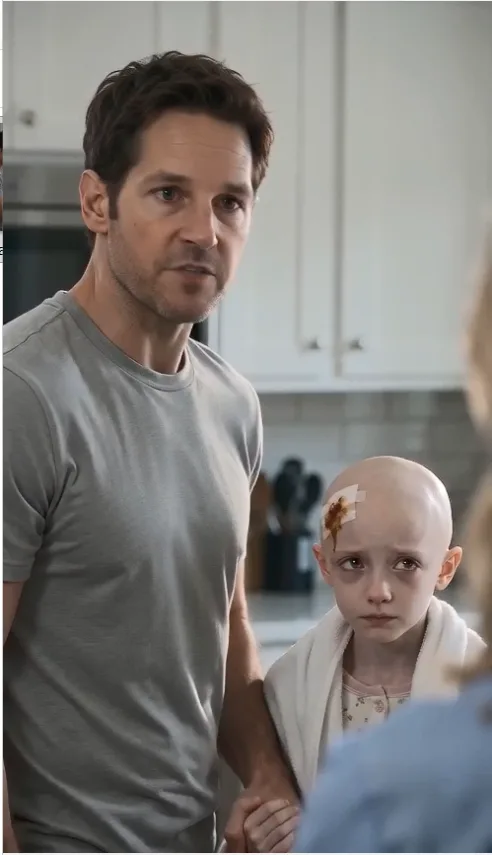
My daughter had cancer.
Of course our lives revolved around her.
Of course hospital appointments replaced vacations.
Of course treatment schedules replaced date nights.
Of course I slept in Lily’s room after surgery.
Vanessa had viewed my daughter’s need for survival as competition.
The email continued.
She claimed the basement punishments were short “calming periods.”
She claimed Lily became manipulative after diagnosis.
She claimed the medication incidents were misunderstood.
She claimed dumping the trash was a terrible moment she regretted.
For the first time, she used the word sorry.
But the apology had conditions.
I am sorry for how it looked.
Not for what she did.
For how it looked.
Aaron called after reading it.
“Don’t answer.”
“I wasn’t going to.”
“She’s trying to create a reconciliation record.”
“What does that mean?”
“She wants to be able to say she acknowledged mistakes and you refused reasonable efforts.”
“I don’t care.”
“You should care legally.”
I rubbed my forehead.
“Sometimes I miss when my biggest problem was cancer.”
The words came out before I realized how terrible they sounded.
Aaron was quiet.
“I know what you mean.”
“No, you don’t.”
“No.”
He did not pretend.
“Probably not.”
That evening, Lily received a card in the mail.
There was no return address.
Inside was a photograph.
Vanessa and Lily at the pumpkin patch.
On the back, someone had written:
I STILL LOVE YOU EVEN IF YOUR DAD IS ANGRY.
I stared at it.
The temporary order prohibited direct communication with Lily.
I called Aaron.
He called Vanessa’s attorney.
Vanessa denied sending it.
Then we checked the envelope.
The postmark came from Patricia’s neighborhood.
Rachel wanted to tear it up.
I stopped her.
“Evidence.”
I hated what the word had done to our lives.
Everything cruel had to be preserved.
Every message.
Every photograph.
Every envelope.
Nothing could simply be thrown away.
The next day, Denise interviewed Patricia.
Patricia admitted mailing the card.
She claimed she was “trying to comfort a sick child.”
She also admitted Vanessa had chosen the photograph.
That violation led to a stricter order.
No indirect contact.
No messages through family members.
No gifts.
No letters.
No social media posts directed toward Lily.
Vanessa reacted by posting publicly.
Not Lily’s name.
Not mine.
Just a long message about “parental alienation” and “the danger of believing medically confused children without context.”
I read it once.
Then Aaron told me to stop looking at her social media.
Rachel blocked her for me.
The next morning, something unexpected happened.
A woman named Melissa Grant called my office.
Vanessa had said she was staying with Melissa.
I expected another accusation.
Instead Melissa said, “Daniel, I think I have something you need.”