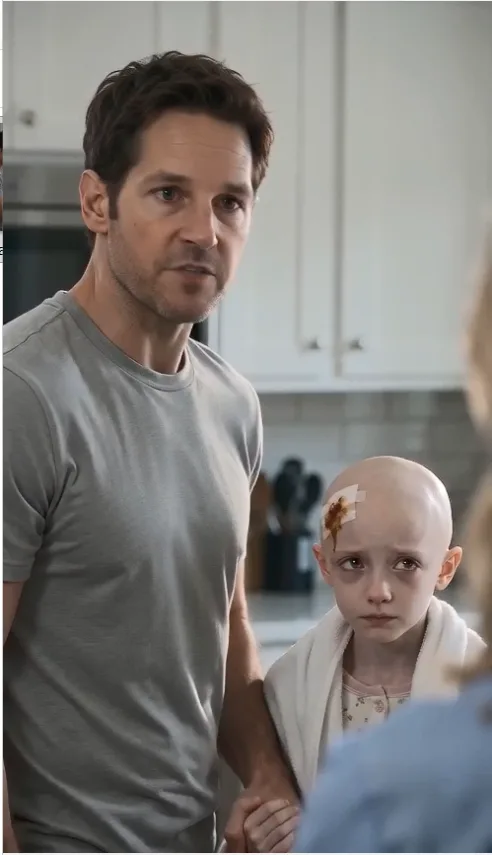
Divorce moved faster after the hearing.
Not fast.
Nothing involving courts is truly fast.
But the major questions were no longer questions.
Vanessa did not contest returning to the house.
She retrieved her belongings through a supervised arrangement while Lily and I were at the hospital.
When we came home, half the bedroom closet was empty.
Vanessa’s photographs were gone.
Her books were gone.
Her favorite coffee mug was gone.
The house looked almost the same.
That made it harder.
I expected her absence to look dramatic.
Instead, it looked like empty hangers.
One missing toothbrush.
A bare space on the bathroom counter.
Lily stood in our bedroom doorway.
“Is all her stuff gone?”
“Most of it.”
She looked around.
“Are you sad?”
“A little.”
“Do you want her back?”
“No.”
My answer came easily.
She nodded.
“Okay.”
I sat on the bed.
“Are you sad?”
Lily thought about it.
“I miss when she was nice.”
“So do I.”
“Was she pretending?”
I considered the question.
“I don’t know.”
“Can somebody be nice and mean?”
“Yes.”
“That’s confusing.”
“Yes.”
Lily climbed onto the bed.
She sat beside me.
“I thought bad people were bad all the time.”
“So did I when I was eight.”
“What do you think now?”
I looked at the empty closet.
“I think what matters is what people choose to do.”
She leaned against me.
“And if they say sorry?”
“That matters too.”
“Does it fix it?”
“No.”
Lily nodded as if storing the answer for later.
Her therapy began the following week.
Not cancer therapy.
Counseling.
Her therapist specialized in children with serious illnesses and trauma.
At first, Lily hated going.
She called it “another appointment where adults ask feelings questions.”
Then she discovered the therapist kept a jar of sour candy in her office.
Suddenly, attendance improved.
Little things began changing.
Lily stopped asking permission to call me.
She stopped apologizing after vomiting.
The first time it happened, she threw up beside the bathroom sink.
Then she froze.
I saw fear cross her face.
I grabbed a towel.
“It’s okay.”
She watched me.
“I made a mess.”
“So?”
Her eyes widened.
“So?”
“We clean it.”
“That’s it?”
“That’s it.”
She started crying.
I crouched beside her.
“What?”
“I thought you’d be mad.”
“I’m not.”
She looked at the floor.
“Vanessa always got mad.”
I handed her the towel.
“Vanessa was wrong.”
That sentence became something we repeated often.
Vanessa was wrong.
Not Lily.
Not her body.
Not her fear.
Not her illness.
Vanessa.
The criminal case continued in the background.
Eventually, prosecutors offered Vanessa a plea agreement.
I did not participate in negotiations.
I gave a victim-impact statement focused on Lily.
Vanessa accepted responsibility for child endangerment and unlawful confinement-related conduct under the agreement.
The exact legal language mattered to lawyers.
What mattered to me was that she could no longer call everything a misunderstanding.
She was ordered into a treatment program.
Probation.
Mandatory counseling.
Restrictions around minors.
Continued no-contact protections.
Some people thought the outcome was too lenient.
Others thought it was too harsh.
I stopped reading opinions.
Our life had already been turned into enough arguments.
One evening, months later, I carried a box into the basement.
Then I saw the gray chair.
It was still there.
I had avoided touching it because Denise originally told me to preserve the area.
The investigation was over now.
I carried the chair outside.
Lily watched from the doorway.
“What are you doing?”
“Getting rid of it.”
She looked at the chair.
Then at me.
“Can I help?”
Together, we carried it to the curb.