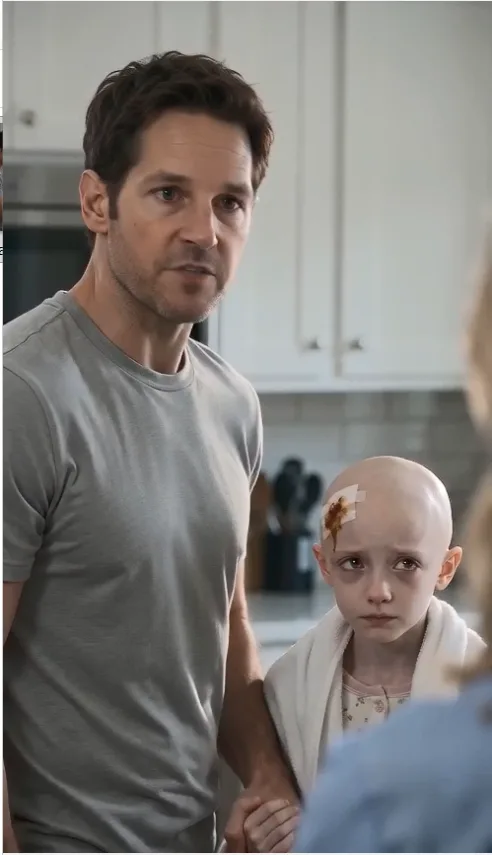
Lily woke at 2:13 in the morning.
I knew the exact time because I was sitting in the chair beside her bed staring at the digital clock.
I had not slept.
Neither had Rebecca.
After making her report, she had contacted Lily’s oncology team and explained what had happened.
They wanted Lily brought to the hospital if the dressing showed any sign of contamination or if she developed a fever.
Rebecca had replaced the bandage carefully.
For now, Lily was stable.
She had gone home shortly after midnight.
I had promised to call if anything changed.
At 2:13, Lily opened her eyes.
“Dad?”
“I’m right here.”
She stared toward the bedroom door.
“Is Vanessa home?”
“No.”
Her shoulders relaxed.
It was barely noticeable.
But I saw it.
That tiny movement told me more than any confession could have.
“She’s not coming back tonight.”
Lily looked at me.
“What about tomorrow?”
There was fear in the question.
I moved closer.
“Do you want her to come back tomorrow?”
Lily pulled the blanket toward her chin.
“I don’t know.”
“You can tell me.”
“What if she gets mad?”
“She’s not here.”
“What if you tell her?”
“I won’t tell her anything you don’t want me to tell her unless I need to tell somebody to keep you safe.”
Lily thought about that.
Eight-year-olds should not have to think about words like safe.
They should think about cartoons.
Birthday parties.
School lunches.
Whether they can stay awake ten extra minutes before bed.
My daughter had already learned the language of hospitals.
Tumors.
Radiation.
Scans.
Blood counts.
Now she was learning the language of fear inside her own house.
Finally, she whispered, “I don’t want her here when you’re gone.”
I felt something turn over inside my chest.
“Why?”
She looked down.
“Because she’s different.”
“How?”
“When you’re home, she talks nice.”
“And when I’m not?”
Lily rubbed the edge of the blanket.
“She says I’m ruining everything.”
I could hear my own heartbeat.
“What does she mean?”
“She says you used to be happy before I got sick.”
I closed my eyes for one second.
When I opened them, Lily was watching me nervously.
I forced myself to stay calm.
“What else does she say?”
“She says you only care about me now.”
“That isn’t true.”
“I know.”
Her voice became smaller.
“She says I’m doing it on purpose.”
“Doing what?”
“Getting sick.”
I could not speak.
“She says sometimes kids learn how to make themselves throw up because they like attention.”
I stood suddenly.
Not because I was angry with Lily.
Because I needed distance from my own rage.
I walked to the window.
Outside, our quiet suburban street looked perfectly normal.
Porch lights.
Parked cars.
Sprinklers clicking somewhere in the darkness.
I had lived beside people for years who probably believed we were an ordinary family.
Maybe I had believed it too.
“Dad?”
I turned immediately.
“I’m sorry.”
“No.”
I crossed the room and sat beside her.
“You do not apologize.”
“But you look mad.”
“I am mad.”
She stiffened.
“Not at you.”
Her eyes stayed on mine.
“I am angry because somebody said cruel things to you when you were sick.”
Lily swallowed.
“She told me not to tell.”
My blood went cold again.
“What did she say would happen?”
“She said you’d think I was causing problems.”
“Anything else?”
Lily hesitated.
Then she nodded.
“She said if you had to choose between your wife and a sick kid who might not…”
She stopped.
I already knew the rest.
“Who might not what?”
Tears appeared in her eyes.
“She said you’d eventually choose the person who was going to be here longer.”
I forgot how to breathe.
For months, doctors had carefully avoided promising Lily anything.
We focused on treatment.
We focused on good days.
We focused on hope.
Vanessa had apparently taken the one terror every child with cancer carried somewhere inside and turned it into a weapon.
I took Lily’s hands.
“Listen to me.”
She looked at me.
“There is no choice between you and anyone.”
“But—”
“You are my daughter.”
I leaned closer.
“You were my daughter before Vanessa entered this house.”
“You are my daughter now.”
“And you will be my daughter every second I am alive.”
Her mouth trembled.
“I’m scared you’ll leave.”
I pulled her against me.
“I’m not leaving.”
That was when she finally cried.
Not loudly.
Not dramatically.
She buried her face in my shirt and cried like she had been holding it in for months.
I held her until her breathing slowed.
Then, just before she fell asleep again, she whispered one more thing.
“There’s a box under my bed.”
I looked down.
“What box?”
She closed her eyes.
“The things Vanessa told me not to show you.”