Part I — The Man at the Mailbox
The first thing Officer Derek Rollins took from me that Sunday morning was my freedom.
The second was the illusion that a title could protect anyone who wasn't allowed to use it.
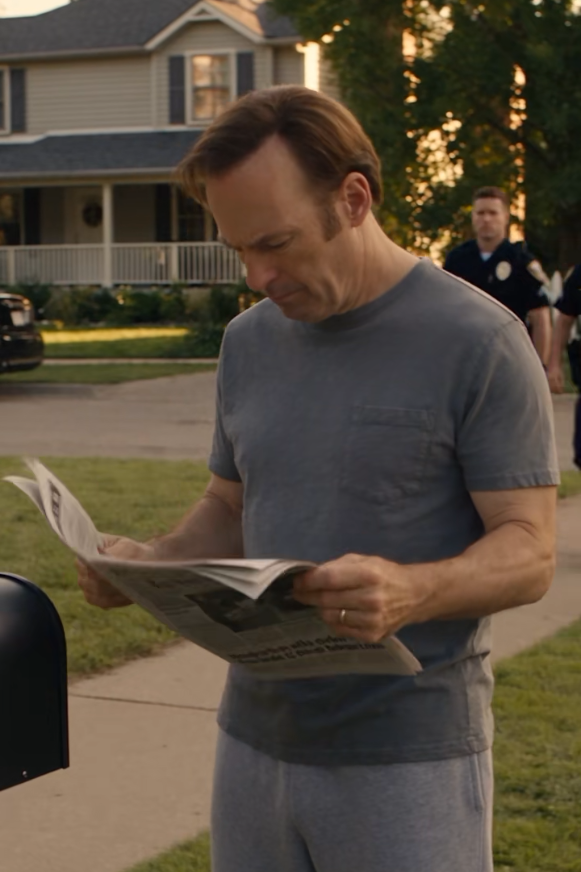
At 7:18 a.m., I was standing at the end of my own driveway with a folded newspaper under one arm when a Montgomery County patrol cruiser slowed beside the curb.
The morning had been quiet enough to hear water ticking against the leaves of the hydrangeas my wife had planted twelve years earlier, before cancer turned our calendar into appointments and test results and eventually into condolences.
Sunday was the one morning I guarded from Washington.
No classified briefing before sunrise. No secure calls from field offices. No congressional aides asking for language that could survive a hearing without becoming a headline.
Coffee.
The paper.
The garden.
That was it.
I was fifty-eight years old, wearing an old Georgetown sweatshirt, gray sweatpants, and running shoes whose heels had started separating from the soles. My silver hair hadn't seen a comb. I hadn't shaved.
There was nothing official about me.
That was the point.
The cruiser stopped.
The driver stepped out.
He was white, perhaps late thirties, broad through the shoulders, sunglasses hooked into the front of his uniform shirt though the morning sun had barely cleared the trees.
His nameplate read ROLLINS.
His partner remained in the passenger seat for another few seconds, holding a coffee cup and watching.
Rollins walked onto my driveway.
No greeting.
No introduction.
“Step away from the mailbox.”
I turned toward him.
“Good morning.”
“I said step away.”
I looked at the brick mailbox, then at him.
There was no package in my hands. No bag. No tool. Nothing except the Sunday paper.
Still, I stepped back.
Not because I thought his instruction made sense.
Because I had spent three decades watching ordinary encounters turn irreversible when pride entered before judgment.
“What are you doing here?”
“Picking up my newspaper.”
“This your house?”
“Yes.”
He looked over my shoulder.
The home was large, Georgian brick, three stories from the rear grade, with a circular side drive and a slate roof. My wife had called it excessive when we first toured it.
Then she had stood at the west windows and seen the evening light.
We bought it two weeks later.
Rollins looked from the house back to me.
“Name?”
“Arthur Pendleton.”
“Homeowner's name?”
“Arthur Pendleton.”
He gave a small laugh.
Not amused.
Dismissive.
“Sure.”
By then his partner had gotten out.
Officer Greg Miller, according to his nameplate. Younger than Rollins, maybe early thirties. His eyes moved from me to the house to Rollins.
“Derek.”
Rollins didn't turn.
“ID.”
“My wallet is inside.”
“How convenient.”
“The front door is fifteen yards behind me. My driver's license is in a brown wallet on the entry table.”
“No.”
“You can check the property records.”
“No.”
“You can run the plate on the SUV in the garage.”
“No.”
“Dispatch can confirm the resident attached to the address.”
His expression hardened.
“I don't need you explaining how to do my job.”
There it was.
The moment when this stopped being a question of identification.
I lowered the newspaper.
“Officer Rollins, what crime are you investigating?”
“Package theft.”
“Was I reported stealing a package?”
“No.”
“Was I seen removing anything from another person's property?”
“I see you standing on property.”
“My property.”
“That is what we're trying to figure out.”
Miller shifted his weight.
“Derek, we can run the address.”
Rollins looked at him.
“I've got it.”
Three words.
I knew them well.
Every profession had phrases that became warning bells when used by the wrong person.
I've got it.
Meaning: Stop interfering.
Meaning: My authority is being tested.
Meaning: This is mine now.
He faced me.
“You don't look like the homeowner.”
I waited.
The pause irritated him more than an argument would have.
“What does the homeowner look like?”
“You know exactly what I mean.”
“I'd like to hear you say it.”
His jaw tightened.
“Hands behind your back.”
Miller moved immediately.
“Derek, hold on.”
I didn't move.
“What is the legal basis for the detention?”
Rollins stepped forward and seized my right wrist.
“Failure to identify.”
“I gave you my identity.”
“You don't have ID.”
“That isn't the same thing.”
He twisted my arm behind me.
Pain shot through my shoulder.
Not injury.
Not yet.
Just enough force to make the point.
My body knew what to do.
Turn.
Drop my weight.
Break the grip.
Control the elbow.
Thirty years of training does not disappear because the suit changes.
I did none of it.
I let him pull my arm farther back.
The first cuff closed around my wrist.
Then the second.
Too tight.
Metal bit into skin.
Miller stared.
“Derek.”
“What?”
“He isn't fighting you.”
“Then he's got nothing to worry about.”
I looked directly at Rollins.
“Remove the cuffs.”
His mouth curved.
“No.”
“Run my name.”
“At the station.”
“You still have several opportunities to correct this.”
“Save the speech.”
He pushed me toward the cruiser.
My paper fell open on the driveway.
The wind lifted the business section and folded it over the front page.
Rollins opened the rear door.
I stopped before getting in.
“Officer Miller.”
Miller looked at me.
“Your body camera is recording?”
Rollins answered for him.
“Get in.”
I kept my eyes on Miller.
“Is it?”
A pause.
“Yes.”
“Good.”
Rollins shoved my shoulder.
I ducked into the back seat.
The door slammed.
From behind the partition I watched my own house through tinted glass.
The garden hose was still running.
Water spread in a dark fan across the walkway.
One of the hydrangea branches sagged beneath the spray.
And that was when I made the decision that would determine everything that followed.
I could have ended it.
One sentence.
I am the Director of the Federal Bureau of Investigation.
Rollins would have frozen.
Miller would have verified it.
Supervisors would have arrived.
Apologies would have multiplied.
Calls would have been made.
But none of that would have answered the question that mattered.
What would Derek Rollins have done if I were exactly the man he believed I was?
A Black stranger.
No influence.
No title.
No office that could make a police chief answer the phone.
Someone he assumed nobody important would miss.
I leaned back against the vinyl seat.
Rollins climbed behind the wheel.
Miller hesitated before entering the passenger side.
“Derek.”
“What?”
“Let's just run him.”
“We're already going in.”
“This doesn't feel right.”
Rollins started the engine.
“He was on private property without ID.”
“He says it's his property.”
“They all say something.”
Miller looked toward him.
“Who is ‘they’?”
Rollins glanced sideways.
“Don't start.”
The cruiser rolled away from my home.
I watched the hydrangeas disappear through the rear window.
Then I looked down at the cuffs around my wrists.
My late wife, Evelyn, used to tell me that people revealed themselves most clearly when they believed there would be no consequence.
I had always thought that was a little too severe.
That morning, I stopped thinking so.
The ride took nineteen minutes.
Rollins did not question me again until we were six blocks from the station.