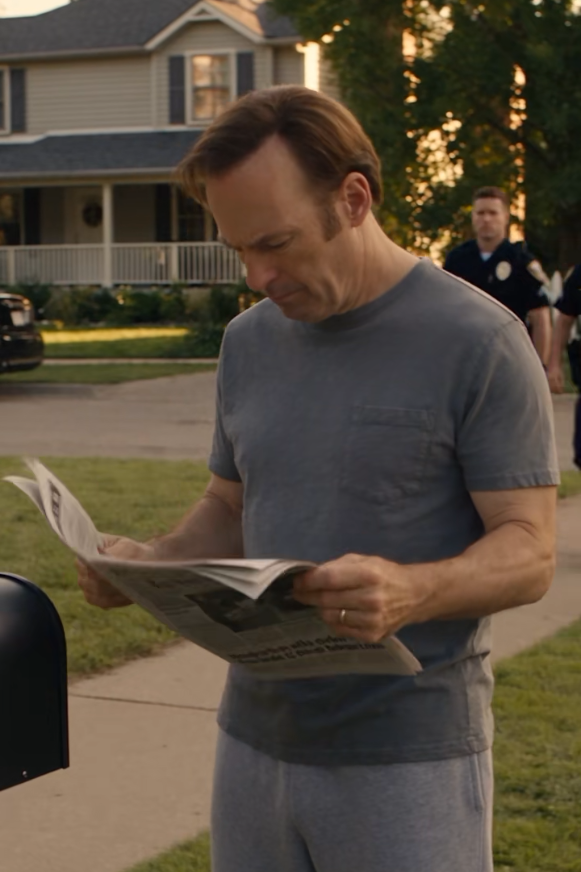
“Outcome?”
“No federal action.”
“Why is this relevant?”
“Because the reviewing agent wrote something unusual.”
I waited.
“He said Rollins's account was technically plausible but inconsistent across interviews.”
“Still not my case.”
“I know.”
“Then why are you here?”
Rachel looked frustrated.
“Because three later complaints contain almost identical language.”
My attention sharpened despite myself.
“What language?”
She opened the folder but did not hand it to me.
“‘The individual displayed indicators consistent with criminal activity but could not provide immediate verification of lawful purpose.’”
I frowned.
“That's generic.”
“Maybe.”
“Or copied from training language.”
“It could be.”
“Then don't build a conspiracy out of phrasing.”
“I didn't.”
She closed the file.
“But somebody else might.”
“Who?”
“The press already has one of the old complaints.”
That landed harder.
“How?”
“No idea.”
“And now they're going to connect everything.”
“Yes.”
“Whether the connection exists or not.”
“Yes.”
I stood.
“Then our job is to stay out of it.”
Rachel watched me.
“That may be the hardest thing you've ever asked yourself to do.”
She was right again.
I was beginning to resent the pattern.
The next development came from the one person nobody had been talking about.
Greg Miller.
He requested to speak with Internal Affairs without Rollins's union attorney present.
Chief Holt called me afterward, not to reveal protected testimony but to tell me one thing she was legally permitted to say.
“Miller reported that Rollins made a comment before approaching you.”
I stopped pacing.
“What comment?”
“I can't give you the exact wording yet.”
“Then why call?”
“Because you should hear it before the media does.”
I waited.
Holt said, “He apparently saw you near the mailbox and said something suggesting you didn't belong in the neighborhood.”
My grip tightened on the phone.
“Suggesting how?”
“Arthur.”
“Marian.”
“I can't quote an ongoing witness statement.”
“Was race explicit?”
A pause.
“Yes.”
The office seemed smaller.
I sat down.
Not because my legs weakened.
Because anger is easier to manage when the body is still.
“How explicit?”
“I can't—”
“Fine.”
I looked at the wall across from my desk.
My FBI commission hung beside a photograph of the first field office I ever worked in.
“Does Miller explain why he didn't intervene more forcefully?”
“Yes.”
“And?”
“That is part of the investigation.”
I gave a humorless laugh.
“Now you're enjoying this.”
“No.”
She paused.
“He says he was afraid of Rollins.”
That surprised me.
“Afraid physically?”
“Professionally.”
“How?”
“Rollins trained him.”
Of course.
That single fact rearranged the scene in my memory.
Miller's hesitation.
His repeated “Derek.”
The way Rollins asked whose side he was on.
This had not been an interaction between equals.
It had been a senior patrol officer and the younger partner he had trained.
A hierarchy inside the hierarchy.
Holt continued.
“There's more.”
“What?”
“Miller says this wasn't the first questionable stop he saw.”
I closed my eyes.
“How many?”
“He documented two others privately.”
“Privately where?”
“Personal notes.”
“Why?”
“He says he wasn't sure what to do.”
“When?”
“Over the last seven months.”
“And he never reported them?”
“No.”
I stood again.
“Then you don't have one problem.”
“I know.”
“You have two.”
“I know.”
“One officer who may be abusing discretion and another officer who saw enough to make notes but not enough to act.”
“I know, Arthur.”
Her voice was tired now.
Not defensive.
That mattered.
I said, “What happened in those two stops?”
“I can't discuss details yet.”
“Were arrests made?”
“No.”
“Force?”
“No.”
“Then nobody noticed.”
“Apparently not.”
I went to the window.
Below, tourists moved along the sidewalk.
To most of them, justice was something that happened in courtrooms.
People in law enforcement knew otherwise.
Justice often lived earlier.
In a decision to stop.
To search.
To believe.
To write.
To look away.
Holt said, “There's something else you need to consider.”
“What?”
“Miller wants to resign.”
I turned.
“Why?”
“He thinks he failed.”
“He did.”
A long silence.
Then Holt said, “That's cold.”
“No. It's accurate.”
“You don't think he deserves any credit for coming forward?”
“I do.”
“Then which is it?”
“Both.”
I sat again.
“Marian, if we only have moral categories for heroes and villains, institutions learn nothing. Miller failed on Sunday. He also prevented Rollins's version from becoming the only version. Those facts don't cancel each other.”
“So what would you tell him?”
“I'd tell him not to resign before he learns whether he can become the officer he should've been in that driveway.”
Holt was quiet.
“Can I tell him that?”
“Yes.”
Then I added, “But tell him I said it as Arthur Pendleton.”
Not Director Pendleton.
There was a difference.
Part IV — Reckoning
Three days after the arrest, the complete body-camera footage was released.
It changed the public conversation immediately.
Not because it made the incident worse.
Because it made it ordinary.
There was no dramatic struggle.
No screaming.
No weapon.
No chase.
No split-second chaos that people could argue about for months.
There was sunlight.
A newspaper.
A man standing in his driveway.
A police officer refusing every easy path toward verification.
The footage showed me saying, “You still have several chances to correct this.”
Then Rollins pushed me toward the cruiser.
That line became the headline.
I hated it.
Not because it was false.
Because headlines turn human failures into scripts.
People began printing the words on signs.
Commentators repeated them as if I had known they would become prophetic.
I hadn't.
I'd been trying to get a man to loosen handcuffs.
On Thursday morning, I held my first press conference.
The room at FBI headquarters was full long before I entered.
I stood behind the lectern.
No prepared statement.
That irritated the communications team.
It also prevented me from hiding inside one.
“I want to begin with something simple,” I said. “What happened to me does not become more serious because of my job.”
The room quieted.
“If the conduct shown in that video was unlawful or inconsistent with policy, then it would be equally serious if I were a teacher, a mechanic, a delivery driver, unemployed, or unknown to everyone in that police station.”
Pens moved.
Cameras clicked.
“I have recused myself from all federal matters that could involve Officer Rollins or the county department's internal investigation. I will cooperate as a complainant and witness. I will not use the authority of my office to determine an outcome.”
A reporter raised her hand.
“Director, do you believe the arrest was racist?”
Political questions often sound simple because the person asking does not have to live inside the answer.
“I believe Officer Rollins made assumptions about me that were unsupported by what I was doing. His partner has reportedly provided information relevant to whether race influenced those assumptions. Investigators should establish the facts.”
“Do you personally think it was racism?”
“I just answered that.”
Another reporter called out.
“Should Rollins be fired?”
“That decision belongs to his department after due process.”
“You're not calling for termination?”
“I am calling for a legitimate investigation.”
“Do you forgive him?”
I almost smiled.
Not because the question was funny.
Because it revealed how quickly public discussion abandons systems for emotion.
“He hasn't asked me to.”