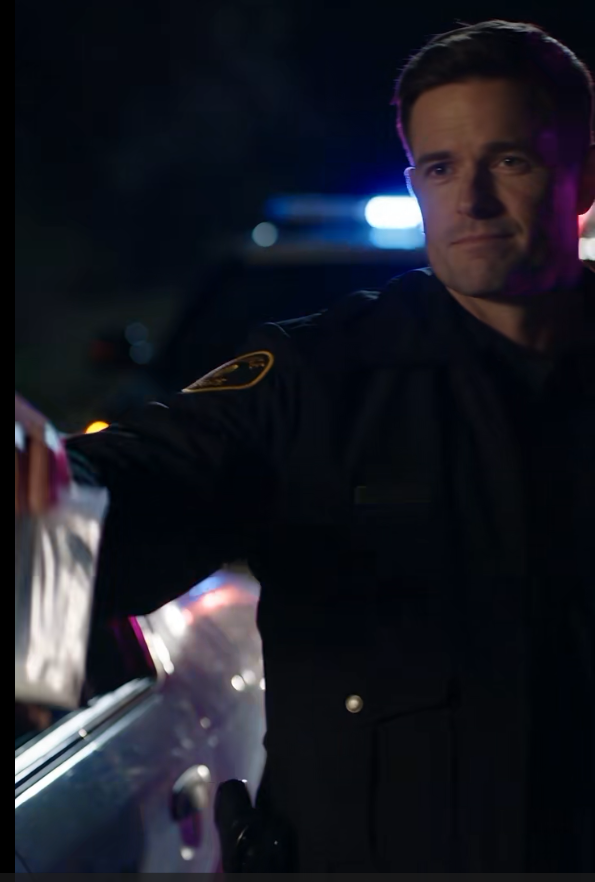
That made the act almost more revealing.
Someone had selected something that looked incriminating without risking an actual controlled-substance chain-of-custody problem until after the arrest.
Calculated.
Controlled.
Designed to buy time.
Forensic technicians found a slim plastic entry tool beneath the passenger seat of Keller's cruiser.
They also found blue fibers matching the cruiser upholstery inside Claire's car.
The passenger door showed signs of manipulation.
Keller's department-issued phone contained no incriminating message.
That was expected.
His personal phone was missing.
Keller claimed he had left it at home.
A search warrant later found no device there.
By eight that morning, Claire had not slept.
She sat in a state police conference room with Mercer, Ortiz, and Reeves, who had arrived in person wearing the same suit he had probably put on the previous morning.
Reeves looked furious.
Not at Claire.
At the situation.
That distinction mattered.
"Where's the file?" he asked.
Ortiz answered.
"Secure evidence vault."
"I need it transferred back to commission custody."
"No."
Reeves looked at her.
"Excuse me?"
Ortiz did not blink.
"Possible target of an attempted criminal seizure. Until we know who authorized that attempt, it remains secure."
Reeves turned to Claire.
"You agreed to this?"
"I requested it."
"Of course you did."
Claire ignored the tone.
Mercer placed a folder on the table.
"Keller's unit GPS puts him three miles from where Ms. Moreau was first detected by traffic-camera systems. He changed direction two minutes before initiating the stop."
Reeves asked, "Detected how?"
"Automated plate recognition."
"Who queried the plate?"
Mercer hesitated.
"We're still tracing it."
Ortiz said, "Initial log shows a credential from municipal command access."
Claire looked at Mercer.
"Which command?"
"Your commission had temporary credentials tied into municipal systems for evidence review."
Reeves stared.
"What?"
Claire felt a quiet chill.
Mercer continued.
"The query token traces to a commission-issued access bundle."
Reeves leaned back.
"That's impossible."
Ortiz said, "No."
Her voice was flat.
"It's inconvenient."
Claire studied Reeves.
He did not look guilty.
But guilt was not always visible.
That was another lesson from six months of files.
She said, "Who has that bundle?"
Reeves rubbed a hand over his face.
"Technical staff. Investigators. Legal. Anyone granted cross-system discovery access."
"How many?"
"Twenty, maybe."
Mercer said, "We need audit logs."
Reeves shook his head.
"Not without authorization."
Claire stared at him.
"Daniel."
"I'm not protecting anyone."
"Then authorize it."
"I can't unilaterally expose protected commission records to local police."
Ortiz said, "State police."
"Same issue."
Claire watched him.
He was right.
That was the problem.
Institutions did not become transparent simply because people inside them wanted to do the right thing.
Reeves said, "I can request emergency review from the chair."
Claire asked, "Foster?"
"Yes."
"One of the people who knew about the transfer."
Reeves looked at her.
"Be careful."
Claire almost laughed.
Keller had said the same thing.
Different meaning.
Same instinct.
Protect the structure first.
Reeves softened.
"Claire, suspicion isn't proof."
"I know that."
"Then act like it."
"I am."
"No. You're treating every person who knew something as if they're compromised."
"Because someone is."
Reeves leaned forward.
"And if you poison every relationship before you identify that person, you make their work easier."
That landed.
Claire looked away.
He was right about that too.
Mercer broke the silence.
"What was in the file?"
Claire looked at Reeves.
He nodded.
She answered.
"Patterns in eleven arrests over fourteen months. Same small group of officers. Repeated evidence discrepancies. Seizures documented after body cameras stopped recording. Vehicle inventories with identical phrasing across unrelated incidents. Three defendants who independently described officers retrieving items from cruisers before 'discovering' them in cars."
Mercer's expression tightened.
"Keller in all eleven?"
"Five."
"Who else?"
"Not discussing names until the file is formally opened."
Ortiz asked, "Any supervisors?"
Claire hesitated.
"Yes."
Mercer noticed.
"Who?"
Claire looked at him.
"Lieutenant."
His face changed only slightly.
"Am I in it?"
"No."
He nodded.
But Claire could see relief he hated himself for feeling.
Reeves said, "The file was supposed to trigger subpoenas this morning."
Ortiz looked at him.
"Someone knew that too?"
"Possibly."
Claire corrected him.
"Definitely."
The room went quiet.
Reeves stood and walked toward the window.
Morning light had begun flattening the parking lot outside.
"We delay the subpoenas."
Claire said, "No."
He turned.
"If the network knows we're coming—"
"They already know."
"Then we don't hand them our next move."
"If we delay, we confirm they successfully disrupted the operation."
Ortiz looked from one to the other.
Reeves said, "This isn't about pride."
"I know."
"Then why rush?"
"Because the evidence is already at risk."
"The file is secure."
"The evidence in the world isn't."
That stopped him.
Claire continued.
"Phones. lockers. private vehicles. unofficial records. Anything not already preserved can disappear by lunch."
Mercer said, "She's right."
Reeves looked at him.
"You want to serve warrants based on a compromised operation?"
"I want preservation orders."
Ortiz nodded.
"Immediate. Quiet."
Reeves considered.
Claire said, "Use the attempted theft as cause to accelerate preservation without disclosing the underlying targets."
He looked at her.
"And the commission leak?"
"We separate the channels."
"How?"
"Nobody gets the full list."
Mercer understood first.
"Compartmentalize."
Claire nodded.
"State police gets one set. Commission counsel gets another. Internal affairs gets a third. Different timing. Different targets."
Reeves' eyes narrowed.
"You want to seed the operation."
"I want to see which part leaks."
Ortiz said, "Dangerous."
"Yes."
Mercer said, "Useful."
Reeves stared at Claire.
"You've been awake all night."
"That doesn't make the idea wrong."
"It makes me wonder whether you understand the consequences."
Claire looked at him.
"I understand them."
If the leak came from the commission, people she had worked beside would become suspects.
If it came from state police, Ortiz's chain could be compromised.
If it came from Mercer, everything on the roadside might have been theater.
Trust was about to become evidence.
She hated that.
But she knew how to work with evidence.
By noon, three sealed preservation packages existed.
Package A named two officers from Keller's district.
Package B named a records supervisor and one patrol officer.
Package C named a lieutenant from a neighboring unit.
Only the real target list included the full network.
Claire personally wrote each package.
No digital copies.
Reeves carried A.
Ortiz handled B.
Mercer handled C.
They agreed to act at staggered times.
Then they waited.
At 2:13 p.m., one of the officers named only in Package C called in sick.
At 2:19, his department-issued phone went offline.
At 2:24, a traffic camera recorded his private truck leaving town.
Mercer stared at the alert.
The room around him seemed to contract.
Claire said nothing.
Ortiz did.
"Your package."
Mercer nodded.
His face had gone still.
Reeves looked at him.
"Who had access?"
Mercer's voice was flat.
"Me."
Claire watched him.
"And?"
He did not answer.
Claire waited.
Finally:
"My captain."
Ortiz said, "Name."
"Franklin."
Claire knew the name.
Captain Robert Franklin appeared in the sealed file.
Three times.
Not as the officer making arrests.
As the supervisor approving disputed reports.
Mercer sat down.
Claire felt the weight of the moment but did not soften it.
"Did Franklin know about the roadside incident last night?"
"Yes."