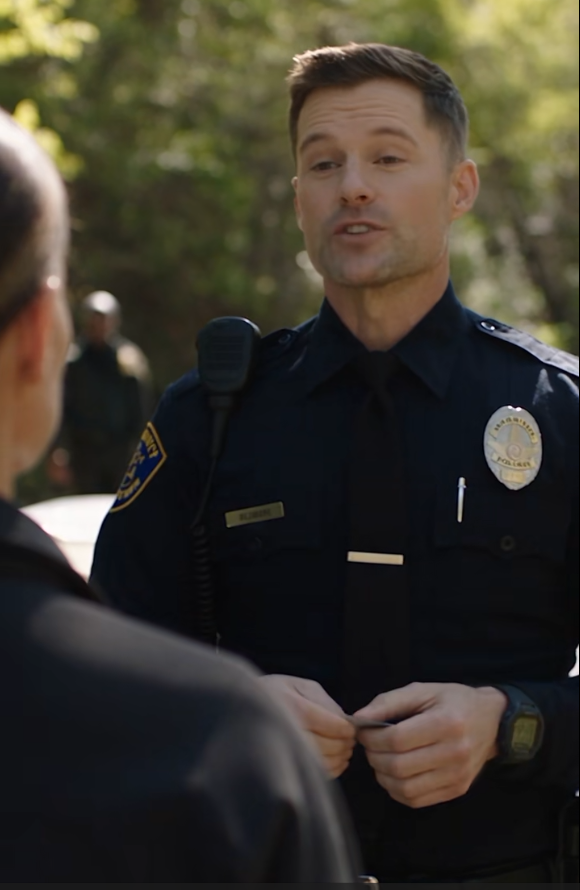
Six names.
Six traffic stops.
All involving Officer Wade Mercer.
Four with Sergeant Nolan Price appearing later either physically or in review documentation.
Three formal complaints.
One withdrawn.
Two never filed.
And one death.
Elena read the last name twice.
“Who is Aaron Pike?”
Benton’s face tightened.
“Twenty-six. Electrician. Stopped four months ago.”
“What happened?”
“Mercer cited him for reckless driving and resisting.”
“Convicted?”
“No. Charges dismissed.”
“Why?”
“Prosecutor couldn’t obtain usable video.”
Mara leaned forward.
“And the death?”
“Three weeks later.”
Elena looked at Benton.
“How?”
“Single-vehicle collision.”
“That connected?”
“We don’t know.”
Grant’s voice came through the speaker.
“Don’t build a conspiracy out of proximity.”
Benton nodded.
“I’m not.”
Elena studied the timeline.
“What did Pike complain about?”
Benton clicked.
A scanned statement appeared.
“He alleged Mercer demanded access to his phone during the stop. Pike refused. Mercer claimed he smelled marijuana. Vehicle searched. Nothing found. Pike said Mercer threatened to ‘make this expensive’ if he filed a complaint.”
“Did he?”
“Yes.”
“And?”
“Internal review found no corroboration.”
“No video?”
“Equipment failure.”
Mara leaned back.
“Again.”
Benton changed slides.
“This is the part we can establish. In the last eight months, Mercer’s body camera has recorded twenty-seven documented malfunctions.”
Grant frowned.
“That many?”
“Department average is three.”
Elena asked, “How many during citizen complaints?”
Benton looked at her.
“Eleven.”
The room became quiet.
“And Price reviewed how many?” Elena asked.
“Nine.”
Mara said, “That’s not random.”
Grant replied carefully, “It’s suspicious. That’s different.”
Benton agreed.
“Which is why we keep digging.”
She changed slides again.
A database access log appeared.
Elena recognized her name.
The timestamp was 3:19 p.m.—three minutes after the stop began.
A second query appeared at 3:21.
A third at 3:23.
“What are those?” Elena asked.
Benton pointed.
“First is standard driver return. Second accesses extended state records. Third requests restricted occupational markers.”
Mara looked at Elena.
“So he knew.”
Benton nodded.
“He knew you were associated with federal service before he ordered you out of the vehicle.”
Elena felt the implication before anyone voiced it.
His behavior had not escalated because he was surprised by her status.
It had escalated after he discovered it.
“Why?” she asked.
Benton switched the screen.
“Because your restricted marker triggered an alert on his terminal.”
“What kind?”
“A local intelligence flag.”
Grant straightened on screen.
“What intelligence flag?”
Benton looked at him.
“One that shouldn’t exist.”
The room changed.
Elena folded her arms.
“Explain.”
“Someone in the county system built a custom query notice. It appears when certain categories of people are stopped.”
“What categories?”
“Law enforcement. Prosecutors. Federal employees. Military personnel above certain access classifications. Judges. Internal investigators.”
Mara stared at her.
“A warning list.”
“Yes.”
“For what purpose?”
“We don’t know.”
Elena did.
“At minimum, to tell officers who could become dangerous complainants.”
Benton did not disagree.
Grant said, “Or to trigger extra caution.”
Elena looked toward the screen.
“Then why hide it?”
Grant held her gaze through the camera.
“Fair point.”
Benton enlarged the alert text.
It contained only three words.
SPECIAL HANDLING REQUIRED.
Elena read it once.
Then again.
“Who created the flag?”
“That’s the problem.”
“What?”
“The account belongs to Sergeant Price.”
Mara exhaled slowly.
Elena stared at Price’s name.
The roadside comment returned to her.
The correct decision is the one that keeps a small problem small.
This was not about one arrogant officer.
Not anymore.
Benton shut down the display.
“We’re executing preservation orders today.”
“On the department?” Mara asked.
“Specific systems.”
“Will they know?”
“Yes.”
Elena looked at Benton.
“Then whoever sent me the list may be exposed.”
“We’ve considered that.”
“Have you identified them?”
“No.”
“Can you protect them?”
“If they come forward.”
Elena stood.
“Then make it safe enough for them to do that.”
Benton’s expression cooled.
“This isn’t your operation, Commander.”
“I know.”
“Then don’t interfere.”
“I’m not asking to.”
“You’re close.”
Elena paused.
Benton continued.
“You are the complainant who triggered this investigation. That matters. But if you contact department employees, witnesses, or anyone associated with the list, defense counsel will use it.”
Elena nodded.
“You’re right.”
Mara glanced at her, mildly surprised.
Elena ignored it.
Benton gathered her papers.
“Go back to work.”
“That’s your advice?”
“Yes.”
“Why?”
“Because people who manipulate systems count on everyone else becoming consumed by them.”
For the first time since the traffic stop, Elena found that useful.
So she returned to command.
The following week was almost normal.
Almost.
Elena spent Monday reviewing deployment readiness, Tuesday in a secure planning conference, Wednesday resolving a personnel dispute between two section leaders who had both confused stubbornness with principle.
No one on base mentioned the traffic stop.
Mara made sure of that.
Then on Thursday morning, Elena’s executive officer stepped into her office and closed the door.
“Ma’am.”
Elena looked up.
Major Thomas Keene rarely closed doors without cause.
“What is it?”
“You have a visitor.”
“Scheduled?”
“No.”
“Then send them through protocol.”
“They asked for you by name.”
“Who?”
Keene hesitated.
“A county dispatcher.”
Elena stood.
“Name?”
“Rachel Dunn.”
Elena felt a quiet shift in the room.
“Where is she?”
“Conference room three.”
Elena walked there alone.
Rachel Dunn was younger than Elena expected, perhaps early thirties. She wore jeans, a plain blue sweater, and the exhausted expression of someone who had not slept.
She stood when Elena entered.
“Commander Vale.”
Elena closed the door.
“Ms. Dunn.”
“I’m sorry for coming here.”
“Why did you?”
Rachel looked at the table.
“Because I sent the email.”
Elena said nothing.
Rachel’s eyes lifted.
“The list.”
“I assumed that.”
“I didn’t know where else to go.”
“You could have gone to state investigators.”
“I tried.”
Elena remained standing.
“When?”
“Months ago.”
“What happened?”
“They referred me back through department channels because I didn’t have enough documentation.”
“And department channels meant Sergeant Price?”
Rachel gave a humorless laugh.
“Eventually.”
Elena sat across from her.
“Have you spoken with Claire Benton?”
“No.”
“You need to.”
“I will.”
“Today.”
Rachel nodded.
“I need to tell you something first.”
Elena waited.
Rachel’s hands were clasped tightly in her lap.
“Officer Mercer isn’t the reason I made the list.”
“Who is?”
“Price.”
Elena did not move.
Rachel continued.
“He tracks complaints.”
“How?”
“Dispatch notes. Stop records. Internal case numbers. He tells people it’s for officer-safety trends.”
“Is that unusual?”
“Not by itself.”
“What is?”
“He tracks who complains before they complain.”
Elena leaned forward.
Rachel swallowed.
“The special handling flag? That’s his.”
“We know.”
Rachel’s eyes widened.
“You do?”
“Yes.”
Relief flashed across her face, then disappeared.
“There’s more.”
Elena waited.
“Some stops get marked for supervisor review before the officer clears them.”
“Why?”
“I don’t know.”
“Which stops?”
“People with certain occupations. Sometimes out-of-county drivers. People linked to attorneys. Government employees. Anyone who starts asking about cameras.”
Elena thought about her own stop.
“Was mine marked?”
Rachel nodded.
“When?”
“Four minutes after Mercer ran your license.”
Before Price arrived.
“Who marked it?”
“Price.”
Elena felt something colder than anger.
“So he was watching remotely.”