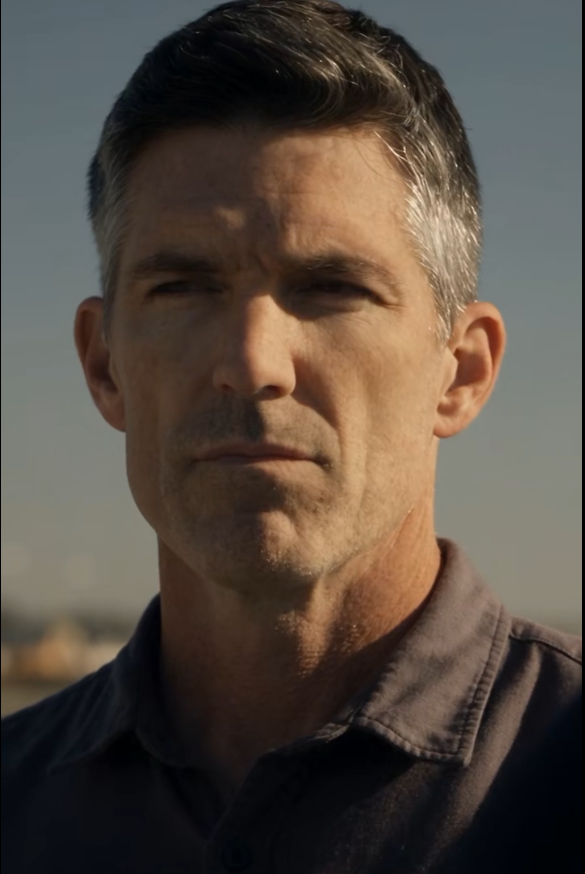
I looked at Brady.
He was finally looking at me.
Not smug now.
Not frightened either.
Watchful.
He knew there was a path out for me.
And I think he expected me to take it.
That expectation decided the answer.
"Because I was angry, and because I wanted leverage over a man who had taken my property."
Nobody moved.
City counsel had known what I would say.
She continued.
"Did you have a technical basis for believing the vehicle was compromised at the moment you issued the command?"
"No."
"Did you later learn there was an abnormal camera-network configuration?"
"Yes."
"Did you know that before initiating the isolation?"
"No."
"So that discovery does not justify your command retroactively."
"No."
Brady's representative wrote something quickly.
City counsel looked at me.
"Why did you restore communications when the sergeant asked?"
"Because by then I had stopped treating a public system like it belonged to me."
"What do you mean?"
"I had access to a powerful tool because the city trusted me to use it for a narrow purpose. Officer Brady had authority because the city trusted him to use his powers for narrow purposes. He crossed that line first."
I paused.
"I crossed mine second."
Brady's representative stood.
"Objection to the characterization."
The panel chair said, "This isn't a trial. We'll allow the answer."
City counsel stepped back.
"No further questions."
Brady's representative approached.
He was good.
Calm voice.
No aggression.
That made him effective.
"You disabled my client's ability to communicate with dispatch."
"Yes."
"Because you wanted your watch back."
"Partly."
"What was the other part?"
"I wanted him to know I wasn't helpless."
"Helpless."
He let the word sit.
"Did Officer Brady threaten you physically?"
"No."
"Strike you?"
"No."
"Display a weapon?"
"No."
"Did he tell you that you were under arrest?"
"No."
"So the threat you were responding to was the temporary seizure of a watch."
"I was responding to an abuse of authority."
"That's your interpretation."
"Yes."
"And your response was to use your own authority improperly."
"Yes."
He stopped.
The answer had taken the energy out of his next question.
He changed direction.
"You designed part of this system."
"Yes."
"You knew disabling communications could create risk."
"Yes."
"You did it anyway."
"Yes."
"You would agree, then, that highly trained professionals can make poor decisions in tense situations."
I knew what he was doing.
"So can patrol officers?"
His expression did not change.
"I'm asking about you."
"Then yes."
"Should one poor decision erase twenty years of service?"
There it was.
Not really about me.
I looked at Brady.
"No."
The representative nodded.
"Thank you."
He turned away.
I added, "But some decisions reveal whether the problem was a moment or a pattern."
He stopped.
"Move to strike."
The panel chair considered.
"Overruled. You opened the subject."
The representative returned.
"What pattern are you qualified to testify about?"
"None beyond my own behavior."
"So you have no personal knowledge that Officer Brady engaged in misconduct before your stop."
"No."
"Yet you implied otherwise."
"I said decisions can reveal patterns. The records determine whether there is one."
He studied me.
"Records you caused to be preserved."
"Records the system preserved automatically after a command I should not have issued."
"Convenient distinction."
"It's an accurate one."
He stared at me for another second, then returned to his seat.
The hearing moved to Brady.
He spoke carefully.
He said he had noticed an item resembling property described informally at roll call.
No written bulletin existed.
No serial number.
No specific model.
He said he intended to inspect the watch further inside his cruiser.
He put it in his pocket because he needed both hands free.
He had not issued a receipt because the investigation was incomplete.
City counsel asked why he had told me to "take it up with the precinct tomorrow" if the roadside investigation was continuing.
He said he had misspoken.
Then they reached the camera.
"Why did you place your body camera in local mode before initiating the stop?"
Brady looked toward his representative.
"It had connectivity issues."
The network-security officer's report showed no connectivity error.
Brady said he'd experienced intermittent delay earlier.
No diagnostic alert supported that.
He said officers sometimes used local mode when sync behaved unpredictably.
The department policy said they were required to document that switch.
He had not.
Then city counsel produced prior dates.
Not allegations.
System records.
Times when Brady's credential had manually selected local mode before encounters.
His representative objected that unrelated incidents were outside scope.
The panel allowed a limited inquiry because Brady had claimed technical habit.
"How many times did you place cameras into local mode during the previous six months?"
Brady looked down at a document.
"I don't remember."
"System records show fourteen."
He said nothing.
"How many were documented as equipment problems?"
Silence.
"Officer Brady?"
"None."
"How many occurred immediately before citizen contacts?"
His representative stood.
The panel chair said, "He may answer if he knows."
Brady swallowed.
"I don't know."
The security officer did.
Twelve.
That number changed the room.
Not because it proved twelve thefts.
It didn't.
Most of those encounters had no allegation attached.
But it destroyed the idea that the camera setting was an isolated mistake.
City counsel placed my watch receipt beside the timeline.
Then photographs of the watch.
Then the body-camera frame showing my wrist.
Then the frame showing Brady's hand placing it into his pocket.
No speech was necessary.
Records work best when they do not need adjectives.
Brady's representative asked for a recess.
The panel granted twenty minutes.
I went into the corridor.
My leg hurt.
I found a bench near a vending machine and sat.
A minute later, the network-security officer joined me.
He held two coffees.
"Didn't know how you take it."
"Badly."
He handed me one.
It was terrible.
Exactly what I needed.
"You could have made that easier on yourself," he said.
"I've heard."
"The technical concern argument wasn't completely absurd."
"It would've been false."
"Mostly false."
"That's a dangerous category for an engineer."
He nodded.
We drank in silence.
Then he looked at my watch.
"You know why the isolation control was single-confirm?"
"Speed."
"That's what everyone says."
"It's true."
"Still."
He leaned back.
"We're changing it."
I turned toward him.
"How?"
"Field isolation from a remote credential will require dual authorization unless the system independently detects a cryptographic compromise."
"Good."
"You're saying that awfully quickly for someone who designed the current flow."
"I helped design a system for the person I thought I would always be."
He waited.
I looked through the corridor window at nothing in particular.
"Turns out that person gets angry too."
He took another drink.
"That's going in the design notes."
"Don't you dare."
He smiled.
The panel reconvened.
The final part took less than an hour.
Brady's local-camera history was admitted.
Prior property complaints remained under separate investigation, so no unsupported accusations were treated as fact.
That mattered.
The hearing was not allowed to become revenge.
The city proved what it could prove.
He had manually altered camera sync without required documentation.
He had seized my watch after being told it bore identifying engraving.
He had failed to inspect that engraving.