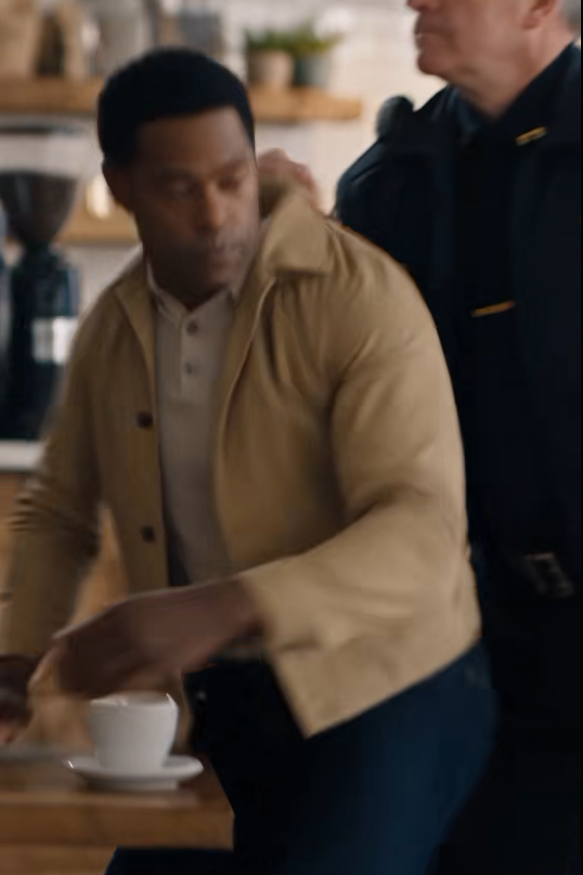
Thornton opened the rear door.
“Out.”
I stepped onto the pavement.
“Am I allowed a lawyer?”
“When you’re booked.”
“I’d like one.”
“You’ll get one.”
He took my arm.
We walked through the rear entrance of Ridgemont Police Headquarters.
I had seen the building plans.
I knew where we were.
Booking was down the hall.
Interview rooms to the left.
Evidence processing past the secure door.
Thornton led me right instead.
Not toward booking.
Toward his office.
That was the first thing that morning I had not anticipated.
Part II — Pressure
Thornton’s office overlooked the municipal parking lot.
It contained a mahogany desk too large for the room, framed newspaper articles, a photograph of him shaking hands with a former governor, and a glass case displaying his father’s badge from the same department.
He put me in a chair facing the desk.
The cuffs remained on.
Officer Sullivan stayed near the door.
Thornton removed his duty belt, set it on a side cabinet, and sat.
He placed my wallet on the desk.
My cover identification lay beside it.
Aaron David Cole.
Age forty-four.
Ashford Avenue.
Occupation listed as retired.
Thornton turned the card over.
“You moved here seven months ago.”
“Yes.”
“Why?”
“I wanted somewhere quieter.”
“From where?”
“Easton.”
“You got family there?”
“My sister.”
“What’s her name?”
“Monica.”
He watched my face.
My cover package was not elaborate.
It did not need to survive a federal background investigation.
It needed to withstand ordinary curiosity.
Monica was my actual sister.
She lived in Easton.
If Thornton called her, she knew what to say because she knew nothing useful.
I had told her months earlier that I was working a sensitive assignment and that if anyone asked, I had retired.
That conversation had lasted four minutes.
My sister worked in emergency medicine and had no patience for intrigue.
Thornton leaned back.
“Schools?”
“What?”
“Where’d you work?”
“North County.”
“Which school?”
“Administrative office.”
“Doing what?”
“Compliance.”
That part was true.
His mouth tightened.
“You like rules?”
“Sometimes.”
Brenda shifted by the door.
Thornton looked at her.
“Go check if Records has anything on him.”
She hesitated.
Then left.
The door closed.
Thornton’s tone changed immediately.
Less official.
More personal.
“You know what bothers me?”
I said nothing.
“You people come into a place, act like you belong anywhere you want, then cry harassment the second somebody asks a question.”
There are things you expect to hear during an investigation.
Then there are things that still land with physical weight.
I kept my face neutral.
“You people?”
His eyes stayed on mine.
“You know what I’m talking about.”
“No, Chief. Explain it.”
He smiled without warmth.
“You’re trying to bait me.”
“I’m handcuffed in your office.”
“Exactly.”
I let the silence sit.
Thornton opened my wallet.
Two credit cards.
Forty-three dollars.
A supermarket loyalty card.
Library card.
Nothing connected to my actual work.
He pulled out an old photograph.
My daughter, Leah, age twelve, standing beside me at a lake.
The photo was six years old.
Thornton studied it.
“Your kid?”
“Yes.”
“Where’s she live?”
“With her mother.”
“Divorce?”
“Yes.”
“Messy?”
“Normal.”
He looked up.
“What’s normal?”
“Expensive.”
For the first time, he laughed genuinely.
Then he set the photograph down.
The shift was deliberate.
Interrogators sometimes create brief rapport before returning to pressure.
Thornton knew the technique.
So did I.
“You ever been arrested before?”
“No.”
“Complaints?”
“No.”
“Why do you sit in that shop every day?”
“I like the coffee.”
“There are twelve coffee shops downtown.”
“I like that one.”
“Why?”
“Window.”
“That’s it?”
“That’s it.”
His gaze sharpened.
“I saw you watching me last Thursday.”
“You were arguing with a customer.”
“He was causing trouble.”
“He was sixteen.”
“He was old enough to know better.”
“What did he do?”
Thornton leaned forward.
“See, that’s what I mean.”
“What?”
“You’re keeping track.”
“I was sitting there.”
“You’re keeping track of my officers.”
“I noticed what happened in front of me.”
“Why?”
“Because it was loud.”
The door opened.
Brenda returned.
“Nothing wants or warrants. No criminal history.”
Thornton looked annoyed.
“Anything else?”
“No.”
“Then book him.”
Brenda stared.
“For what charges?”
Thornton looked at her slowly.
“Trespass. Obstruction. Resisting.”
“Nora said he was allowed to stay.”
“She changed her story.”
“She said the same thing before the arrest.”
That was the first time Brenda had contradicted him.
The room changed.
Thornton did not raise his voice.
That made it worse.
“You want to repeat that?”
Brenda swallowed.
“I’m saying the trespass charge may be difficult if the owner says he had permission to remain.”
Thornton’s face went still.
“Are you giving me legal advice now?”
“No, sir.”
“Then do your job.”
“Yes, sir.”
She reached for my arm.
I stood.
Thornton picked up my identification.
He held it between two fingers.
“Something about you doesn’t add up, Mr. Cole.”
I looked at him.
“You arrested me because I drank coffee.”
“No.”
He smiled faintly.
“I arrested you because I know when someone doesn’t belong.”
I felt Brenda’s hand stiffen on my arm.
Thornton dropped the identification onto his desk.
“Book him.”
The charges lasted forty-six minutes.
That was how long it took Sergeant Anthony Mercer, the booking supervisor, to read Nora’s written statement and refuse to certify the probable-cause form as presented.
Mercer was not part of our investigation.
At least not as a cooperating witness.
We had reviewed his record and found nothing notable.
Eleven years in the department.
Two commendations.
One minor disciplinary action for damaging a cruiser.
No complaints alleging biased conduct.
He sat behind the booking desk with Thornton’s report on one monitor and Nora’s statement on another.
“This says the property owner expressly told you he was welcome.”
Thornton stood beside him.
“She interfered after the fact.”
“She says she told you before you removed him.”
“She’s lying.”
Mercer looked toward me.
I sat on a molded plastic bench twenty feet away, wrists cuffed in front now.
Brenda stood nearby.
Mercer lowered his voice, but the booking area was designed for surveillance. The ceiling microphone picked up everything.
“We can do obstruction if you can articulate the underlying investigation.”
“I already did.”
“You wrote ‘suspicious behavior.’”
“He was watching the register.”
“Did anyone report it?”
“No.”
“Did he refuse ID?”
“No.”
“Did he threaten anyone?”
“No.”
“Did you find burglary tools, weapons, anything?”
Thornton’s patience ended.
“Sergeant.”
Mercer looked at him.
“I don’t need you second-guessing me.”
“I’m trying to keep the paperwork straight.”
“You’re trying to embarrass me.”
“No, sir.”
Thornton stepped closer.
“You think because you sit behind a desk you get to decide whether I know probable cause?”
“No.”
“Then process it.”
Mercer glanced at Brenda.
“Officer Sullivan, did he resist?”
Thornton answered.
“Yes.”
Mercer kept looking at her.
“Officer?”
Brenda’s expression changed almost imperceptibly.
Her lips pressed together.
“He pulled slightly when the chief first moved him.”
Thornton turned.
“He fought me.”
Brenda did not look at him.
“I didn’t see him strike, kick, push, or attempt to flee.”