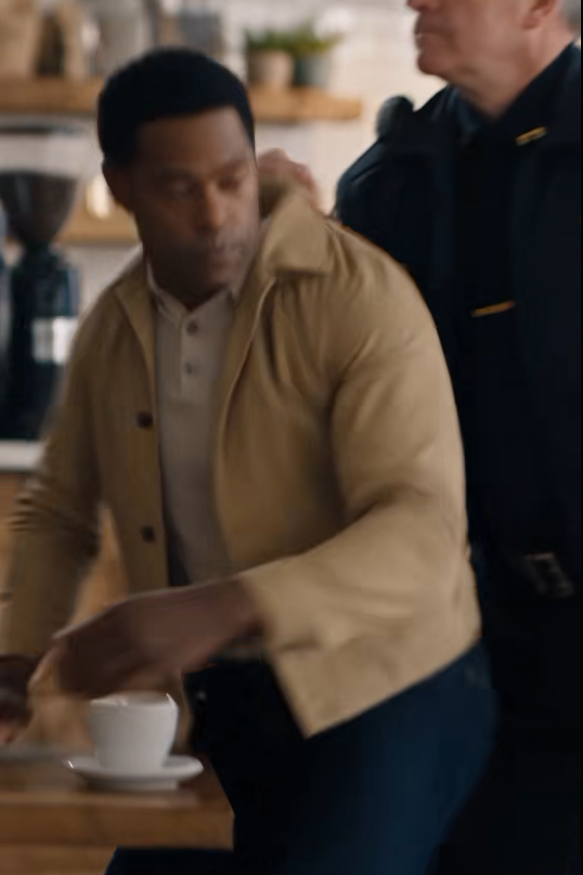
No recording.
But five officers had been present.
Two, Brenda believed, might confirm.
One did.
One refused.
The other three denied remembering.
That was enough to reopen several avenues.
Not enough to finish the case.
The city reacted before we could.
Reed’s suspension became public.
Then Henley resigned.
A local reporter connected the resignation to Ridgemont’s police department.
Thornton held a press conference.
I watched from Elena’s office.
He stood behind a podium beneath the city seal.
“I am aware of vague allegations involving outside investigators and certain members of city government. Let me be clear: the Ridgemont Police Department has nothing to hide.”
He looked directly into the cameras.
“For months, outside agencies have attempted to portray ordinary proactive policing as misconduct. My officers will continue protecting every law-abiding resident of this city without fear or favor.”
A reporter asked whether he had arrested an undercover state investigator inside Common Grounds.
Thornton paused.
That question had not been expected.
“I’m not going to speculate about someone’s occupation.”
“So you did arrest him?”
“We detained an individual whose behavior raised legitimate concerns.”
“Was he charged?”
“The matter remains under review.”
“Did the owner tell you he was not trespassing?”
Thornton’s mouth tightened.
“I’m not litigating incomplete facts in the media.”
Another reporter shouted:
“Chief, did you know Aaron Cole worked for the state?”
Thornton stepped away from the podium.
“No further questions.”
The clip went statewide within hours.
That was bad for everyone.
Public attention narrows room for careful work.
People choose conclusions early.
Witnesses hear each other’s stories.
Politicians demand timelines.
Defense attorneys begin framing narratives.
By Friday, protesters stood outside police headquarters.
So did counterprotesters.
One sign read THORNTON RESIGN.
Another read BACK THE BLUE.
Neither helped us determine what was true.
Elena suspended field operations.
Common Grounds closed for three days after Nora received two threatening voicemails.
Ray’s cover ended.
I returned to bureau headquarters full-time.
The investigation became less cinematic and more important.
Search warrants.
Financial records.
Data recovery.
Interviews.
Audit trails.
Policy comparisons.
Statistical analysis.
Complaint reconstruction.
Months of patterns compressed into tables no jury would ever love but every serious case needed.
Then the break came from a place none of us expected.
Not luck.
Consequence.
Lieutenant Dorsey had spent years protecting Thornton.
But Dorsey discovered, through Henley’s attorney, that Reed had identified him as the person responsible for altering Internal Affairs records.
He realized the insulation had worked in only one direction.
Thornton was protected.
Dorsey was exposed.
So he asked for a lawyer.
Then a meeting.
His first words were:
“He always said never write what you can say.”
Dorsey gave us the missing architecture.
Thornton did not order false findings directly.
He asked questions.
“What would happen to morale if we sustain this?”
“Are you sure the witness is reliable?”
“Did you consider officer-safety factors?”
“Would a reasonable chief sign this?”
People learned.
Investigators revised reports.
Supervisors softened language.
Evidence inconvenient to the preferred conclusion was described as inconclusive.
Body-camera gaps became technical problems.
Patterns disappeared case by case.
Dorsey admitted deleting Nora’s Marcus Bell interview recording.
“Why?”
“The chief said the witness was hostile.”
“That’s not a reason to delete evidence.”
“I know.”
“Why did you do it?”
Dorsey stared at the table.
“Because by then I knew what he meant.”
There it was.
The system did not require explicit orders once everyone learned the language.
That was the case.
Not one arrest.
Not one insult.
Not one bad officer.
A structure in which ambiguity consistently benefited authority and consistently harmed the same residents.
Still, one question remained.
Had Thornton known who I was when he arrested me?
Reed claimed Henley received the description.
Henley admitted telling Dorsey.
Dorsey denied telling Thornton before the arrest.
Thornton denied knowing anything.
Brenda said Thornton had noticed me weeks earlier.
We could not prove the answer.
Until Dorsey remembered the notebook.
Part V — What He Wrote Down
Thornton kept a small black notebook in his desk.
Not an official log.
A personal one.
Dorsey had seen him use it during command meetings.
Names.
Vehicle plates.
Addresses.
Fragments.
Thornton took it home most nights.
Search warrants require facts, not curiosity.
Dorsey’s statement, combined with evidence of suppressed investigations and obstruction, gave us enough.
The warrant was executed at 6:12 on a Monday morning.
Thornton was not arrested.
Not yet.
Investigators searched his office and residence simultaneously.
The notebook was found in a locked drawer in his home study.
Page after page contained dates and initials.
Most meant nothing at first.
Then analysts found an entry from twenty-two days before my arrest.
CG—older BM, glasses, paper. Possible state? Ask M.D.
Common Grounds.
Older Black male.
Glasses.
Newspaper.
Possible state.
Ask Mark Dorsey.
The next entry:
M says rumor only. Watch.
Thornton suspected I was connected to the state investigation.
He did not know.
That distinction mattered.
Then, three days before my arrest:
Same male 5x this week. Nora friendly. Counter guy new. Too coordinated?
The morning of my arrest:
See if he breaks cover.
I read that sentence three times.
David stood beside me in the evidence room.
“What are you thinking?”
“He approached me deliberately.”
“Yes.”
“To test the cover.”
“Probably.”
“He still had no lawful basis.”
“Correct.”
“He accused me of watching the register.”
“Pretext, possibly.”
“He wanted me to react.”
“Looks that way.”
I closed the evidence bag.
The arrest had changed meaning.
It was not spontaneous racial profiling in the simplest sense.
Thornton suspected surveillance.
He confronted me to see whether I would reveal myself.
But he still selected the method he had used repeatedly with Black civilians: challenge belonging, demand identification, order removal, escalate resistance into a charge.
He had reached for a familiar tool.
That made the incident less clean.
It also made it more revealing.
He had not needed to know whether I was an investigator.
He only needed to believe I was someone he could pressure without consequence.
And when Nora contradicted him, he escalated instead of stopping.
The final confrontation came two weeks later.
Not in a courtroom.
Not at a press conference.
In Interview Room Two of the State Bureau of Professional Standards.
Thornton arrived with two attorneys.
He had been placed on administrative leave the day the warrant became public.
The city council had appointed an interim chief.
Thornton entered wearing a navy suit.
No uniform.
No badge.
That visual mattered more than I expected.
For months, I had seen him as an institution.
Without the uniform, he looked smaller.
Still formidable.
Still controlled.
But human.
He sat across from Elena and David.
I watched from the observation room.
Thornton had agreed to a voluntary interview after his attorneys reviewed portions of the warrant affidavit.
For forty minutes, he denied wrongdoing.
The notebook?
Professional observations.
Complaint reviews?
Delegated appropriately.
Disparities?
Driven by crime patterns.
Deleted recordings?
Not his responsibility.
My arrest?
A legitimate investigative contact based on suspicious behavior.
Then Elena placed the video still on the table.
Me bent over the Common Grounds table.
“You had no report of criminal activity.”
“I observed suspicious behavior.”
“You had watched Mr. Cole for weeks.”