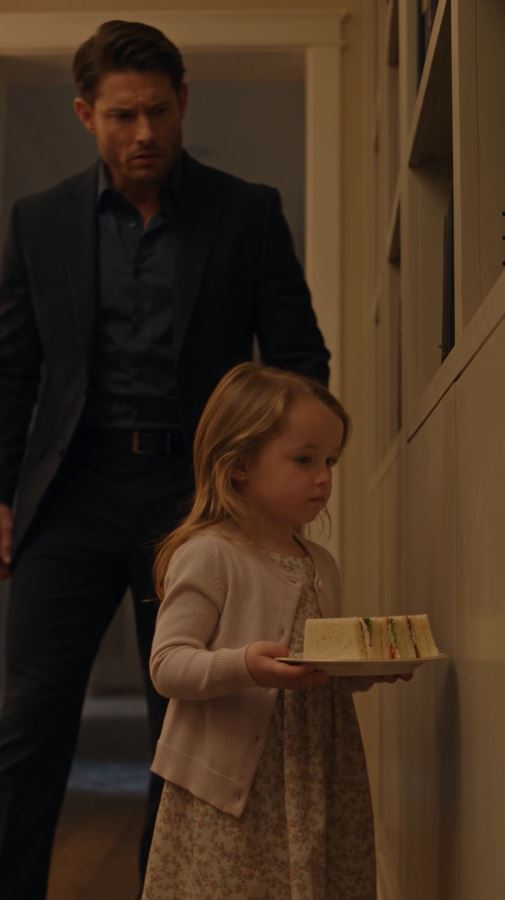
Lily was thirty-eight when she won a national design award for hospital pediatric wards.
She had spent six years working for an architectural engineering firm that specialized in medical infrastructure. She didn't design glamorous office towers or luxury condos. She designed surgical suites, clean rooms, and long-term recovery spaces for children suffering from chronic illnesses.
Her award-winning project was a prototype pediatric wing for the county children’s hospital in Cleveland.
She invited Sophie, Daniel, and me to the ribbon-cutting ceremony. Emily was too frail to travel, so we had arranged for a specialized home nurse to sit with her for the weekend.
The new pediatric wing was full of light. The ceilings were high, vaulted with skylights that let the pale northern sun pour down over maple-paneled corridors. There were no dead ends. Every hallway curved gently toward an open communal space with play areas and kitchenettes.
Lily gave us a private tour before the hospital board arrived.
"Notice the storage," she said, pointing to built-in cabinetry along the walls.
Sophie looked at the cabinets. "What about them?"
"Flush mounted," Lily explained, running her hand along the wood. "No hollow chasms behind them. The mechanical chases for oxygen and medical suction are sealed with poured composite insulation. Zero dead space. You can't drop a coin behind these panels, let alone crawl into them."
Sophie looked at her sister. Her expression was unreadable. "Lily."
"What?" Lily asked defensively.
"Did you design an entire pediatric hospital wing just to make sure there are no secret spaces in the walls?"
Lily stopped walking. She wore a tailored charcoal blazer, her hair pulled back into the practical bun she had worn since her engineering school days. She looked like an executive. But when she spoke, her voice had the exact stubborn cadence of the three-year-old who had carried a plate of sandwiches into the dark.
"Hospitals are terrifying for kids," Lily said, looking at the floor. "They put kids in rooms where the vents hum and the ceiling tiles rattle. When I was three, I heard someone crying behind a wall in our house. For twenty-five years, whenever I walked into an older building, my ears automatically listened for breathing in the baseboards. I couldn't stop doing it. So when they gave me the contract to design this wing, I decided that no sick child in this city would ever lie in a bed and wonder what was living inside the drywall."
Sophie stood in the middle of the bright, airy corridor. Doctors in white coats were walking past, carrying clipboards, entirely unaware of the history embedded in the fire-rated composite panels around them.
She walked over to Lily, grabbed the lapels of her charcoal blazer, and pulled her into a fierce, bone-crushing hug.
"You are ridiculous," Sophie whispered into Lily’s ear.
"I’m an engineer," Lily mumbled against her shoulder. "We eliminate structural defects."
"You didn't eliminate a structural defect, Lil. You built an apology."
"For what? I was three!"
"I know," Sophie said, stepping back and holding Lily by the arms. "You were three, and you thought you were supposed to fix everything. You didn't save me, Lily. You just found me. But this? This is yours. This isn't about me at all."
Lily blinked, her eyes shining with unshed tears. She smoothed down her lapels, cleared her throat, and looked toward the lobby where the hospital donors were beginning to gather.
"The catering includes miniature sandwiches," Lily muttered. "Turkey and cheddar."
"Did you order them?" Sophie asked, horrified.
"Of course not," Lily smiled. "The hospital catering committee did. But I didn't stop them."
---