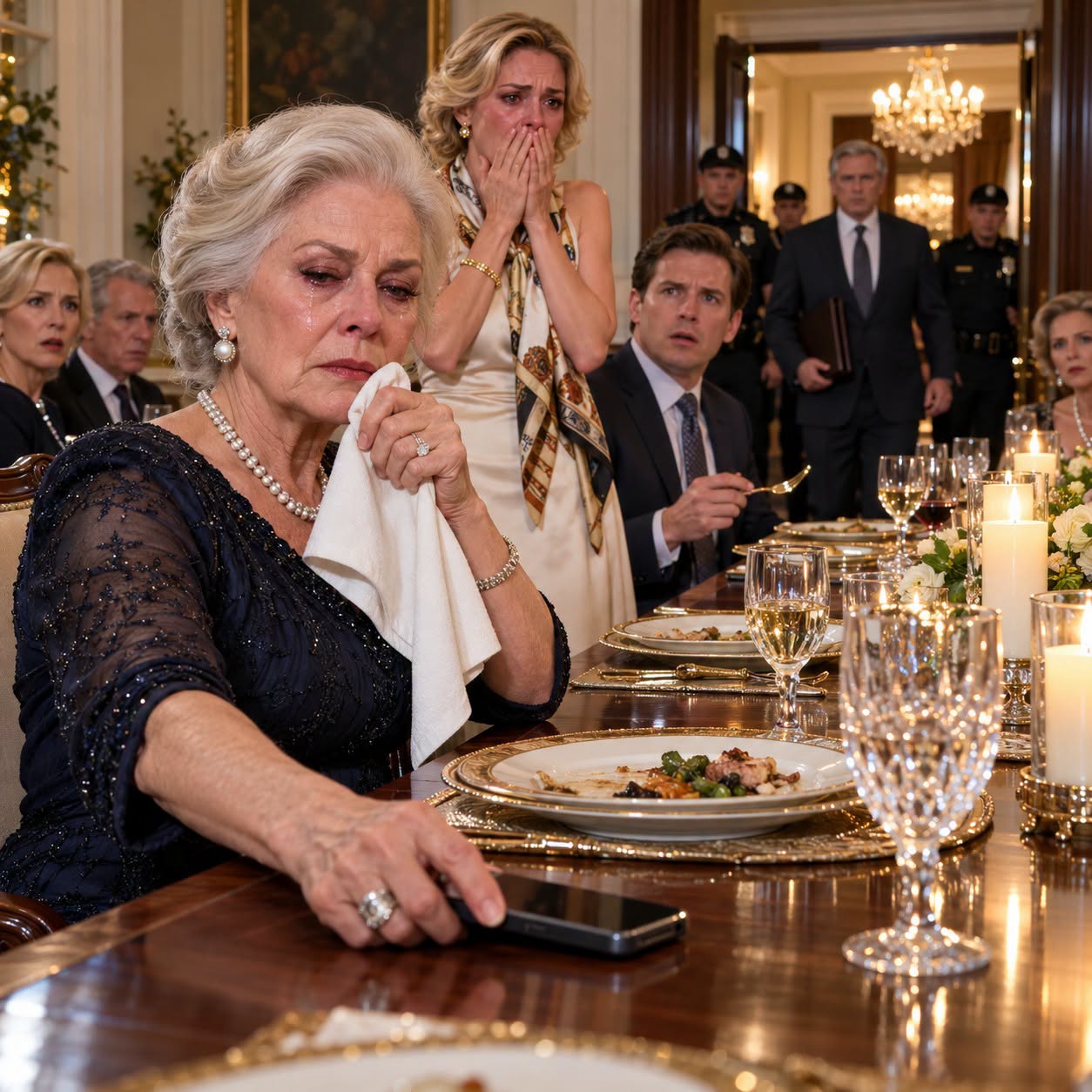
By morning, reporters stood outside the gates.
Daniel wanted to resign.
I refused to let him make the decision while frightened.
“If you resign because you're guilty, that's one thing.”
“I'm not.”
“Then don't behave as though you are.”
“But the company—”
“Needs facts.”
The board placed Daniel on temporary administrative leave while independent counsel reviewed the Singapore contracts.
He hated it.
I understood.
But protecting the investigation mattered more than protecting his pride.
Meanwhile, Vanessa's campaign against my mental capacity began collapsing.
My actual physician provided records showing no diagnosis of cognitive impairment.
My accountant confirmed I had personally reviewed complex trust statements the previous month without difficulty.
My housekeeper denied ever seeing evidence that I couldn't care for myself.
Then Dr. Mallory contacted Margaret.
He wanted immunity.
Apparently, seventy-five thousand dollars had not purchased courage.
He admitted Arthur's people approached him about conducting my cognitive assessment.
He claimed he never agreed to falsify results.
Margaret asked the obvious question.
“Then why did you accept money?”
His answer was pathetic.
“Consulting.”
I had heard that word used to hide many sins.
Investigators would decide what it meant.
Vanessa remained at a hotel.
Daniel hadn't spoken to her for four days.
On the fifth evening, she came to my house alone.
I almost refused to let her in.
Then I saw her face.
“Five minutes,” I said.
She entered the study.
Her gaze landed on Thomas's photograph.
“I used to think he was judging me.”
“Thomas?”
“All those photographs.”
“He's dead, Vanessa.”
“I know.”
“He can't judge anyone.”
“You can.”
“Yes.”
She looked surprised by my answer.
I wasn't interested in pretending forgiveness had already happened.
“I've done terrible things,” she said.
“Yes.”
“I didn't forge your signature.”
“I believe you.”
She looked up.
“Why?”
“Because whoever did it knew my signature professionally. Richard had access to old legal documents. You didn't need to forge it yourself.”
Tears formed.
“I did steal your password.”
“I know.”
“I copied files.”
“I know.”
“I lied to Daniel.”
“I know.”
“And I made people think you were sick.”
That one sat between us.
“Why?” I asked.
She cried silently.
“Because Arthur said nobody would transfer control while you were competent.”
“So you decided to make me incompetent.”
“I kept telling myself it wasn't permanent. That once Daniel had control, I would stop.”
“You cannot temporarily destroy someone's dignity.”
“I know that now.”
“No. You knew it then.”
She had no answer.
After a moment, she placed something on the desk.
A small digital recorder.
“What's this?”
“The last meeting with Arthur.”
“We already have your recordings.”
“Not this one.”
“When?”
“The night before your birthday.”
My attention sharpened.
“At the gate?”
“After the gate.”
She explained that she met Arthur later that night.
The recording lasted seventeen minutes.
Near minute twelve, Arthur said something extraordinary.
“Daniel was never supposed to keep the company.”
Vanessa asked, “What does that mean?”
Arthur laughed.
“Once Evelyn signs, Daniel becomes useful for about six weeks.”
“And then?”
“Then Singapore takes care of him.”
Vanessa's breathing became audible.
“You said you wouldn't hurt him.”
“I said he'd survive.”
“What happens to me?”
Another laugh.
“You get paid if you do what you're told.”
The recording ended.
I looked at Vanessa.
“That is why you copied the files.”
She nodded.
“I realized I wasn't his partner.”
“You were evidence he needed to eliminate.”
“Yes.”
I studied her.
“You should have come to us immediately.”
“I was afraid.”
“So was I.”
She lowered her head.
Before leaving, Vanessa paused at the doorway.
“I know you probably hate me.”
“Hate takes too much energy.”
She almost smiled.
Then I said, “But forgiveness is not the same as forgetting consequences.”
“I understand.”
After she left, I called Margaret.
The new recording could help Daniel.
But Margaret had news of her own.
The forensic review of the Singapore documents was complete.
Daniel's signatures were genuine.
The pages attached to them were not.
Someone had substituted documents after he signed.
And the metadata pointed toward a computer inside Arthur Harlan's executive office.
For the first time since my birthday dinner, we had evidence that could clear my son.
But finding Arthur was about to become far more complicated.