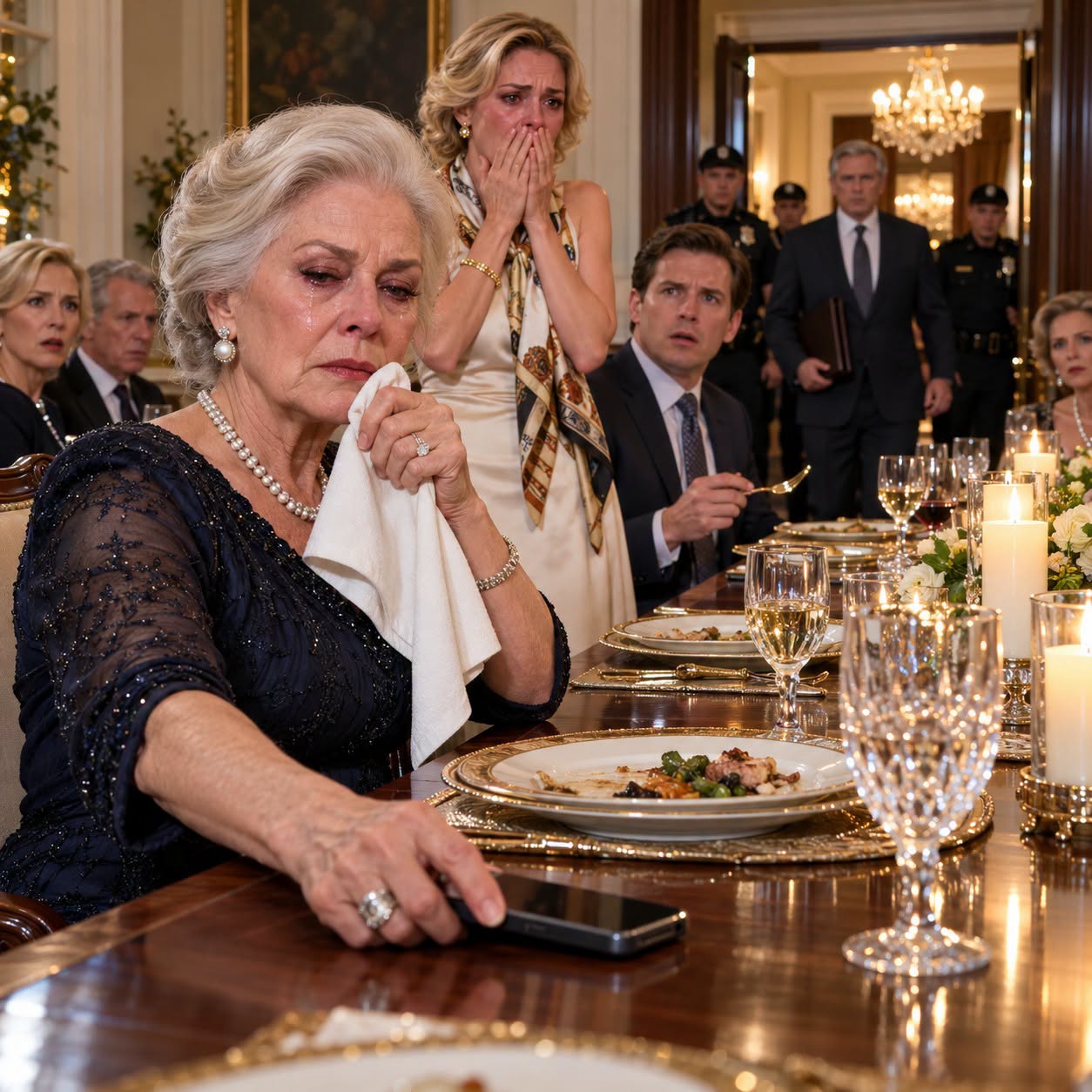
Arthur's trial began eight months after my birthday.
I testified on the fourth day.
His attorney tried to portray me as vindictive.
“Mrs. Whitmore, you disliked my client?”
“I trusted him for twenty-seven years.”
“That wasn't my question.”
“No. I did not dislike him.”
“Do you dislike him now?”
“I dislike what he did.”
The attorney walked closer.
“You're seventy years old?”
“Yes.”
“You've experienced memory lapses?”
“Have you?”
A few people laughed.
The judge silenced them.
The attorney changed direction.
He showed me the forged signature.
“You admit this resembles your signature.”
“It was designed to.”
“Could you have signed it and forgotten?”
“No.”
“How can you be certain?”
“The document references a trust provision that did not exist on the date printed at the top.”
Silence.
The attorney looked down.
I continued.
“And the signature lacks the identifying mark I have used on legal documents for forty-four years.”
He moved on.
Vanessa testified the next day.
That was harder to watch.
She admitted everything.
The lies.
The stolen password.
The effort to undermine my credibility.
The meetings.
The promised money.
Arthur stared at her throughout.
Vanessa did not look at him once.
Daniel sat beside me.
When she finished, he whispered, “That took courage.”
“Yes.”
“Does that change how you feel?”
“It changes part of it.”
That was all I could offer.
Richard testified.
So did company auditors.
Digital experts explained the altered contracts.
Banking specialists traced funds.
The evidence was overwhelming.
Arthur was convicted on numerous counts.
Sentencing came later.
I didn't celebrate.
I went home and sat at the walnut table.
Thomas's chair was empty.
“I wish you'd been here,” I whispered.
Then I corrected myself.
“No. I'm glad you didn't have to see it.”
A strange peace settled over me.
The war was finished.
But consequences remained.
Vanessa pleaded guilty to lesser offenses connected to unauthorized access and conspiracy. Her cooperation significantly affected the outcome.
She avoided a long prison sentence but received probation, substantial financial penalties, and community-service requirements.
She also lost nearly everything she had valued socially.
Country-club membership.
Certain friendships.
Status.
I wondered whether that loss hurt her more than money.
Then she surprised me.
She got a job.
Not with Whitmore.
That would never happen.
She began working for a nonprofit that helped women transition from temporary housing into employment.
At first, I suspected it was for appearances.
Months passed.
She stayed.
Daniel and Vanessa remained separated.
Then one evening, a year after my birthday, Daniel arrived with unexpected news.
“We're not getting divorced.”
I studied him.
“Certain?”
“No.”
I smiled.
“At least you're honest.”
“We're starting over.”
“What does that mean?”
“Separate finances. Counseling. No secrets. No involvement in the trust. She knows she may never regain everything.”
“And you?”
“I know forgiveness isn't pretending it didn't happen.”
That sounded healthy.
Then he asked, “Would you have dinner with us?”
I hesitated.
“At your house?”
“No.”
“Restaurant?”
“No.”
He smiled.
“Here.”
I looked toward the dining room.
I hadn't hosted a formal dinner since that birthday.
The table still carried memories of humiliation.
Perhaps that was exactly why I said yes.