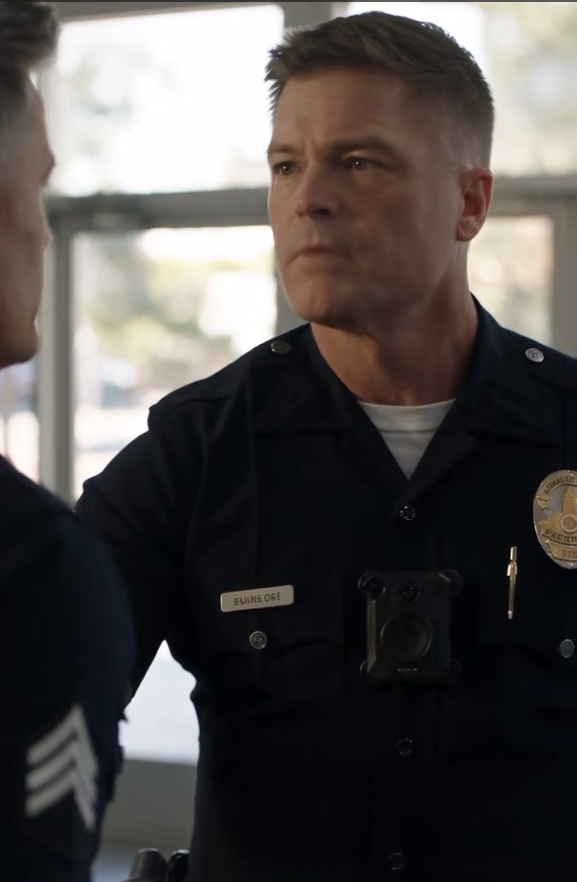
“And then?”
“That depends.”
“On what?”
“On you.”
Caldwell waited.
Marcus stood and walked to the window.
“I can approve the suspension and return you to supervision afterward.”
Caldwell’s expression changed.
“That’s what they recommended?”
“No.”
“What did they recommend?”
“Return to duty after suspension with remedial training.”
Caldwell nodded slowly.
Marcus turned.
“I’m adding a condition.”
The sergeant’s eyes narrowed.
“You will return as a patrol officer for ninety days.”
Caldwell stared.
“That’s a demotion.”
“Temporary reassignment.”
“You’re taking my stripes.”
“No. Your rank stays.”
“So I get to wear sergeant stripes while somebody else runs my shift.”
“Yes.”
Caldwell laughed once in disbelief.
“That’s humiliation.”
Marcus did not answer.
Caldwell stood.
“You said this wasn’t about embarrassing me.”
“It isn’t.”
“Then what do you call that?”
Marcus stepped closer.
“Perspective.”
Caldwell shook his head.
“You want me to walk back into that room with everyone knowing I handcuffed the chief, then take calls like a rookie?”
“Yes.”
“Why?”
“Because you need to experience a shift where your authority comes from competence instead of position.”
Caldwell stared at him.
Marcus continued.
“You will answer to another supervisor. You will be expected to question unsafe or unlawful instructions appropriately. You will be expected to receive correction without treating it as disrespect.”
Caldwell looked at him as though the proposal were worse than suspension.
Marcus understood why.
A ten-day suspension would end.
Ninety days among the people he had supervised would live in memory.
Caldwell’s voice lowered.
“You could just fire me.”
“Yes.”
“Would be easier.”
“For both of us.”
“Then why don’t you?”
Marcus looked at him.
“Because I’m not convinced you’re finished being useful.”
Caldwell’s face changed.
Not relief.
Something more difficult.
Marcus added, “But I am convinced the version of you who walked into that lobby Monday cannot supervise here again.”
The sergeant looked away.
Marcus returned to his chair.
“You don’t have to accept the reassignment.”
“What happens if I refuse?”
“We proceed through the disciplinary process and determine fitness for supervisory duty.”
Caldwell understood.
Not a threat.
A choice.
He stood there for a long time.
Finally he asked, “When does the suspension start?”
“Tomorrow.”
“And the ninety days?”
“When you return.”
Caldwell nodded.
He walked to the door.
His hand reached the handle.
Marcus spoke.
“Sergeant.”
Caldwell looked back.
“You were right about one thing Monday.”
“What?”
“You did have a responsibility to stop someone you believed did not belong in the station.”
Caldwell waited.
Marcus said, “Next time, do the whole job.”
Caldwell left.
Part V — The Harder Choice
Ten days later, Garrett Caldwell returned to Riverside Police Station at six-forty in the morning.
Marcus knew because he was already there.
Not in uniform this time.
He sat in his office wearing a white shirt with the sleeves rolled once, reading overnight reports while the building slowly came alive.
He had considered staying away.
He did not want Caldwell’s first morning back to become another spectacle.
But avoiding the station would have been its own form of theater.
So Marcus came to work.
At seven-ten, someone knocked on his open door.
Caldwell stood there.
His sergeant stripes were still on his uniform.
But no supervisory radio.
No clipboard.
No command keys.
Just patrol gear.
“Chief.”
“Morning.”
“You have a minute?”
Marcus gestured toward the chair.
Caldwell sat.
For several seconds neither spoke.
Then Caldwell said, “I almost didn’t come back.”
Marcus nodded.
“I assumed that was possible.”
“Thought about retiring.”
“You’re eligible.”
“Yes.”
Marcus waited.
Caldwell looked toward the books on the shelf.
“My wife asked me why.”
“Why what?”
“Why I wanted to retire.”
He rubbed one thumb along the side of his hand.
“I told her because nobody would respect me after this.”
Marcus said nothing.
“She asked whether I wanted respect or whether I wanted people to be afraid of crossing me.”
Marcus watched him.
Caldwell gave a humorless smile.
“She doesn’t work in law enforcement.”
“Sounds like she understands supervision.”
“That’s what she said.”
Marcus almost smiled.
Caldwell looked down.
“I hated you for about four days.”
“I suspected.”
“Then I watched the footage again.”
Marcus raised an eyebrow.
“You requested a copy?”
“My representative had one.”
“And?”
Caldwell’s jaw moved.
“I noticed something.”
Marcus waited.
“The young officer.”
“What about him?”
“Every time he tried to say something, I turned away from him.”
Marcus remembered.
Caldwell continued.
“Not just verbally. Physically.”
He demonstrated with one shoulder.
“Like he wasn’t worth looking at.”
Marcus did not interrupt.
“I’ve done that before.”
There it was.
Not a confession forced by evidence.
Recognition.
Marcus sat back.
“What are you going to do about it?”
Caldwell looked at him.
“I don’t know yet.”
Marcus nodded.
“Good answer.”
That surprised a small laugh out of him.
Then Caldwell became serious.
“Chief.”
“Yes?”
“Why did you let me cuff you?”
Marcus had known the question would come eventually.
He took a moment.
“Because by then you had made it clear that anything I said would sound like resistance.”
Caldwell looked uncomfortable.
“And because?”
Marcus met his eyes.
“Because I wanted to see whether anyone else would stop you.”
Caldwell absorbed that.
“That’s why you told me to turn on the camera.”
“No.”
“It was already recording.”
“Yes.”
“Then why say it?”
Marcus looked toward the hallway.
“So everyone watching would understand that what happened next mattered.”
Caldwell let out a slow breath.
“You made me prove your point.”
Marcus shook his head.
“No.”
Caldwell frowned.
“You proved your own.”
That stayed between them.
Finally Caldwell stood.
“My shift starts in five.”
Marcus nodded.
Caldwell walked to the door.
Then stopped.
“The officer who spoke up.”
“Yes.”
“I owe him an apology.”
“You probably do.”
“Should I do it privately?”
Marcus looked at him.
“What do you think?”
Caldwell thought.
“I corrected him publicly.”
Marcus said nothing.
Caldwell nodded.
“Right.”
He left.
Marcus returned to the overnight reports.
But a few minutes later, he found himself listening.
The roll-call room was down the hallway.
The door was open.
Caldwell’s voice carried faintly.
“Before we start…”
Marcus got up.
Not to intervene.
Just to hear.
He stopped outside the room where he could not be seen easily.
Caldwell stood near the front.
The shift supervisor was beside him.
Officers sat facing forward.
The younger officer was near the back again.
Caldwell looked around the room.
“I need thirty seconds.”
The supervisor nodded.
Caldwell continued.
“Two Mondays ago, one of you tried to stop me from making a bad decision.”
The room was quiet.
“He suggested that I verify an identity. I dismissed him.”
The younger officer looked uncomfortable.
Caldwell kept going.
“He tried again. I dismissed him again.”
No one moved.
“I told myself I was maintaining control. I wasn’t. I was protecting my pride.”
Marcus saw several officers glance at one another.
Caldwell looked directly at the younger officer.
“You were right.”
The young officer sat very still.
“And I treated you like being right mattered less than your rank.”
Caldwell paused.
“That was wrong.”
No speech.
No dramatic apology.