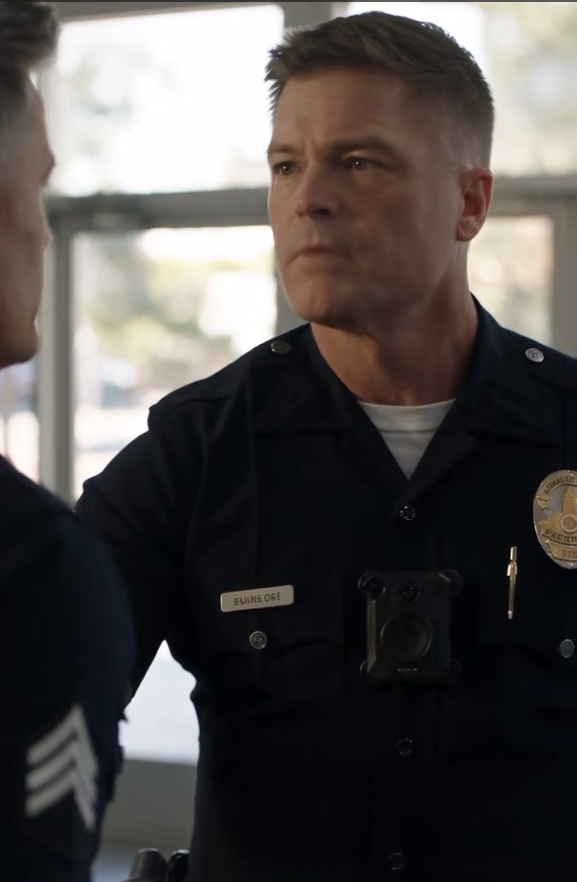
Then Helen ruined it.
“You know what people still call you?”
Marcus looked up from his coffee.
“I’m afraid to ask.”
“The cuffed chief.”
He closed his eyes.
“Wonderful.”
“Could be worse.”
“How?”
“They could call you the handcuff chief.”
“That sounds criminal.”
Helen smiled.
Marcus shook his head.
“I was hoping six months would kill the story.”
“It made it better.”
“For who?”
“Everyone except you.”
She took a sip of coffee.
“Recruiting has used it twice.”
Marcus stared.
“No.”
“Yes.”
“Absolutely not.”
“Too late.”
“You’re lying.”
“I wish.”
He sighed.
Helen watched him.
Then her expression became more serious.
“You did the right thing with Caldwell.”
Marcus looked at her.
“You weren’t sure.”
“No.”
“Neither was I.”
“That’s why it worked.”
He considered that.
Helen leaned back.
“If you had fired him immediately, nobody would have blamed you.”
“I know.”
“If you had protected him, everyone would have.”
“I know.”
“You found the narrow path.”
Marcus looked at the window beside their table.
Outside, people moved along the sidewalk under streetlights.
“It could have gone badly.”
“Yes.”
“He could have faked the change.”
“Yes.”
“He could still fail.”
“Yes.”
Marcus looked back at her.
“You’re not very comforting.”
“I’m the commissioner.”
“That explains it.”
She smiled.
Then said, “Do you know what convinced me?”
“What?”
“The apology.”
“To the officer?”
Helen nodded.
“Not because he apologized.”
She paused.
“Because you didn’t order him to.”
Marcus sat with that.
No.
He had not.
He had wanted to.
But he had not.
A required apology might have repaired procedure.
A voluntary one had revealed character.
Helen finished her coffee.
“Still planning to arrive early everywhere?”
Marcus smiled.
“I’m reconsidering.”
“Good.”
They left the restaurant a few minutes later.
At the corner, Helen went toward the parking garage.
Marcus walked back to the station.
He liked seeing it at night.
The lobby was calmer after ten.
Different people.
Different rhythm.
When he entered, the desk officer nodded.
“Evening, Chief.”
“Evening.”
Marcus crossed the same tile where Caldwell had stopped him six months earlier.
The counter had been replaced.
Not because of the incident.
Maintenance had finally approved a renovation.
Marcus found that appropriate.
Organizations changed for many reasons at once.
No single story explained them.
He reached the administrative hallway.
Behind him, voices rose near the front desk.
Marcus stopped.
A civilian was arguing about paperwork.
Nothing serious.
A sergeant approached.
Caldwell.
Marcus turned slightly.
The civilian held up a document.
“I’m telling you, this is the form they gave me.”
Caldwell took it.
Looked at it.
Then at the desk officer.
The desk officer started to explain.
Caldwell held up one hand.
Not to silence him.
To pause.
He read the form.
Then said, “You’re right.”
The civilian blinked.
Caldwell pointed to a line near the bottom.
“This should have been processed yesterday.”
He turned to the desk officer.
“Can we fix it now?”
The officer nodded.
“Yes, Sergeant.”
“Do it.”
The civilian’s shoulders dropped.
“That’s it?”
“That’s it.”
Marcus watched from the hallway.
Caldwell looked up and noticed him.
For a second, neither man moved.
Then Caldwell glanced at the form in his hand.
A faint, almost embarrassed smile crossed his face.
Marcus returned it.
No salute.
No speech.
No reminder of the past.
There was no need.
Marcus started upstairs.
He reached his office and switched on the lamp.
The leather folder from his first day sat in the bottom drawer of his desk.
He had almost thrown it away several times.
Instead, he kept it.
Not as a souvenir.
As a warning.
Inside were the appointment papers Caldwell had refused to open.
Marcus pulled them out once more.
The pages looked ordinary now.
No power in them.
No drama.
Just ink and signatures.
He thought about how easily the first morning could have ended differently.
He could have pulled rank.
He could have shouted.
He could have threatened Caldwell before the cuffs closed.
Helen could have fired the sergeant on the spot.
The department could have spent a week gossiping and learned nothing.
Instead, one bad decision had exposed a deeper habit.
Then a harder decision had tested whether a person was capable of changing it.
Marcus returned the papers to the folder.
A knock came at the door.
Caldwell stood there.
“Chief.”
“Sergeant.”
“Got a second?”
Marcus gestured him in.
Caldwell entered holding two cups of coffee.
He placed one on the desk.
Marcus looked at it.
“What’s this?”
“Peace offering.”
“For what?”
Caldwell sat.
“I heard Commissioner Ward told recruiting the story again.”
Marcus stared.
“You knew?”
“Whole building knows.”
Marcus leaned back.
“This is unacceptable.”
Caldwell nodded solemnly.
“Tragic.”
“You’re enjoying this.”
“A little.”
Marcus picked up the coffee.
“You handcuff one chief and suddenly you’re a comedian.”
Caldwell looked toward the window.
“Could have been worse.”
“That’s what Helen said.”
“She’s right.”
Marcus took a sip.
It was terrible.
He looked at Caldwell.
“This coffee is punishment.”
“Station machine.”
“That machine violates policy.”
“I’ll open an investigation.”
Marcus shook his head.
For a few seconds, neither spoke.
Then Caldwell’s humor faded.
“There’s something I never told you.”
Marcus waited.
“The morning you came in.”
“Yes.”
“When you said to make sure my camera was recording.”
Marcus nodded.
“I thought you were bluffing.”
“About what?”
“About who you were.”
Marcus said nothing.
Caldwell looked down at his coffee.
“I thought a real command officer would have told me exactly who he was.”
“I did.”
“You said your name.”
“Yes.”
“I mean rank.”
Marcus considered that.
“You didn’t ask.”
Caldwell gave a short laugh.
“No. I didn’t.”
He rubbed one hand across his jaw.
“That bothered me later.”
“Why?”
“Because I realized I wasn’t trying to identify you.”
Marcus waited.
Caldwell looked up.
“I was trying to prove I was right about you.”
The office went quiet.
That sentence, more than the investigation, the suspension, or the ninety-day reassignment, explained the entire morning.
Marcus nodded slowly.
“There’s the lesson.”
Caldwell studied him.
“For me?”
Marcus looked toward the station beyond the glass.
“For anyone with authority.”
He closed the leather folder.
“The moment proving yourself right becomes more important than finding out what is true, the badge stops protecting judgment and starts protecting ego.”
Caldwell sat with the words.
Then he nodded.
Once.
No argument.
No defense.
Marcus put the folder back in the drawer.
Outside his office, radios murmured.
Phones rang.
Someone laughed down the hall.
The station moved around them with the imperfect rhythm of people trying, failing, correcting, and trying again.
Caldwell stood.
“See you tomorrow, Chief.”
“Tomorrow.”
He reached the door.
Marcus said, “Garrett.”
Caldwell looked back.
Marcus lifted the terrible coffee.
“Next time, verify the machine before you bring me this.”
Caldwell smiled.
“Fair.”
Then he left.
Marcus remained by the window for another minute.
Downstairs, the front doors opened and closed as officers came and went.
No one stopped to look at the polished tile where the new chief had once stood in handcuffs.
No plaque marked it.
No photograph preserved it.
That suited Marcus.
The important thing was never the cuffs.
It was the question that came after them.
Not Helen Ward’s question in the lobby.
A harder one.
The one every person trusted with authority eventually had to answer alone:
When someone beneath you tells you that you may be wrong, what kind of leader do you become next?