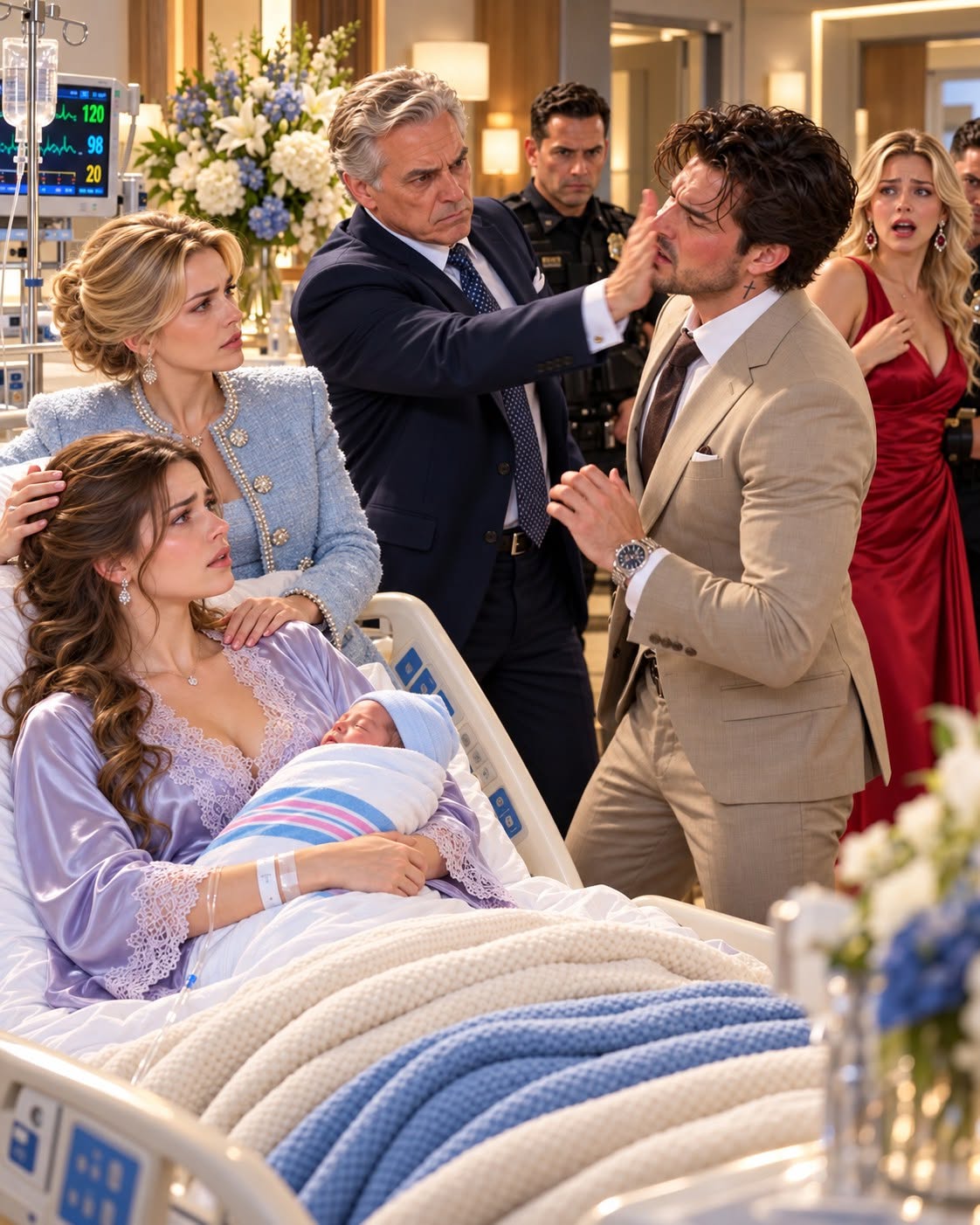
One year later.
The early October sun rose over the Hudson River, casting a brilliant ribbon of gold across the expansive terrace of the Bennett family’s newly acquired penthouse on Central Park South.
The terrace was alive with laughter, the soft clinking of champagne flutes, and the sweet, melodic chords of a string quartet playing in the garden alcove.
Large, elegant balloons of ivory and soft blush danced gently in the autumn breeze, framing a hand-painted banner that read:
**HAPPY FIRST BIRTHDAY, BEATRICE!**
I stood near the stone balustrade, holding a glass of sparkling cider, watching the guests mingle.
I was thirty, dressed in an emerald green silk dress that fell gracefully past my knees. The postpartum recovery that had begun in pain and betrayal had transformed me into something unrecognizable from the woman who had cried in triage. My posture was tall, my shoulders squared, my eyes clear and untroubled.
Six months ago, I had officially taken over as Managing Director of the Bennett Family Philanthropic Trust, directing forty million dollars annually into maternal health initiatives, rural obstetric clinics, and legal defense funds for vulnerable mothers across the state.
I was no longer just Arthur Bennett’s daughter, and I had long ceased to be Ryan Whitmore’s victim. I was Claire Bennett—a mother, a leader, and the master of my own life.
Across the lawn, Madison was kneeling beside Beatrice, who was taking steady, confident toddler steps across the lush turf.
Bea was breathtaking. Her dark curls tumbled around a radiant, rosy-cheeked face, and her laughter was a bright, musical chime that filled every corner of my heart. She wore a handmade lace dress, her tiny feet encased in soft white leather shoes, completely oblivious to the storm that had surrounded her arrival into this world.
"She has your stubbornness," Eleanor said, stepping up beside me, handing me a small porcelain plate with a slice of vanilla almond cake. "Arthur tried to get her to sit in the highchair for photos, and she simply looked at him, grabbed her wooden duck, and walked in the opposite direction."
"She knows what she wants," I smiled, watching my father chase Beatrice with exaggerated, playful stomps, his face lit with a joy I had never seen during his corporate career. "And she will never apologize for taking up space."
"Evelyn called this morning," Eleanor remarked quietly, looking out over the park where the trees were ablaze in autumn colors. "The final civil collections against Vanessa Sinclair have concluded."
"And?"
"The court seized her vehicle and placed a lien on the small inheritance her grandmother left her in Ohio. We recovered eighty-two thousand dollars of the dissipated assets. Per your instructions, Evelyn wired the entire sum directly to the St. Catherine’s Neonatal Intensive Care Fund to endow two permanent incubator beds for low-income mothers."
"Good," I nodded. "And Vanessa?"
"Living in upstate New York, working as an administrative assistant at a dental clinic. No public profile. No high society. Just a quiet, ordinary life paying off her legal debts."
"And Ryan?"
I asked the question without a trace of anger, bitterness, or lingering pain. It was the same tone I would use to inquire about the weather in a city I had never visited.
"Arthur’s investigator checked last week," Eleanor said. "He completed his community service for the forged document plea. He’s working as an entry-level analyst at an independent logistics firm in New Jersey, sharing a small apartment in Newark with two roommates. He tried to reach out to an old college friend last month to get a meeting at an asset management firm in Stamford, but the moment his name was run through the compliance system, the meeting was canceled."
Eleanor turned to look at me, her gaze filled with profound, maternal pride.
"He will never bother us again, Claire. He knows the gates are locked forever."
"He didn't matter, Mom," I said softly, watching Beatrice tumble into Madison’s open arms, giggling hysterically as she was swung through the air. "The moment I heard her first cry in that operating room, he became nothing more than a ghost."
A soft chime sounded as my father tapped his crystal glass with a silver spoon.
The string quartet lowered their instruments, and the sixty guests—close friends, family, and trusted colleagues—gathered around the terrace lawn.
Arthur held Beatrice on his hip, the little girl proudly holding a cluster of purple wildflowers she had plucked from the garden border.
"A year ago today," Arthur began, his voice deep and resonant, "our family faced an unexpected test. We were reminded that true strength is not measured by the absence of hardship, but by the ferocity with which we protect those we love."
He looked directly at me, his eyes gleaming with pride.
"My daughter, Claire, showed this world what a mother’s love looks like when it is forged in fire. She didn't break; she stood up, she took the helm, and she brought this magnificent little miracle into a life of safety, honor, and joy."
Arthur raised his glass high toward the clear October sky.
"To Beatrice Bennett. May she always walk with the courage of her mother, the strength of her ancestors, and the absolute certainty that she is cherished beyond measure."
"To Beatrice!" the crowd echoed in unison, raising their glasses.
Beatrice clapped her tiny hands, delighting in the applause, her bright laughter floating out over the city below.
I walked forward, stepping into the center of the terrace, and took my daughter into my arms.
She wrapped her warm, chubby arms around my neck, resting her soft cheek against mine, smelling of sweet vanilla and pure sunshine.
I looked out over the Manhattan skyline—the towering skyscrapers, the endless horizon, the vast river flowing steadily toward the sea.
The storm was over. The slate had been wiped clean.
And as the sun rose higher, warming our faces, I knew with absolute certainty that our lives were just beginning.