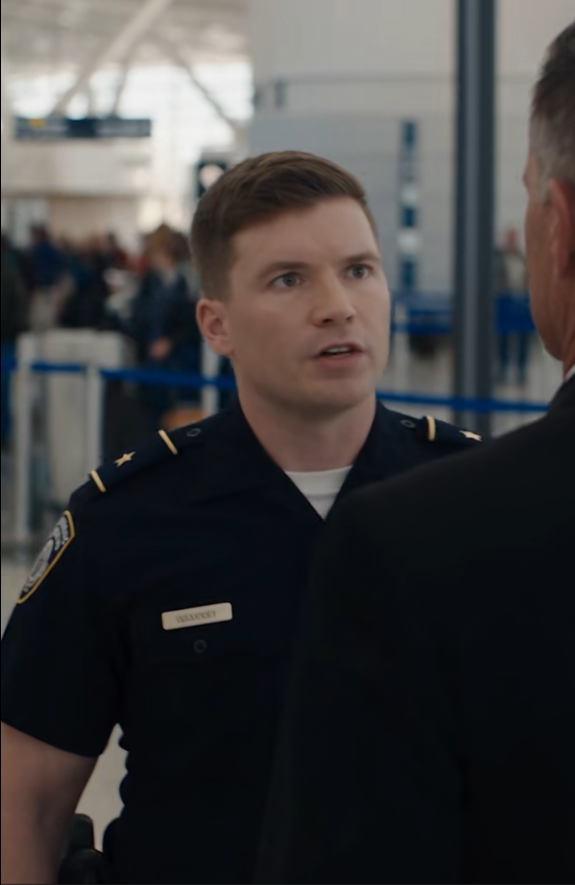
She looked at me.
“That sounds like you don't know.”
“I don't.”
That surprised her.
“Commanding officers are allowed to say that?”
“Rarely. We keep it secret.”
She smiled.
Then the door opened.
Vance stepped into the hallway.
He saw us.
Stopped.
Ruiz looked at me.
“I can go.”
“No.”
Vance walked toward us.
He seemed unsure where to put his hands.
“Captain.”
“Officer.”
He glanced at Ruiz.
Then back to me.
“I wanted to say something before they call us back.”
I waited.
“I watched the whole bodycam.”
“I assumed you would.”
“More than once.”
“That sounds unpleasant.”
“It was.”
He looked at the floor.
“I kept waiting to see the part where I thought you did something that justified what I did.”
There was no self-pity in the sentence.
That mattered.
“Did you find it?”
“No.”
He swallowed.
“I saw myself decide first.”
Ruiz said nothing.
Vance looked at me.
“I don't expect you to forgive me.”
“I haven't decided whether that's a useful word.”
His face tightened.
“That sounds like a no.”
“It means this isn't about making you feel better.”
He nodded slowly.
Fair.
“I was good at my job,” he said.
“I believe you probably were.”
“That somehow makes this worse.”
“Yes.”
He looked surprised.
I continued.
“Bad systems are easy to distrust. Bad officers are easy to watch. Competent people who become overconfident are harder.”
He absorbed that.
“You think that's what happened?”
“I think you stopped separating experience from certainty.”
He looked through the window.
“My father was Army.”
I said nothing.
“He hated people pretending to serve. That guy last year, the stolen-valor case... I thought I was protecting something.”
“Maybe you were.”
He turned toward me.
I nodded toward the hearing room.
“But protecting something doesn't excuse refusing facts.”
“No.”
The door opened again.
“Officer Vance.”
The hearing was resuming.
He started toward it.
Then stopped.
“Captain.”
“Yes?”
“Why didn't you ask them to fire me?”
Ruiz looked at me.
I set the coffee on the windowsill.
“Because at eight-oh-seven that morning you decided who I was before checking.”
He waited.
“I wasn't going to decide who you should be afterward before they checked everything.”
For the first time since I met him, Bradley Vance had no answer.
He returned to the room.
The board terminated his employment forty-three minutes later.
Not because I asked.
Not because the video went viral.
Not because I was a Navy captain.
The written decision cited the cumulative failures, especially the inaccurate report and the unreported suspicious-person contact.
It also cited his corrected statement as a mitigating factor.
That mattered.
It didn't save his badge.
It mattered anyway.
After the hearing, I expected never to see him again.
I was wrong.
Six months later, a letter arrived at my command.
Handwritten.
No return address I recognized.
Captain Hayes,
I don't know if you'll read this.
I'm not writing to ask for anything.
I work at a logistics company now. Less authority. More boxes.
Probably good for me.
They made me do safety training my second week. Instructor showed us an accident where three experienced people ignored a warning because each assumed somebody else had checked it.
I knew how the story ended before he finished.
I thought about Atlanta.
I thought about your bag sitting three feet away.
I thought about the driver's license I didn't run the day before.
I used to believe experience meant recognizing the answer faster.
Now I think sometimes experience should mean knowing when to slow down.
I should have checked your ID.
I should have checked his.
I should have told the truth in my first report.
I didn't.
I'm sorry.
—Brad Vance
I read it twice.
Then folded it and put it in the bottom drawer of my desk.
Not with commendations.
Not with official correspondence.
Just by itself.
A year after the incident, I returned to Hartsfield-Jackson again.
No special movement.
No sealed travel packet.
No admiral waiting downstairs.
I was heading home after a conference.
I wore jeans, a blue shirt, and a jacket my daughter insisted made me look “less aggressively government.”
At security, the officer checked my driver's license.
Looked at me.
Looked at the photograph.
Then looked back at me.
“Captain Hayes?”
I felt my shoulders tighten.
He smiled.
“My brother served Navy. Saw that airport video last year.”
I nodded.
“Long time ago.”
“You handled that better than I would've.”
I didn't know what to say to that.
So I gave him the truth.
“I had practice staying calm.”
He handed me my license.
“Have a good flight, sir.”
“You too.”
He laughed.
“I'll try.”
I moved through the terminal.
Concourse B looked unchanged.
That was the strange thing.
Same carpet.
Same lighting.
Same coffee kiosks.
Same gate signs.
People rushed toward flights with the urgency of lives that had nothing to do with mine.
I passed B27.
For a moment I could see the morning again.
My sea bag on the floor.
Phones raised.
Vance's hand on my arm.
Ruiz looking at the uniform and then at the abandoned bag.
The radio crackling.
Captain Marcus Hayes.
I stopped near the window.
Outside, a jet pushed away from the gate.
Its nose turned slowly toward the taxiway.
A father beside me lifted his small son so the boy could see.
The child pressed one hand to the glass.
I thought about uniforms.
Badges.
Ranks.
Credentials.
All the visible things people use to decide who deserves trust.
Then I thought about that dark sea bag three feet away from an officer who had already made up his mind.
The truth had been there the whole time.
Not hidden.
Not classified.
Not difficult.
Just unchecked.
My boarding group was called.
I picked up my bag.
Before walking away, I looked once more at Gate B27.
For months, people had told me the story was about a police officer mistaking a Navy captain for an impostor.
They were wrong.
That was only the part caught on video.
The real story was about how easily certainty can disguise itself as competence—and how much damage can happen in the distance between “I know” and “Let me verify.”
Then I turned toward my gate.
This time, no one stopped me.