She stopped sleeping.
She smiled when Jack came by, but the smile did not reach her eyes.
He noticed.
He always noticed.
“You’re quiet,” he said one evening with groceries in his arms.
“Just tired,” she lied.
Lily toddled over yelling “Papa Bear,” and the moment passed.
Shame is a liar.
It grows loudest when a person is trying hardest to heal.
That night, Mia sat on the edge of her bed and read the messages again.
A real mother would never.
You will always be a danger to that child.
Something inside her crumbled.
She looked at Lily asleep in the crib.
Maybe they were right.
Maybe love was not enough to make Mia safe.
By morning, she was gone.
Lily’s overnight bag was left with Sarah along with a note asking her to watch the baby.
Mia had vanished.
Jack got the call at nine.
Sarah’s voice shook.
“She is gone, Jack.”
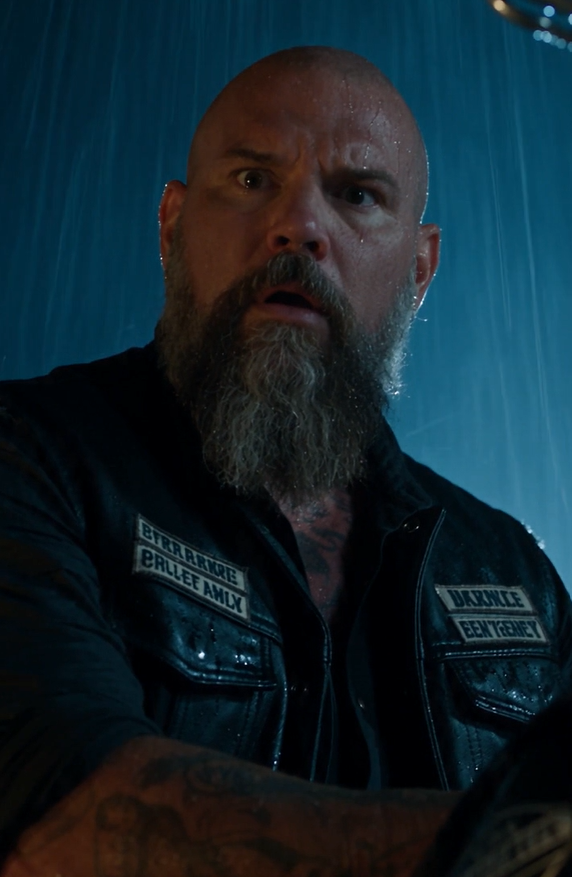
He stood in the garage with oil on his hands.
The rag fell to the floor.
The old fear rose inside him.
Everyone I love leaves.
For one terrible morning, he almost believed it.
He sat beside his motorcycle in the quiet garage, staring at the stuffed rabbit from the drain.
He thought of his mother leaving.
His father leaving.
Emily being taken by illness.
Mia disappearing.
Maybe the doubters had been right.
Maybe he had been a fool.
Then Sarah came in wearing her old blue coat.
She sat beside him.
“Lily is fine,” she said softly.
“She keeps looking at the door.”
Jack’s jaw tightened.
“I thought she was better.”
Sarah laid a hand on his arm.
“When Lily was in that drain, did you climb down because you knew it would be easy?”
Jack did not answer.
“No,” Sarah said.
“You climbed down because she was falling and nobody else would catch her.”
Her voice stayed gentle, but there was iron under it.
“Love is not measured by whether somebody falls, Jack.”
He looked at her.
“It is measured by whether we are there to help them stand back up.”
The garage went still.
“Mia did not leave because she stopped loving Lily,” Sarah said.
“She left because somebody convinced her she was not worth loving.”
Jack stood.
The warmth returned as a hard, stubborn fire.
“I am going to find her.”
He rode for three days.
Shelters.
Cheap motels.
Bars.
Gas stations.
Doorways.
Soup kitchens.
He showed her picture to anyone who might have seen a woman trying to disappear.
Some people thought he meant harm.
He kept his voice low.
“I just want to bring her home.”
On the fourth morning, an old woman at a soup kitchen recognized Mia’s face.
“Railyard,” she said.
“Empty warehouse.”
Jack reached the railyard before the rain came again.
The warehouse smelled of rust, wet concrete, and old dust.
Pigeons shifted in the rafters.
In the far corner, Mia lay curled against the wall beneath a thin scrap of blanket.
She looked like a shadow.
When she heard his boots, she flinched.
“Mia,” he said softly.
She looked up.
Her face collapsed.
“Don’t look at me.”
Jack crouched several feet away so he would not tower over her.
“I have been looking for you.”
“You should not have.”
Her voice broke.
“You should be with Lily.”
“She is waiting for her mama.”
Mia sobbed.
“I ruined everything.”
“You fell,” Jack said.
He did not soften the truth.
“You stumbled and ran and scared everybody who loves you.”
She covered her face.
“But a fall is not the end of the road.”
He leaned closer.
“It is just a fall.”
She shook her head.
“You made it one hundred forty-two days,” he said.
“You think one bad night wipes that away?”
Mia looked at him through tears.
“All that fighting is still yours.”
His voice roughened.
“Nobody can take it from you.”
“Not even you.”
“I do not deserve to try again.”
“Yes,” Jack said.
“You do.”
He held out his hand.
“Recovery is not about never falling.”
His eyes held hers.
“It is about getting back up every single time.”
Mia stared at his hand.
Then she took it.
She returned to treatment that afternoon.
This time, she stopped hiding the ugliest parts.
She told her counselor about the messages.
She told the group she had run.
She apologized where she needed to apologize.
She read her mistakes aloud with shaking hands.
The work was brutal.
But she stayed.
Sarah visited twice a week.
Jack visited Lily in the evenings while the foster family cared for her during the hearing process.
He told Lily her mother was coming back stronger.
He believed it because belief, he had learned, was sometimes a bridge a broken person needed someone else to build first.
The courthouse was cold on the morning of the hearing.
Mia wore a simple gray dress.
Her hands pressed flat against her knees.
Jack sat beside her in his leather vest because Mia had asked him to come as himself.
Across the aisle, Lily sat on the foster mother’s lap in a yellow dress, chewing the ear of the stuffed rabbit.
When she saw Jack, her whole face lit.
“Papa Bear!”
Even the bailiff smiled.
The judge entered with silver hair and tired eyes.
She had read the reports.
She had seen the relapse.
She had seen the recovery work.
But she wanted to hear from the people who knew Lily.
“Mr. Callahan,” she said.
Jack stood.
Every eye turned toward the feared man in the biker vest.
“Your Honor,” he began, “I am not here to say Mia never made mistakes.”
His voice was rough but steady.
“She made big ones.”
He looked at the judge.
“I found that baby in the drain.”
The room listened.
“I climbed down into the dark and the filth and pulled her out.”
His jaw tightened.
“At first, I hated whoever had done it.”
He paused.
“Then I met Mia.”
He looked toward her.
“And I learned the truth.”
A person who did not care did not tuck a blanket around a baby.
Did not leave a rabbit.
Did not write a note begging someone to save the one thing she loved most.
A person who did not care did not crawl back into treatment after falling and keep doing the ugly work every morning.
“I have watched her fight,” Jack said.
“I have watched her become the mother that little girl deserves.”
He gave a faint smile.
“People said she could not change.”
He looked down at his hands.
“They said the same about me.”
When Mia stood, her knees trembled.
“I did leave her,” she said.
Her voice cracked.
“I ran when it got hard.”
She wiped her cheek.
“I lied.”
She drew a shaking breath.
“I cannot undo that.”
The courtroom was silent.
“But I can promise this.”
Mia looked at the judge.
“Every morning, I will choose recovery.”
Her voice steadied.
“I will choose my daughter.”
Another tear fell.
“Not perfect.”
She looked at Lily.
“Just chosen.”
The judge set down her pen.
“I have spent thirty years in this seat,” she said.
“I know the difference between words spoken to win a case and words spoken from somewhere deeper.”