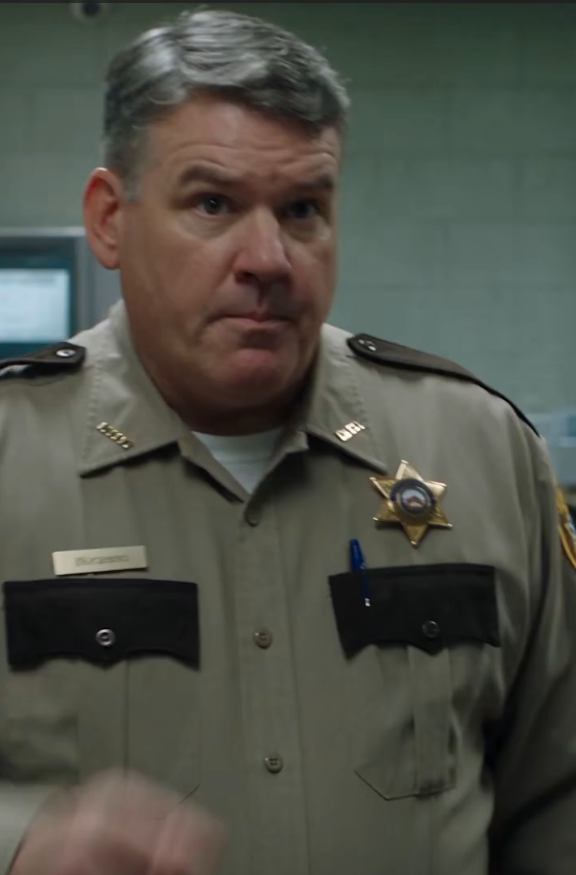
Because everyone in it understood that people with power were now paying attention.
Ryker lowered his voice.
“You calling here to interfere with an arrest?”
“No. I’m calling to establish her status and ensure she is permitted legal contact. I am also informing you that her government phone and credentials are federal property. If they are in your possession, preserve them.”
Ryker glanced toward the property lockers.
The colonel continued.
“And Sheriff?”
“What?”
“Preserve all records associated with the stop and detention.”
Ryker stopped moving.
“Excuse me?”
“Dash camera. Body camera. Dispatch traffic. Booking video. Property logs. All of it.”
Brenda watched the color rise slowly into Ryker’s face.
“You don’t issue orders in my county.”
“No,” the colonel said. “I’m making sure you understand what exists before someone decides later that it doesn’t.”
The line went quiet.
Ryker’s fingers tightened around the receiver.
Miller looked at the floor.
Brenda did not move.
Finally Ryker said, “You’ll hear back.”
He hung up.
For several seconds no one spoke.
Then Ryker turned to Miller.
“Did you activate your body cam?”
Miller hesitated.
“Yes.”
“All of it?”
“Yes.”
Ryker stared at him.
“Dash?”
“Automatic when the lights came on.”
Brenda looked from one man to the other.
Ryker pointed at her computer.
“Pull the booking entry.”
Brenda did.
Ryker leaned over her shoulder.
The charges appeared.
Disorderly conduct.
Resisting.
Reckless driving.
He read them twice.
“What time did you enter reckless?”
“After she came in.”
“That isn’t what I asked.”
Brenda looked at the timestamp.
“Three fifty-eight.”
His head snapped toward the wall clock.
4:07.
“Change the narrative.”
Brenda turned.
“To what?”
“Say Miller reported reckless at roadside.”
Miller spoke before Brenda could.
“I didn’t.”
Ryker looked at him.
No one moved.
Miller swallowed.
“I said she drifted over the center line.”
“That’s reckless.”
“I didn’t call it reckless.”
“Then you should’ve.”
Sarah could not hear the words clearly from cell four.
Only voices.
Ryker’s, louder.
Another man’s, lower.
A woman’s.
She sat forward.
There was movement in the hallway.
Ryker appeared at the cell door.
The smile was gone.
He unlocked it and stepped inside.
Sarah remained seated.
He closed the door behind him but did not lock it.
“You want to tell me who you are?”
Sarah looked at him.
“You have my identification.”
“You know what I mean.”
“Yes.”
“So?”
“What would you like me to tell you?”
His nostrils flared.
“You’re a general?”
“Yes.”
“Major general?”
“Yes.”
“At the Pentagon?”
“I work there.”
He gave a short, disbelieving laugh.
“You thought this was funny?”
“No.”
“You let us bring you all the way in here without saying a word.”
“You didn’t ask my rank.”
“You said federal employee.”
“That is accurate.”
Ryker took one step toward her.
“You could’ve identified yourself.”
“I did.”
“You know damn well what I mean.”
Sarah looked up at him.
“If I had been a teacher, a nurse, an accountant, or unemployed, would the reason for my arrest have changed?”
Ryker stared.
“That’s not the point.”
“It is exactly the point.”
“You think your stars make you untouchable?”
“No.”
“Sure looks that way now.”
Sarah stood.
She was slightly shorter than him, but she did not step back.
“My rank should not make me untouchable. It also should not be the first thing standing between me and an unsupported charge.”
Ryker glanced toward the camera in the corridor.
Sarah noticed.
“You worried about that camera?” he asked.
“No.”
“I think you are.”
“I think you are.”
For several seconds they stood facing each other.
Ryker spoke more quietly.
“You crossed the line.”
“Then cite me for the traffic violation you believe you observed.”
“You resisted.”
“How?”
“You refused a lawful order.”
“I refused consent to a search.”
“You were argumentative.”
“I asked why I was being arrested.”
“You don’t get to run a traffic stop.”
“And you don’t get to turn questions into crimes.”
Ryker opened the door.
“Get her phone.”
He called the order toward the front desk.
Then looked back at Sarah.
“You can make your call.”
“My request was for counsel.”
“You can call whoever you want.”
“Will I be released?”
“That depends.”
“On what?”
He looked at her for a moment.
Then said, “On whether you’re smart enough to stop pushing.”
He walked out.
Sarah remained standing.
That sentence, she knew immediately, mattered.
Not because it offended her.
Because it explained him.
This had never been about a center line.
It was about obedience.
Sarah’s civilian phone was brought to her at the booking desk.
Her secure government device remained in the property locker.
Brenda placed the phone down carefully.
“Your unlock code is your business,” she said.
Sarah looked at her.
“Thank you.”
Brenda’s eyes met hers for half a second.
Something had changed in them.
Sarah turned slightly away from the counter as she unlocked the phone.
Seven missed calls.
Four from her executive officer.
Two from a Washington number.
One from her aunt.
She called her executive officer first.
He answered before the first full ring.
“Ma’am.”
“I’m safe.”
A breath on the other end.
“Understood.”
“I’m being held at the Oak Haven County Sheriff’s Office.”
“We know.”
“Do not send anyone down here to create a scene.”
“Ma’am—”
“I mean it.”
A pause.
“Yes, ma’am.”
“I need counsel notified. Civilian counsel first. Make sure the appropriate Army legal office is aware, but this is not a military jurisdiction issue.”
“Yes, ma’am.”
“Also, preserve my travel timeline. Every call. Every device status. Do not contact local officials beyond what is necessary.”
Her executive officer understood her immediately.
“You want the record clean.”
“I want the record honest.”
Another pause.
“Colonel from the duty desk called them.”
“I heard.”
“Are you injured?”
Sarah looked at the marks around her wrists.
“No.”
That was close enough to true.
“Any medical need?”
“No.”
“All right.”
Sarah lowered her voice.
“One more thing. Nobody invokes my rank as a reason they should release me.”
The executive officer was silent.
Then: “Understood.”
“If the charges have legal basis, they can process them. If they don’t, I want that determined the same way it would be for anyone else.”
“Yes, ma’am.”
Sarah ended the call.
Ryker was watching her from across the room.
“You done?”
“For now.”
“Your Pentagon friends coming?”
“No.”
That appeared to surprise him.
Sarah set the phone down.
“I still want counsel.”
“Someone’s calling back.”
“Thank you.”
It was the first polite exchange they had managed.
Ryker looked almost irritated by it.
Miller stood beside a desk, pretending to review paperwork.
Sarah turned toward him.
“Deputy Miller.”
He looked up.
“Did your body camera remain active from the start of the stop through transport?”
Ryker cut in.
“Don’t interrogate my deputy.”
“I asked a question.”
“Don’t.”
Sarah nodded.
“All right.”
Miller’s eyes followed her as she was taken back toward the holding corridor.
This time Ryker did not order the cell door closed.
Sarah paused at the threshold.
“Sheriff.”
He turned.
“I’m not asking for special treatment.”