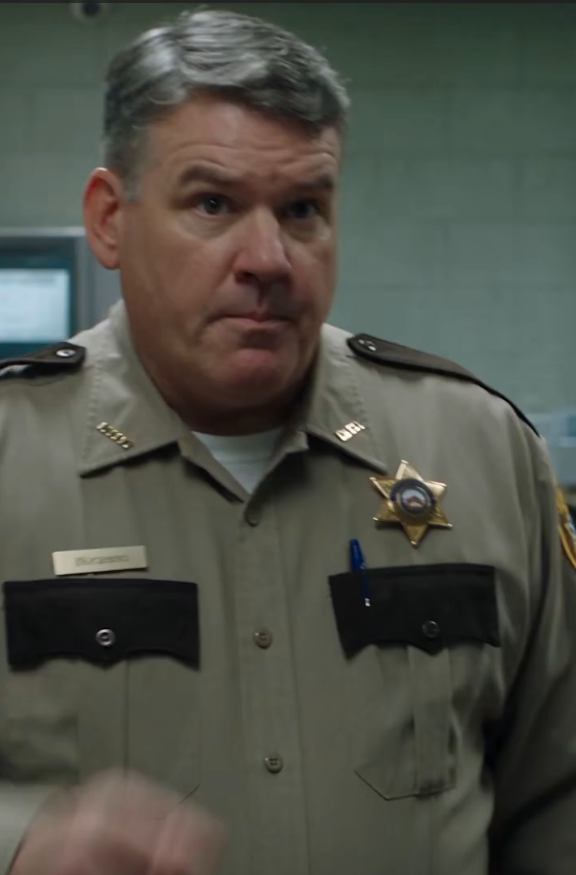
He gave a hard smile.
“Could’ve fooled me.”
“I’m asking you not to alter anything.”
The hallway seemed suddenly narrower.
Ryker said, “You accusing me of something?”
“No.”
Sarah stepped into the cell.
“I’m telling you what matters next.”
Part III — The Record
For the next hour, the sheriff’s office existed in two versions.
There was the official version being typed into forms.
And there was everything the cameras had already seen.
Sarah understood the difference.
So did Ryker.
The trouble was that Ryker had spent years working in an environment where his written version usually became the version that mattered.
His reports were not necessarily false.
They were shaped.
A driver “became confrontational.”
A suspect “refused repeated commands.”
A person “made sudden movements.”
Words that could stretch.
Words that turned hesitation into resistance and questions into hostility.
Usually there was no competing narrative with institutional weight behind it.
This time there was.
Brenda watched him revise the incident summary.
The first draft said Sarah had been stopped after crossing the center line and subsequently became argumentative.
The second said she had “displayed increasingly aggressive behavior.”
Brenda read the phrase twice.
She had been in the booking room.
Sarah had never raised her voice.
“Sheriff.”
Ryker kept typing.
“What?”
“She wasn’t aggressive in here.”
“I’m writing about the stop.”
“You weren’t there for the start of it.”
He stopped.
Then turned his chair.
“Brenda.”
She waited.
“You answering phones or conducting investigations now?”
“I’m making sure the booking record matches what came in.”
“It will.”
Miller was sitting at the next desk.
Ryker looked at him.
“Tell her.”
Miller’s mouth moved before sound came.
“She was… difficult.”
Brenda folded her arms.
“What’d she do?”
Miller glanced at Ryker.
“She questioned the search.”
“That isn’t what I asked.”
Ryker stood.
“That’s enough.”
Brenda turned back to her monitor.
She had worked for the department for eleven years.
Long enough to know when the safest thing was silence.
But there were different kinds of silence.
One protected your job.
Another protected the lie.
At 4:41 p.m., an attorney called on Sarah’s behalf.
Ryker took the call in his office.
At 4:54, he emerged and told Brenda to begin release paperwork.
“Charges dropped?” Brenda asked.
“No.”
“Then bond?”
“Citation release.”
“For resisting?”
Ryker looked at her.
“You got a problem with releasing her?”
“No.”
“Then process it.”
Sarah was brought forward.
Her phone was returned.
Her secure government device was placed on the counter beside it.
Ryker handed her a citation sheet.
“You sign here, it’s not an admission.”
Sarah read it.
The charges remained.
Disorderly conduct.
Resisting.
Reckless driving.
She looked up.
“What is the factual basis for resisting?”
Ryker laughed quietly.
“You really don’t know when to stop.”
Sarah looked back at the paper.
“No. I know exactly when to stop.”
She placed it on the counter.
“I will sign acknowledgment of receipt. Nothing more.”
“That’s what it is.”
“Then we agree.”
She signed.
Ryker picked up the sheet.
“You’re free to go.”
Sarah remained where she was.
“My rental car?”
Miller answered.
“Still on Route 119.”
“Was it searched?”
Ryker said, “No.”
“Was it impounded?”
“No.”
“Then I need transportation to it.”
Ryker leaned against the counter.
“That isn’t our responsibility.”
Miller looked toward him.
Then said, “I can take her.”
Ryker’s head turned.
Miller did not withdraw the offer.
Sarah watched them.
“No,” she said. “I’ll arrange transportation.”
She collected her property.
Brenda slid the property form across the counter.
Sarah checked each listed item.
Civilian phone.
Government phone.
Wallet.
Rental keys.
Travel folder.
Everything present.
Sarah signed.
Then she looked at Brenda.
“What time was I booked?”
“Three fifty-two.”
“What time was reckless driving entered?”
Ryker’s face changed.
Brenda looked at the monitor.
Then at Sarah.
“Three fifty-eight.”
“Thank you.”
Ryker stepped forward.
“What are you doing?”
Sarah put her wallet into her bag.
“Leaving.”
“You collecting evidence?”
“I’m remembering what happened.”
“You planning to come after this department?”
Sarah lifted the strap of her bag onto her shoulder.
“I don’t know yet.”
Ryker laughed.
“Oh, come on.”
Sarah looked at him.
“The charges still exist. My attorney will address them. What happens after that depends on what the record shows.”
“You were treated like anybody else.”
“That’s what concerns me.”
The sentence landed differently than an accusation would have.
Ryker’s expression hardened.
Sarah walked toward the exit.
Miller followed two steps behind.
“General.”
She stopped.
It was the first time anyone at the department had addressed her by rank in person.
She turned.
Miller looked uncomfortable.
“Your car’s safe.”
“Thank you.”
He nodded.
She waited.
There was something else.
He looked back toward Ryker, then toward Sarah.
“You didn’t cross far.”
Sarah’s eyes narrowed slightly.
“What?”
“The center line.”
Ryker said sharply, “Miller.”
Miller stopped.
Sarah studied him.
“Deputy, if you have something to say about your report, say it in your report.”
His face tightened.
“Yes, ma’am.”
Sarah turned and walked out.
The late-afternoon light felt too bright after the cell.
Her aunt was still nearly two hours away.
The secure briefing was gone.
The charges were not.
Sarah stood beneath the exterior camera and called her attorney.
Her attorney did not ask whether she wanted to sue anyone.
He asked for chronology.
Sarah liked him for that.
She sat in the passenger seat of a rideshare car forty minutes later, heading back toward the rental sedan, and gave him times, language, charges, camera locations, names, badge numbers, and sequence.
He interrupted only to clarify.
“When did the sheriff arrive?”
“Approximately 3:40.”
“When were cuffs applied?”
“Approximately 3:46.”
“Did you physically pull away?”
“No.”
“Verbally refuse to place your hands behind your back?”
“No.”
“Threaten them?”
“No.”
“Profanity?”
“No.”
“Raise your voice?”
“Not that I recall.”
“Did you consent to any search?”
“No.”
“Did they search anyway?”
“Not to my knowledge.”
“Did anyone mention reckless driving before booking?”
“No.”
He was quiet for several seconds.
“Sarah.”
“Yes.”
“You understand the Pentagon call complicates this.”
“I know.”
“Defense is going to be that you received preferential attention because of rank.”
“I told my staff not to seek special treatment.”
“That helps. It doesn’t erase the optics.”
“I’m not trying to erase the optics.”
“What are you trying to do?”
Sarah watched trees blur beyond the window.
“Find out whether the charges existed before they knew who I was.”
Her attorney exhaled.
“Good question.”
“That’s the only question I care about tonight.”
“That won’t remain the only question.”
“No.”
She knew that.
By Monday there could be media calls.
The story had everything editors liked.
A Black major general.
A rural sheriff.
An arrest.
The Pentagon.
Five minutes.
The facts would flatten into teams before most people knew what had happened.
Some would decide Ryker was guilty of racism before seeing a second of video.
Others would decide Sarah had weaponized her rank against local police before reading a single report.
Sarah wanted neither story.
She wanted the true one.
And truth was usually less convenient than a headline.