Her attorney said, “I’m going to issue preservation letters tonight.”
“To whom?”
“Sheriff’s office. County dispatch. Body-cam system vendor if necessary. Rental company for vehicle data if any exists. We’ll request everything.”
“Include the booking system audit log.”
He paused.
“Why?”
“Reckless driving appeared after I arrived.”
“Good.”
“And the hallway camera.”
“You think something happened there?”
“I think he told me my release depended on whether I was smart enough to stop pushing.”
Another pause.
“That on camera?”
“It should be.”
Her attorney became very still on the other end.
“All right.”
Sarah looked at her reflection in the car window.
“Do not threaten them.”
“I wasn’t planning to.”
“No press statement either.”
“I agree.”
“And don’t contact Miller separately.”
“Also agree.”
“I want the records before anyone starts performing.”
“You sound like you’re running an after-action review.”
“I am.”
Her attorney laughed once.
Not because anything was funny.
Because he knew her.
“You ever stop being an officer?”
“Not today.”
The rental sedan was exactly where she had left it.
She thanked the driver, checked the car exterior, then opened the door.
Nothing appeared disturbed.
She sat without starting the engine.
The driver pulled away.
For the first time all afternoon, Sarah was alone.
No cameras she knew of.
No officer.
No staff.
No lawyer.
The marks around her wrists had darkened.
She touched one carefully.
Then stopped.
She closed both hands around the steering wheel.
Her breath came out slower than she expected.
She had spent the day refusing to give Ryker the reaction he seemed to want.
Now there was no one to see one.
Sarah lowered her head.
Not crying.
Not breaking.
Simply allowing the weight of what had happened to arrive.
The steel bench.
The sound of the lock.
The phrase You people.
The invented resisting charge.
The look on Ryker’s face when he learned her rank.
What disturbed her most was not the arrest.
It was how ordinary it had felt to everyone except her.
Ryker had not behaved like a man improvising.
Brenda had known how to enter the charge.
Miller had known when to look away.
The cell had been ready.
The forms had been ready.
The language had been ready.
Sarah sat there until the dashboard clock showed 6:02.
Then she started the engine.
Her aunt opened the front door before Sarah reached the porch.
She had apparently been watching through the curtain.
“You look terrible.”
Sarah almost smiled.
“Good to see you too.”
Her aunt wrapped her arms around her.
Sarah stood stiffly for half a second.
Then allowed herself to be held.
“What happened?”
“Long afternoon.”
“They said you got arrested.”
“Who said?”
“Your office called me because you put my name down.”
Sarah closed her eyes.
“Of course they did.”
Her aunt stepped back.
“Baby, what happened?”
Sarah looked past her into the warm house.
A pot was simmering in the kitchen.
A television murmured somewhere in the back room.
Normal life.
She had wanted this visit because she needed two days where no one called her ma’am.
She followed her aunt inside.
“I got pulled over.”
“That doesn’t explain handcuffs.”
“No.”
Sarah set down her bag.
Her aunt’s eyes dropped to her wrists.
The silence changed.
Sarah said, “I’m okay.”
Her aunt looked at her for a long time.
Then she went to the stove.
“Sit.”
“Auntie—”
“Sit down before I make that an order, Major General.”
Sarah sat.
For the first time that day, she obeyed without argument.
Part IV — The Story They Wrote
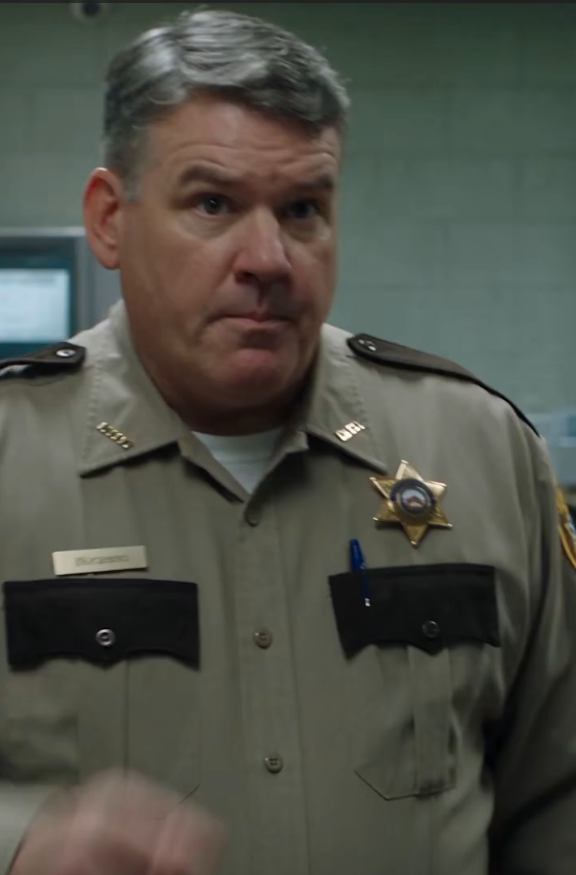
By Monday morning, Sheriff Thomas Ryker had convinced himself the situation was manageable.
The key, he believed, was procedure.
Procedure could make almost anything look reasonable if each piece was documented separately.
The stop: lane deviation.
The request: vehicle search.
The arrest: disorderly conduct and resisting.
The additional charge: reckless driving.
The release: citation pending court review.
Nothing extraordinary.
Nothing, in isolation, indefensible.
The problem was the video.
Ryker watched Miller’s body-camera footage in his office at 6:20 a.m.
He watched it once with the sound low.
Then again at full volume.
Sarah’s voice came through clearly.
Calm.
“I do not consent to a search.”
Ryker’s own voice:
“There it is.”
Her answer:
“What?”
“The attitude.”
He stopped the video.
Rewound.
Watched again.
He skipped forward.
“Turn around.”
“For what?”
“I said turn around.”
“Am I being detained?”
“You’re about to be arrested if you keep this up.”
“For what offense?”
Ryker paused the recording.
Sarah’s face froze on the monitor.
Tired.
Controlled.
Not aggressive.
Not frightened.
Not giving him anything.
He hated the image.
Miller knocked once and entered.
“You wanted me?”
Ryker closed the video window.
“Sit.”
Miller sat.
Ryker folded his hands.
“You’ve been contacted by anyone?”
“No.”
“Pentagon?”
“No.”
“Her lawyer?”
“No.”
“Media?”
“No.”
“Good.”
Miller waited.
Ryker said, “Your report needs clarity.”
“I filed it.”
“I read it.”
Miller’s shoulders tightened.
“What’s wrong with it?”
“You wrote she refused consent to a search.”
“She did.”
“You make it sound like that’s why she was arrested.”
Miller said nothing.
Ryker leaned back.
“What was her driving like?”
“She touched the center line.”
“Crossed it.”
“Her left tires went over maybe—”
“How far?”
Miller looked away.
“I don’t know.”
“Enough to stop her.”
“Yes.”
“Was it dangerous?”
“I wouldn’t say dangerous.”
“You stopped her on suspicion of impaired driving.”
“I wanted to check her.”
“Which means you believed the driving created a safety concern.”
Miller stared at him.
Ryker continued.
“She became argumentative. She refused instructions. She interfered with the investigation. That is what your report should reflect.”
“She didn’t interfere with sobriety testing.”
“No.”
“We didn’t give her sobriety tests.”
Ryker’s face tightened.
“Because her behavior shifted the situation.”
Miller rubbed one palm against his knee.
“You arrested her because she wouldn’t open the trunk.”
“I arrested her because she refused lawful commands.”
“She was right about the search.”
Ryker became very still.
“What did you say?”
Miller looked at him now.
“We didn’t have probable cause for the trunk.”
“You taking her side?”
“No.”
“Sure sounds like it.”
“I’m saying the search wasn’t mandatory.”
“You know how many stops you’ve made because somebody gave you a bad feeling?”
“That’s not the same thing.”
“Don’t start learning constitutional law because the woman turns out to be a general.”
Miller’s face reddened.
Ryker pointed at him.
“That’s what this is. You’re scared now.”
Miller stood.
“I’m not changing my report.”
The words remained between them.
Ryker slowly rose from his chair.
“You think I asked you to lie?”
“Yes.”
Miller looked almost surprised to hear himself say it.
Ryker’s expression emptied.
“Get out.”
Miller did.
The office door closed softly.
Ryker stood behind his desk for a long time.
Then opened the body-camera file again.
Sarah watched the same footage Wednesday afternoon in her attorney’s office.
She had returned to Washington Sunday night and spent Monday doing what she normally did after an interrupted operation: repairing schedules, apologizing where necessary, and making sure the people under her command did not waste time being angry on her behalf.