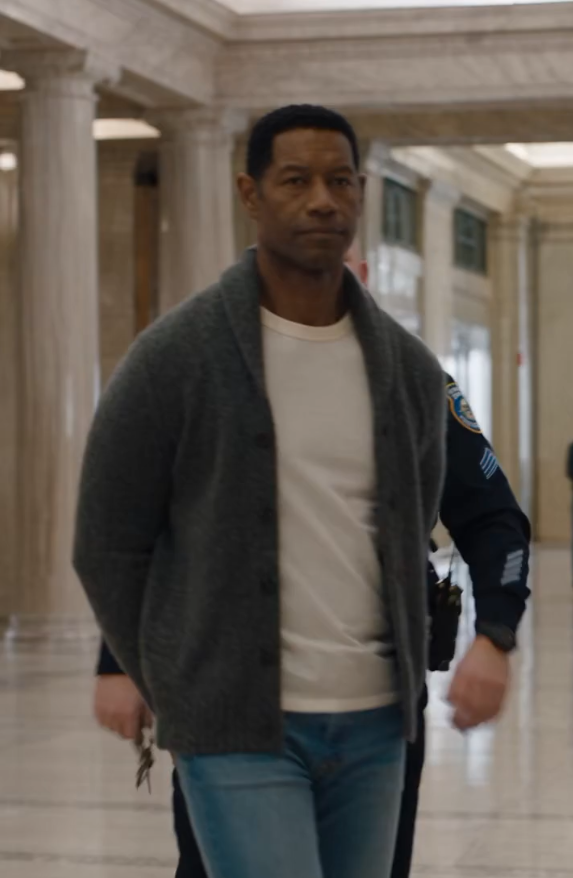
On Thursday evening, Jenkins asked to meet me.
Through counsel.
Khloe said no before I finished reading the request.
“No.”
“He asked.”
“I heard you.”
“Ten minutes.”
“No.”
“Khloe.”
She stared at me.
“You are the complainant.”
“I am also the mayor.”
“Exactly.”
“I won't discuss discipline.”
“What do you think he wants?”
“I don't know.”
“You do.”
Maybe I did.
I approved the meeting under one condition: counsel present, Granger informed, no discussion of the pending disciplinary outcome.
Jenkins arrived in a dark suit.
Without the uniform, he seemed smaller.
Not physically.
Institutionally.
His attorney sat beside him.
I remained behind my desk.
Jenkins looked at the bruise that had mostly faded from my cheek.
“I wanted to apologize.”
I waited.
He swallowed.
“I handled the situation wrong.”
Still I waited.
“I should've verified who you were.”
There it was.
I leaned back.
“You've had three weeks.”
He looked confused.
“To think about this.”
“Yes.”
“And that is your apology?”
His attorney shifted.
Jenkins looked at her, then back at me.
“I don't understand.”
“You should have verified who I was.”
“Yes.”
“Meaning what?”
“That I would've known you were the mayor.”
“And then?”
His face tightened.
“I wouldn't have arrested you.”
I nodded slowly.
“Officer Jenkins, do you understand why that is not the apology you think it is?”
He looked down.
“I treated you disrespectfully.”
“You treated me unlawfully.”
“Yes.”
“Would it have been lawful if I weren't mayor?”
“No.”
“Would the housing-office comment have been appropriate?”
“No.”
“Would ‘you people’ have been appropriate?”
“No.”
His shoulders dropped slightly.
I continued.
“Then why is my identity still at the center of your explanation?”
He was quiet.
His attorney spoke.
“Mayor Harrison, Officer Jenkins has acknowledged substantial failures in judgment.”
I looked at her.
“I am not negotiating discipline.”
“I understand.”
I looked back at Jenkins.
“Why did you ask to see me?”
He took a long breath.
“Because I don't think I'm the person they're saying I am.”
The sentence was more honest than anything else he had said.
I considered it.
“Who are they saying you are?”
“A racist cop.”
“I haven't called you that.”
“People have.”
“Yes.”
“You think they're wrong?”
I could have answered quickly.
I didn't.
“I think labels are tempting because they let us stop examining behavior.”
He frowned.
“I don't know what that means.”
“It means I don't need to know what's inside your heart to know what you did.”
He looked away.
“You made assumptions about me before I spoke. You dismissed explanations. You used language that reduced me to a category. You escalated when your authority was questioned. You arrested me without legal cause.”
I paused.
“Those are facts.”
He rubbed his thumb along the edge of the chair.
“I've been doing this twenty-two years.”
“I know.”
“I've helped people.”
“I believe you.”
That surprised him.
“I've pulled kids out of wrecks. I've talked people down. I've gone into houses when everybody else was running out.”
“I believe you.”
His eyes lifted.
“Then how can all that disappear because of one morning?”
“It doesn't.”
He stared at me.
“But neither does the morning.”
For the first time since entering, Jenkins had no immediate response.
I leaned forward.
“The hardest thing about accountability is that good things you've done do not buy permission for harm.”
His jaw tightened.
“And bad things erase everything else?”
“No.”
I shook my head.
“But some jobs require trust. And some violations affect whether that trust can continue.”
His attorney touched his arm.
He stood.
At the door he stopped.
“I really didn't know you were the mayor.”
I looked at him.
“I know.”
He waited.
I said, “That was never the part I needed you to understand.”
He left.
Part IX — The Vote
The council scheduled the final oversight vote for the following Tuesday.
By then, Jenkins had been terminated.
Granger's recommendation cited unlawful detention, unnecessary use of force, conduct unbecoming, biased language, inaccurate articulation of probable cause, and a prior documented incident showing failure to correct similar behavior.
The union appealed.
They had every right to.
Miller remained with the department.
He was transferred from Jenkins' unit during the review, then voluntarily enrolled in a new intervention and peer-accountability pilot Granger created before the council required him to.
The vote on independent review remained uncertain.
That was the part no viral video could solve.
Public outrage is powerful.
Legislation requires counting.
Two council members who originally opposed the proposal now supported it.
One former supporter worried it appeared retaliatory.
Another wanted to remove subpoena authority.
Khloe tracked the votes on a yellow legal pad.
“Five certain yes.”
“We need six.”
“Two maybe.”
“Which two?”
She told me.
I shook my head.
“One wants the subpoena language gone.”
“Then remove it.”
“No.”
“You want the board or not?”
“I want one that can function.”
“Compromise is not surrender.”
“Neither is arithmetic.”
She smiled.
“That sounded almost mature.”
We spent hours negotiating.
The final structure preserved independent investigative authority for serious complaints while creating defined standards for document requests, officer representation, timelines, public reporting, and appeals.
It was less broad than my original proposal.
It was stronger in several procedural areas because Granger insisted vague authority would create lawsuits and distrust.
That annoyed me until I realized he was right.
The morning of the vote, I arrived at City Hall through the public entrance.
Khloe noticed immediately.
“You have a garage.”
“I know.”
“And an elevator.”
“I know.”
“You're doing symbolism now.”
“I am walking through a door.”
“In front of six cameras.”
“That isn't my fault.”
“It is absolutely your fault.”
At the metal detector, a different officer stood beside Miller.
Miller saw me.
“Morning, Mayor.”
“Morning.”
I emptied my pockets into a tray.
Keys.
Phone.
Wallet.
Miller noticed the wallet.
A tiny smile appeared.
“Got your ID today?”
“I've learned.”
“So have we.”
I looked at him.
He meant it.
I stepped through the detector.
No beep.
I gathered my things.
Then I noticed the marble pillar.
For weeks, I had avoided looking at it.
There was no mark where my face had struck.
Of course there wasn't.
Stone does not remember pain.
People have to.
Inside the chamber, every seat was filled.
The council debated for two hours.
No speeches changed anyone's mind.
Those had happened earlier, in offices, hallways, private phone calls, neighborhood meetings.
At 11:47, the clerk called the vote.
One.
Two.
Three.
Four.
Five.
A pause before the sixth.
Then:
“Yes.”
The measure passed.
Six to five.
Applause began in the gallery.
I did not join it.
I looked toward Chief Granger.
He sat near the side wall.
He gave one small nod.
Nothing triumphant.
Just acknowledgment.
Work had moved from argument into obligation.
That afternoon, I signed the ordinance in my office.
No ceremony.
No giant pens.
No row of smiling officials.
Just Khloe, Granger, the city clerk, and a stack of paper.
When I finished, Khloe said, “You know communications is going to murder us for not taking pictures.”
“They can photograph the document.”
“You are terrible at politics.”
“I won.”
“Once.”
Granger picked up his copy.
“This is going to be painful.”
“Probably.”
“Officers are going to test it.”